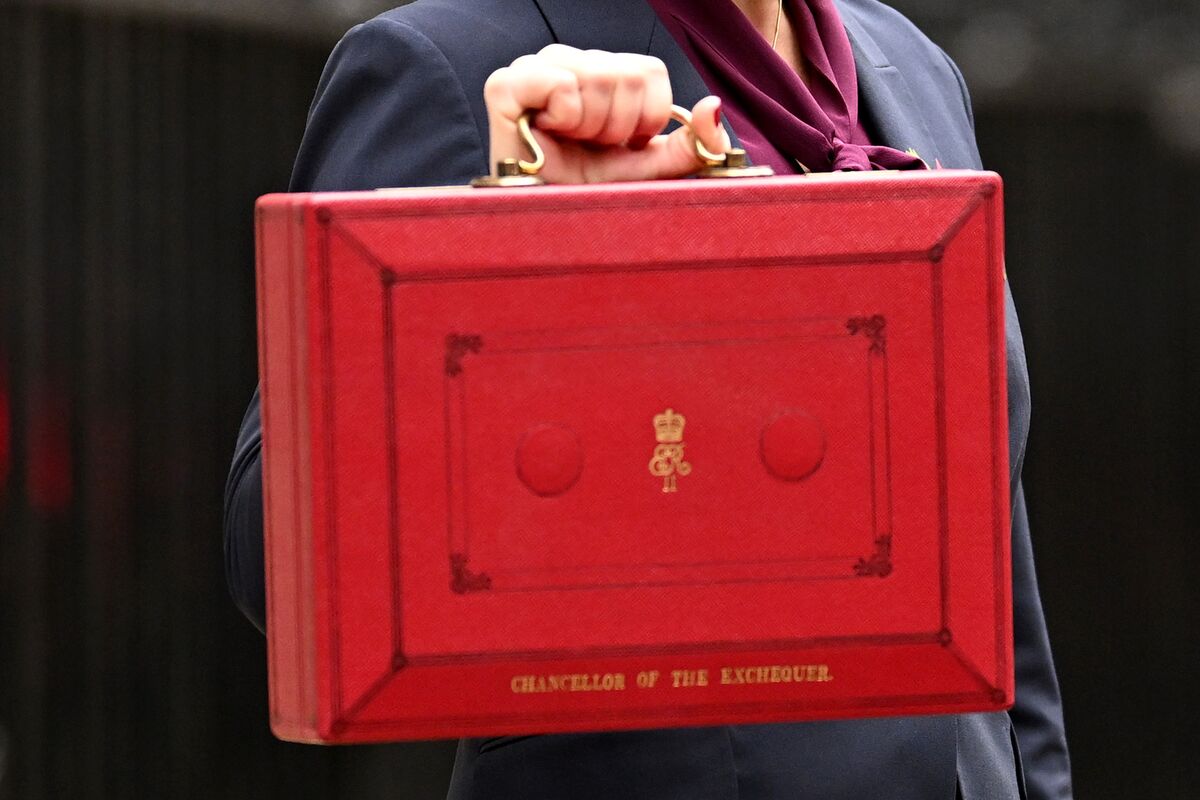
Chancellor Rachel Reeves is preparing a highly watched UK budget requiring an estimated £30 billion ($39 billion) to close a fiscal gap and restore credibility, with the run-up marked by U-turns and a political crisis. Markets are braced as her apparent abandonment of an income tax rise raises the prospect of a patchwork of sector-specific levies, putting banks, housebuilders, retailers and commercial landlords on the frontline and increasing policy uncertainty for investors.
Market structure will bifurcate: banks, housebuilders, retailers and commercial landlords are first-order losers if the Chancellor substitutes an income-tax rise with targeted sector levies, compressing ROE and elevating capital charges for banks and landlords; consumer staples, utilities and defensive telcos gain relative pricing power as demand rebalances. Competitive dynamics will favor firms with low marginal tax exposure, long-duration contracted cashflows (indexed rents, regulated returns) and strong deposit franchises; housebuilders with short-cycle land banks will see margins squeezed and idiosyncratic bankrupt risk rise. Supply/demand signals point to higher gilt supply and risk premia — expect 10y UK gilt yields to reprice +30–100bp in stressed scenarios over 1–3 months, pressuring long-duration equities and boosting short-term funding costs for UK corporates. Cross-asset: sterling likely weakens 2–6% vs USD in a high-uncertainty scenario, UK credit spreads widen, gilt vol spikes (VSTOXX-style moves in gilts), and commodity reaction limited except for domestic-sensitive oil demand via weaker GBP.
Tail risks include a punitive sector-wide windfall tax ( >£5–10bn targeted) or a market confidence shock forcing a fiscal U-turn leading to >150bp move in 10y yields; geopolitical or global rate shocks could amplify. Immediate (days): volatility and FX moves around budget release; short-term (weeks–months): sector earnings revisions, capex delays; long-term (quarters–years): structural tax regime uncertainty raising WACC by 50–150bp for UK assets. Hidden dependencies: bank CET1 buffers, covenant triggers in commercial mortgages, and pension scheme deficits tied to gilts; second-order effects include reduced M&A and deferred listings. Catalysts: budget text, OBR reaction, UK 10y auction results, BoE commentary within 0–90 days.
Trade implications: establish tactical shorts in long-duration UK assets and sector-specific names likely to bear levies; prefer options to limit downside. Pair trades: long defensive staples (ULVR.L, TSCO.L) vs short housebuilders (PSN.L, BDEV.L) or landlords (LAND.L, BLND.L). Use 1–3 month put spreads on banks (BARC.L, HSBA.L) to hedge levy risk and buy USD/GBP forwards or call options to capture sterling weakness. Rotate away from domestically-levered cyclicals into exporters and global earners (FTSE 100 staples/energy) over the next 3–12 months.
Contrarian angles: consensus may over-penalize large banks — capital-ready big banks (HSBA.L, LLOY.L) can absorb one-off levies with limited ROE structural damage, making deep single-name shorts risky beyond 3 months. Housebuilder sell-offs may be overdone if mortgage rates stabilize; look for distressed entry points < -25% from recent highs. Historical parallels (2010 austerity, 2022 fiscal credibility shocks) show gilt repricing reversals once credible fiscal anchors are announced, so nimble short-duration trades with strict stop-losses are essential.
AI-powered research, real-time alerts, and portfolio analytics for institutional investors.
Request DemoOverall Sentiment
moderately negative
Sentiment Score
-0.45
