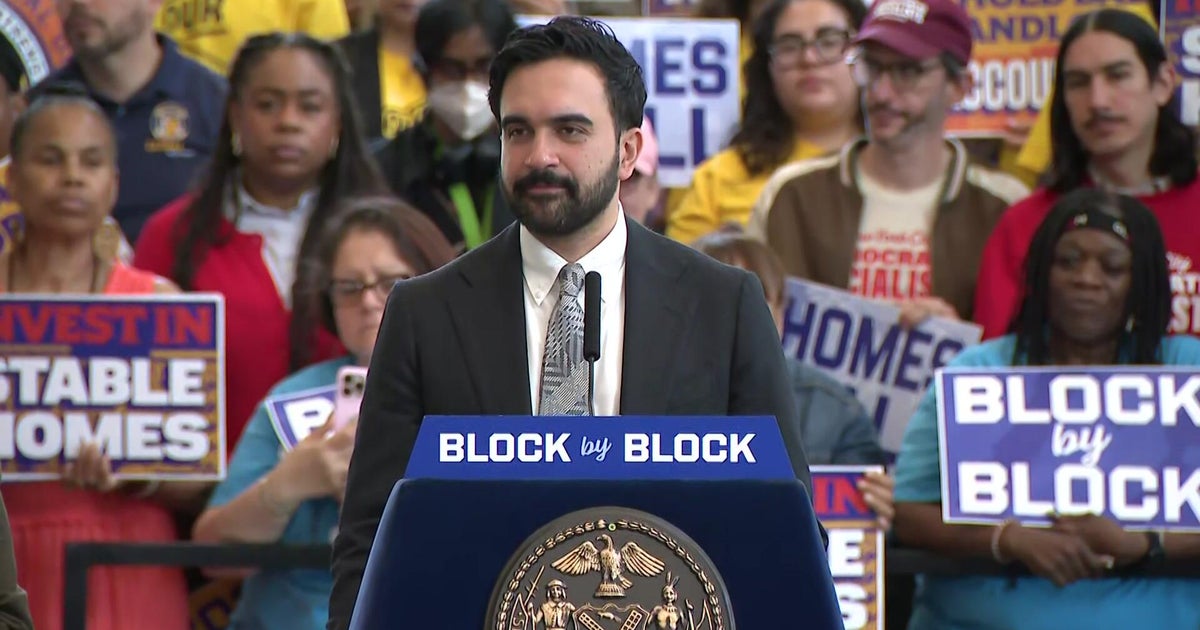
New York City Mayor Zohran Mamdani announced a Commission on Government Efficiency (COGE) to review the city charter, gather public input through 10 citywide hearings, and identify ways to improve budget practices and remove bureaucratic barriers. The commission is intended to speed delivery of housing, transit, child care and other public services, with the first hearing set for June 9. The move is a governance and policy initiative with limited immediate market impact.
This is less about near-term cost savings and more about creating optionality for a broader deregulatory or pro-delivery agenda. The market-relevant second-order effect is that any credible attempt to shorten permitting, loosen agency constraints, or revise city charter rules could pull forward capex in housing, transit-adjacent development, and municipal services by months to quarters, which matters more for private contractors and local real estate operators than for city bond pricing in the immediate term.
The biggest beneficiaries are likely to be firms with existing exposure to NYC project pipelines and bureaucratic friction: engineering, construction management, and permitting-heavy service providers. If COGE becomes more than a rhetorical vehicle, the fastest operating leverage should show up in names tied to public infrastructure execution and multifamily development, while the losers are the embedded rent-extractors in process-heavy compliance, consulting, and unions that rely on slower workflow and scope creep. That said, the first-order equity impact is probably muted until there is evidence of charter changes or budget-process reforms, which makes this a 3-12 month catalyst rather than a trading-day event.
The contrarian view is that commissions like this often produce process reforms that sound aggressive but translate into marginal, not transformational, changes. If the political coalition is broad and includes labor and civic stakeholders, the end state may be better coordination rather than actual headcount cuts or material spending restraint, which would limit any upside to margins. Tail risk cuts both ways: a visible failure to deliver could become an election liability and accelerate pressure for bolder reforms, while a successful early win on permitting could re-rate local housing and infrastructure sentiment quickly.
For credit, the more interesting angle is municipal governance credibility: if COGE leads to more disciplined budgeting and fewer project overruns, it is mildly constructive for NYC-related muni spreads over a 6-18 month horizon, but not enough to drive a standalone macro trade. The bigger opportunity is in relative value between execution-sensitive contractors and bureaucratic bottlenecks—if approvals improve even 5-10%, project timelines and IRRs can move enough to matter for backlog conversion and valuation multiples.
AI-powered research, real-time alerts, and portfolio analytics for institutional investors.
Request DemoOverall Sentiment
neutral
Sentiment Score
0.10
