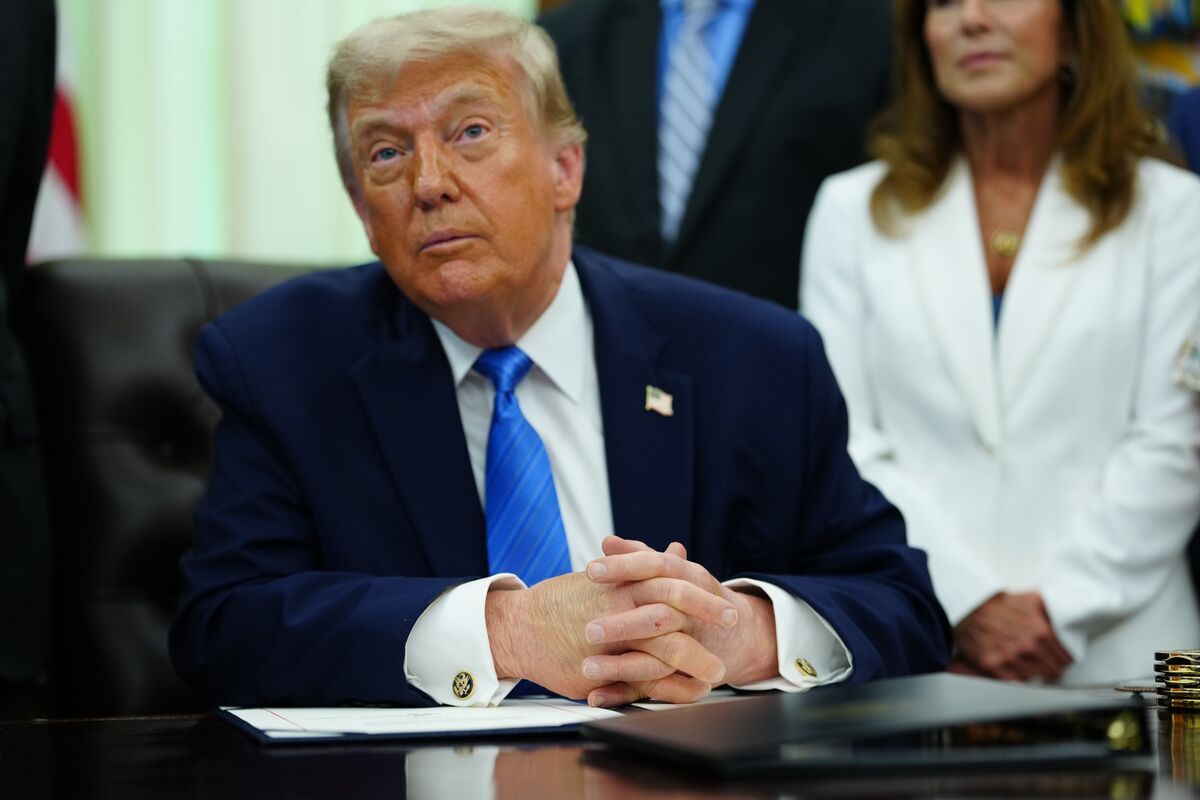
Trump said he canceled planned military strikes against Iran, reversing a prior threat to hit the country "VERY HARD" and potentially seize its oil infrastructure. He also cited discussions reaching the highest levels of Iranian leadership around a negotiated end to the war, with a signing time and place to be announced later. The shift lowers immediate escalation risk but keeps geopolitics and energy markets highly sensitive to further developments.
This is a classic de-escalation shock with asymmetric implications for energy vol rather than outright price direction. The market should treat the main signal as a reduction in immediate tail risk, which usually compresses front-end crude implied volatility faster than spot, especially in the 1-2 week window when headlines can reverse again. The bigger second-order effect is that shipping, refining, and defense supply-chain names most exposed to a Gulf disruption may outperform on reduced crisis premia even if crude only retraces modestly.
The key issue is credibility: a canceled strike does not remove the underlying bargaining framework, so the path of least resistance is a series of abrupt headline-driven gaps rather than a clean trend. That favors options over directional cash equity exposure because the distribution is fat-tailed in both directions; a renewed escalation would reprice Brent, tanker rates, and defense contractors in hours, while a genuine diplomatic channel would likely crush near-dated protection quickly. For equities, integrated energy and diversified defense have less convexity than pure-play producers or munitions names, so the market may overestimate how much this reduces medium-term earnings risk.
Contrarian view: the immediate “peace premium” may be overstated because the cancellation itself can be read as negotiating leverage, not a durable policy shift. If traders extrapolate lower oil and lower geopolitical risk too far, that opens a setup for buying volatility on the next contradiction headline. The more durable winner could be beneficiaries of lower input-cost uncertainty—industrials, airlines, and chemical names—but only if the détente survives beyond the next few trading sessions.
AI-powered research, real-time alerts, and portfolio analytics for institutional investors.
Request DemoOverall Sentiment
mildly negative
Sentiment Score
-0.20
