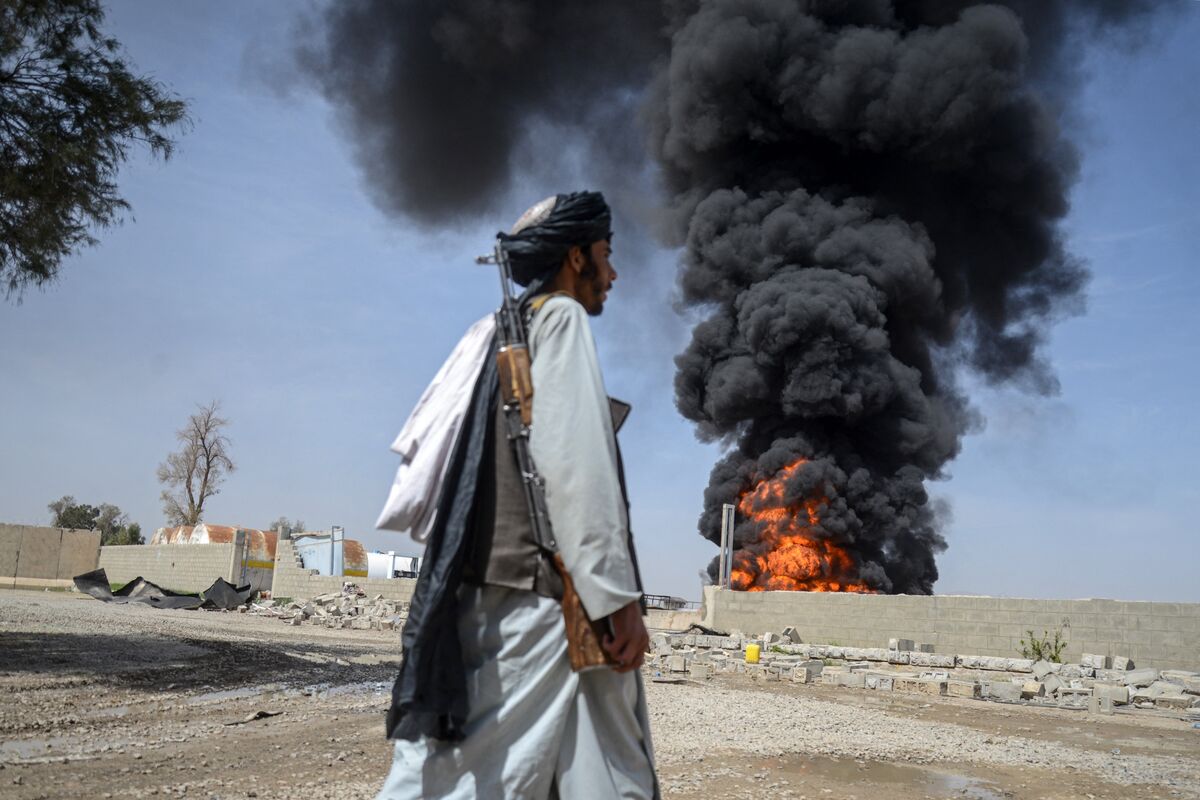
India condemned Pakistani air strikes in Afghan territory, calling them an act of aggression and accusing Islamabad of hostility toward a sovereign Afghanistan. Elevated India–Pakistan tensions raise regional geopolitical risk and could prompt short-term risk-off moves in emerging-market assets, pressure regional FX and equities, and modestly increase interest in defense exposure if the situation escalates.
Immediate market mechanics will be a short-lived risk-off knee in emerging markets: expect 1–3% underperformance in frontier/small-cap Pakistan exposures and a 0.5–1.5% widening in EM sovereign spreads over the next 3–10 trading days as cross-border headline risk triggers stop-losses and liquidity pulls. Over a 3–12 month horizon the more investable structural effect is higher defense and surveillance procurement across South Asia — procurement cycles, offset agreements and spares/maintenance tend to convert headlines into multi-year revenue streams for prime contractors and tier-1 systems suppliers.
Second-order supply-chain winners are sensor and sustainment specialists rather than bulk munitions makers: radar/ISR, SATCOM payloads and maintenance/upgrade contractors see faster order conversion and recurring services revenue; look for 12–24 month order cadence rather than immediate one-offs. Conversely, small-cap regional contractors and insurgency-exposed logistics providers are likely to suffer chronic capex displacement and insurance-cost pass-throughs, compressing margins for local infrastructure players.
Tail-risk scenarios (low-probability, high-impact) include expanded interdiction of shipping lanes or a larger proxy escalation that would push oil/shipping insurance premia sharply higher and force a 30–90 day risk repricing across global commodity-linked EM assets. The path to reversal is diplomatic bandwidth: a China/US-led de-escalation or Pakistan/India confidence-building measures can remove risk premia in days to weeks, making any defense-stock spike vulnerable to quick mean reversion.
Practically, this is a volatility event that creates asymmetric option and pair-trade opportunities rather than a pure directional long-only call on regional equities; prefer to buy convexity into sanctions/response timelines and overweight long-duration services exposure that benefits from sustained higher defense budgets over 12–36 months.
AI-powered research, real-time alerts, and portfolio analytics for institutional investors.
Request DemoOverall Sentiment
mildly negative
Sentiment Score
-0.30
