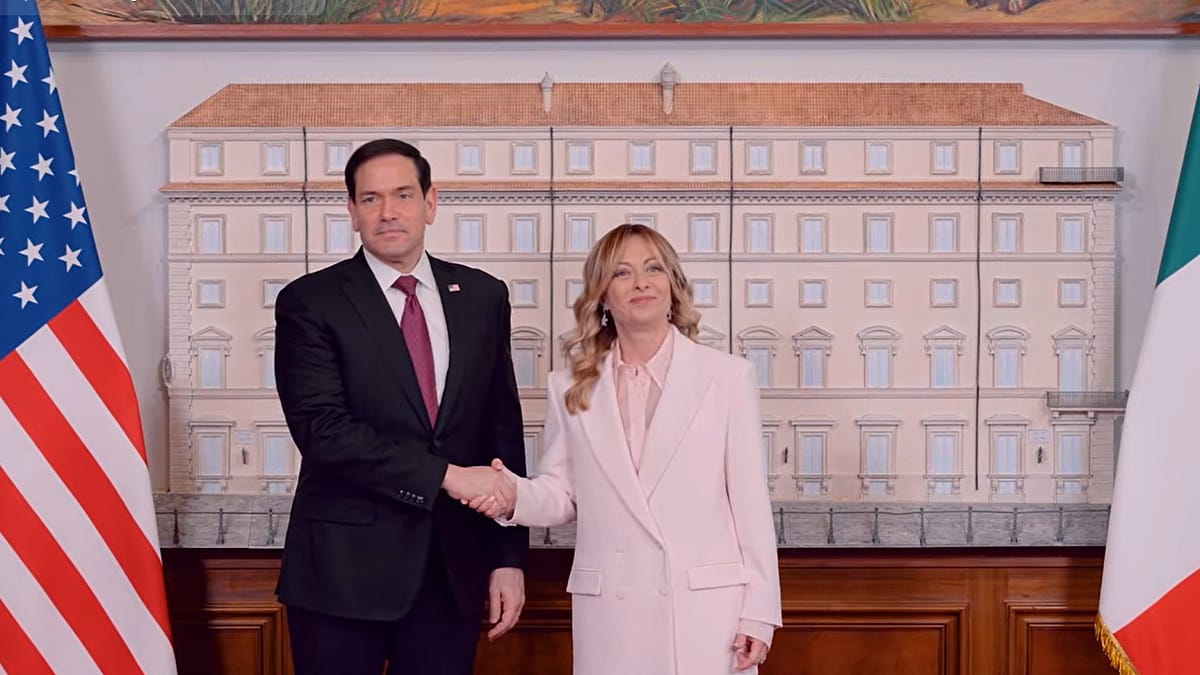
US and Italian officials discussed Iran, Lebanon, Ukraine, and NATO cooperation, with Italy signaling readiness for a defensive multilateral naval role in Hormuz when conditions allow. Rubio said negotiations with Iran may develop in the coming hours and that the US has not yet decided on troop withdrawals from Italy, while Tajani stressed Italy does not want trade wars and reiterated support for diplomacy. The article also highlights renewed tariff concerns on autos and broader transatlantic trade frictions, but no concrete policy changes were announced.
The market implication is less about the headline diplomacy and more about the probability of a temporary de-escalation premium coming out of shipping, energy, and defense volatility. If talks around Iran reduce the odds of immediate maritime disruption, the first beneficiaries are European industrials and cyclicals with fuel-sensitive input costs, while the most exposed names are oil services, tanker insurance, and select defense contractors that have been trading on a Middle East risk bid. The bigger second-order effect is that Europe may be forced into a more visible burden-sharing role on maritime security, which supports incremental spending but also keeps NATO procurement politics sticky rather than resolved.
The tariff subtext is important: the administration is signaling that trade leverage can be applied even to allies, which raises the floor on transatlantic friction. That is mildly negative for autos, machinery, and semis with EU assembly exposure because the supply chain response is slow — companies can’t re-shore in a quarter, so near-term margin pressure is more likely than volume destruction. The best positioned firms are those with flexible North American capacity and low EU-to-US export reliance; the weakest are highly integrated OEMs and tier-1 suppliers that depend on cross-border routing.
Contrarian view: consensus may be overestimating how quickly geopolitics translates into durable asset repricing. These developments are headline-driven and can fade within days if negotiations stall, but the underlying policy regime — more defense burden on Europe, more tariff risk, more maritime insecurity — is a months-long earnings story. The market should treat this as a volatility regime shift, not a clean directional macro call.
AI-powered research, real-time alerts, and portfolio analytics for institutional investors.
Request DemoOverall Sentiment
neutral
Sentiment Score
-0.05
