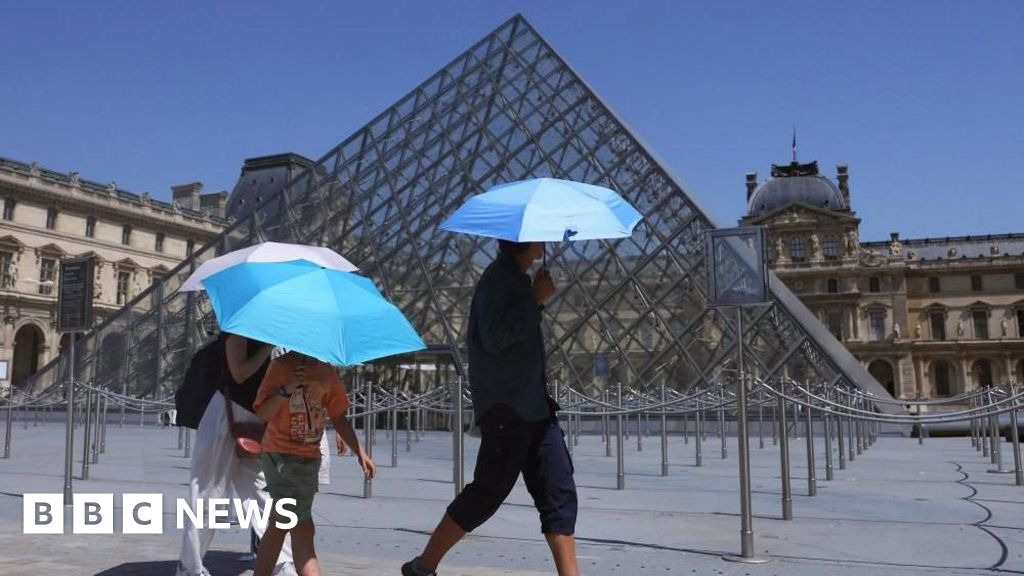
France recorded its hottest day since measurements began in 1947, with the national temperature indicator hitting 30C and highs of 39C to 43C across much of western France. The heatwave has triggered red and orange alerts across France, the UK, the Netherlands, Belgium and parts of Spain and Germany, with power outages, forest fires, drownings and transport/tourism disruptions including early closures of the Louvre and Eiffel Tower. The event underscores growing climate-related economic and infrastructure stress across Europe and could pressure utilities, insurers, and travel-related activity in the near term.
The market implication is less about the headline weather shock and more about the compounding stress on European operating leverage. Hot days simultaneously raise electricity load, reduce thermal plant efficiency, and strain low-voltage distribution assets; that creates a transient but very real margin hit for utilities that must buy spot power into peak demand while outage-related claims and grid repair costs rise. The second-order loser set is broader than obvious travel disruption: food processors, cold-chain logistics, rail operators, and insurers with high France/Iberia exposure face a short-duration but potentially ugly claims and disruption spike.
This also accelerates the capex narrative in grid hardening, backup generation, cooling, and water infrastructure. Names exposed to emergency diesel gensets, HVAC retrofit, transformers, and grid automation should see a better order pipeline even if the stock reaction is delayed; the key is that repeated heat events pull forward spend from 2026-27 into 2H25 budgets. On the consumer side, discretionary spend likely gets deferred into indoor/low-ticket categories while tourism receipts become more volatile, especially for urban attractions and southern Europe leisure operators with limited climate adaptation.
The risk window is days-to-weeks for immediate outage/claims volatility, but the more important catalyst is that this pattern normalizes higher baseline summer demand and makes next winter gas storage less flexible if power burn remains elevated. What the market may be missing is that heat is not a one-off commodity shock; it is a persistent infrastructure resilience tax with asymmetric winners in electrical equipment and insurers that can reprice risk faster than incumbents can adapt. The contrarian view is that after the first wave of headline damage, investors may over-discount broad Europe cyclicals even though the incremental earnings hit is concentrated in a few sub-sectors and partially offset by grid, cooling, and water capex beneficiaries.
AI-powered research, real-time alerts, and portfolio analytics for institutional investors.
Request DemoOverall Sentiment
strongly negative
Sentiment Score
-0.55
