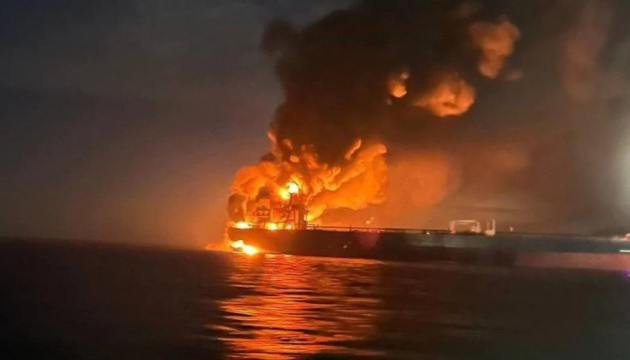
Ukrainian forces struck two vessels in Russia’s shadow fleet at the entrance to Novorossiysk Port, disrupting tankers that had been used to transport oil. President Zelensky framed the operation as part of expanding long-range capabilities across sea, air, and land. The attack could have implications for Russian oil logistics and sanctions enforcement, making it more than a routine battlefield update.
This is less about the immediate barrel count than about maritime risk premia becoming semi-permanent. Even isolated disruptions at a major export gateway raise the expected cost of moving sanctioned crude: shipowners demand higher war-risk insurance, more opaque routing, and larger discounts for origin barrels, which mechanically widens the spread between benchmark prices and the realized price paid to the producer. The first-order market reaction can look contained, but the second-order effect is a slow tightening of effective export capacity and a higher clearing price for non-Russian seaborne oil.
The bigger winner is not just crude itself but the entire compliance stack around sanctions enforcement. Firms that facilitate alternative sourcing, refined product substitution, or freight arbitrage benefit as counterparties seek redundancy away from exposed Black Sea infrastructure. On the other side, Russian crude-linked flows become more vulnerable to schedule slippage and demurrage, which can show up in weaker export volumes before it shows up in headline production data.
The key risk is escalation management: if these incidents remain tactical, the market may fade them within days; if they trigger stronger port security, convoying, or retaliatory strikes on energy logistics, the premium can persist for months. A meaningful reversal would require either a negotiated de-escalation around export corridors or a compensating rise in non-risky supply from OPEC+/US shale, neither of which is fast. The contrarian angle is that traders may overfocus on disruption and underprice Russia’s ability to reroute cargoes over time, so the trade is likely better expressed as a relative-value and optionality view than a naked directional oil long.
AI-powered research, real-time alerts, and portfolio analytics for institutional investors.
Overall Sentiment
moderately negative
Sentiment Score
-0.35
