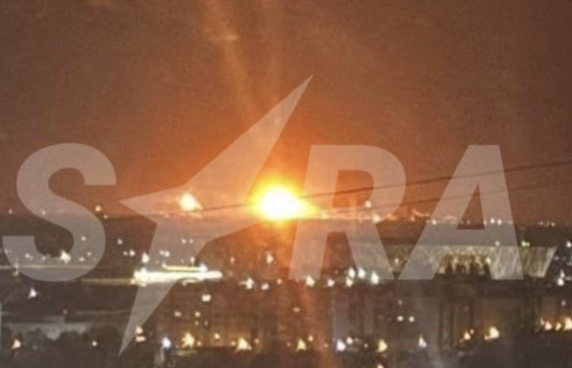
A Ukrainian drone strike reportedly set Lukoil's Volgograd oil refinery ablaze overnight on May 29, hitting one of Russia's largest refining sites and the largest in Volgograd Oblast. The article also notes the city is near a major defense plant and references prior strikes on Russian energy and military infrastructure. The event adds to wartime disruption risks for Russian fuel processing and defense-related assets.
This is less about the single refinery outage and more about the war-infrastructure feedback loop: Ukraine is widening the set of assets that can be pressured inside Russia, which raises the expected cost of domestic energy logistics and forces higher defensive spend. The market impact is asymmetric because Russia’s refining system is already operationally brittle; repeated disruptions create temporary product tightness even when crude supply is intact, which can lift regional diesel cracks faster than headline Brent. That matters most for European middle distillate balances and any carriers, refiners, or chemical names exposed to feedstock and freight volatility.
The second-order winner is not necessarily crude producers, but volatility itself. Every successful strike that temporarily removes refining capacity can steepen the backwardation in refined products, improving near-term margins for non-Russian refiners with flexible crude slates and export access. The loser set is broader than Russian assets: tanker routing, marine insurance, and defense-oriented logistics all face a higher probability of disruption, while any perception that critical infrastructure is less secure can force Russia to over-allocate air defense to rear-area industrial sites.
The key risk is that markets may over-interpret the strategic signal and bid up crude on supply fears even though the direct damage is mostly to conversion capacity, not upstream output. If the U.S. and allies continue to tolerate Ukrainian deep strikes, the tail risk shifts toward sustained product-market dislocations over the next 1-3 months rather than a lasting Brent shock. A reversal would come from successful Russian air-defense adaptation or a diplomatic constraint on strike depth, which would deflate the volatility premium quickly.
Consensus is likely underpricing the duration of refined-product tightness relative to crude. The more durable trade is a relative one: long beneficiaries of non-Russian refining and shipping optionality, short pure-crude beta if the market overshoots on headlines. If attacks continue every 1-2 weeks, the compounding effect is less about lost barrels and more about maintenance deferrals, higher capex, and lower utilization across the Russian system.
AI-powered research, real-time alerts, and portfolio analytics for institutional investors.
Request DemoOverall Sentiment
moderately negative
Sentiment Score
-0.45
