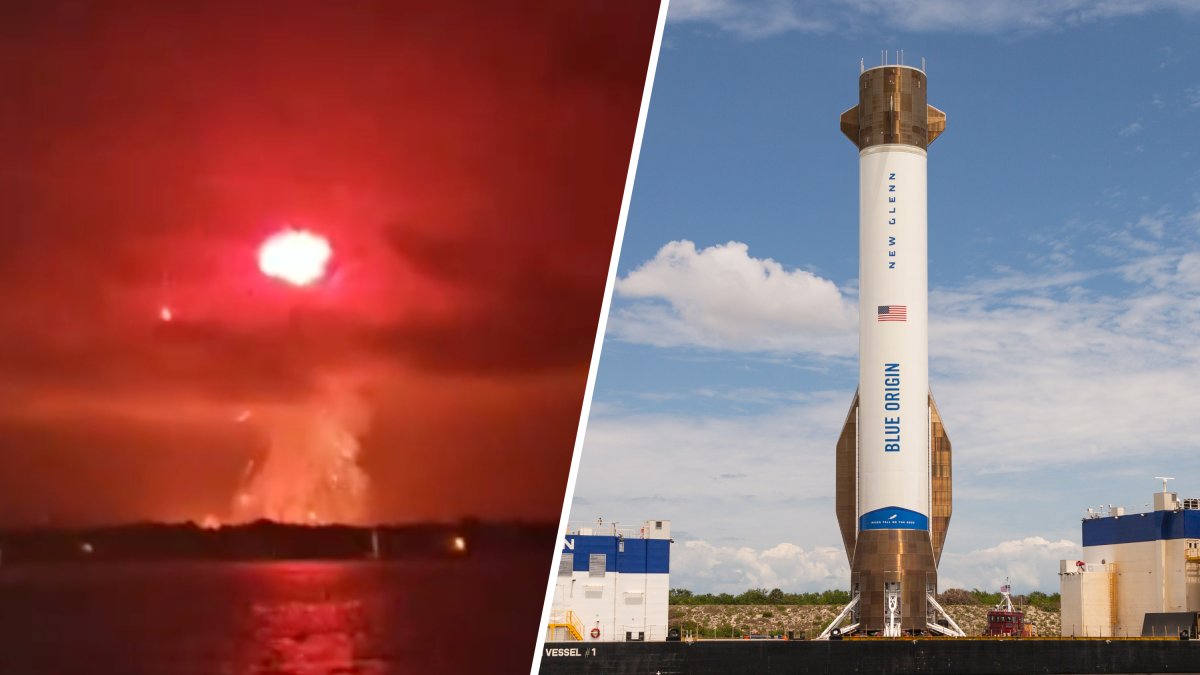
Blue Origin’s New Glenn rocket exploded during an engine-firing test ahead of a planned satellite launch next week, with no injuries reported. The failure comes after the rocket was grounded in April for an orbit insertion problem caused by engine failure, raising additional execution risk for Blue Origin’s heavy-lift program and moon-mission ambitions. While the incident is material for the company and its NASA-related launch pipeline, it is unlikely to have broad market impact.
This is not just a one-off hardware setback; it is a schedule credibility event for Blue Origin’s only meaningful heavy-lift platform. The second-order damage is to customer confidence, not physical assets: launch buyers with mission-critical payloads will reprice schedule risk immediately, while NASA-style programs will demand more redundancy and tighter milestones before awarding downstream work.
The competitive beneficiaries are the operators with demonstrated cadence and lower perceived execution risk. SpaceX gains the most on both commercial and government workloads because buyers will prefer the vendor with a visible recovery playbook and repeated launch success, while ULA can opportunistically absorb any near-term payload spillover. The likely medium-term loser is Blue Origin’s margin structure: remediation costs, insurance friction, and delayed manifest monetization create a longer cash burn cycle even if the hardware fix is straightforward.
The key catalyst window is the next 2-8 weeks, when management either isolates the fault quickly or enters a more expensive redesign/test loop. If the root cause points to a systemic engine or integration issue, the timeline damage compounds into 2026 and could force Blue Origin to defer lunar-adjacent commitments, which would matter more than the launch pad loss itself. If the issue is contained and the company can re-fly within a quarter, the market will likely fade the event; the real tell is whether external customers keep their manifests or start diversifying away.
Consensus is probably underestimating how much this amplifies the winner-take-more dynamic in launch services. Even without direct public equity exposure to Blue Origin, the event strengthens the investment case for the most reliable launch stack and for any supplier ecosystem tied to high-cadence providers. The contrarian view is that repeated failure can actually speed Blue Origin’s internal learning curve, but that upside is long-dated and not investable against the near-term competitive reallocation.
AI-powered research, real-time alerts, and portfolio analytics for institutional investors.
Request DemoOverall Sentiment
strongly negative
Sentiment Score
-0.55
