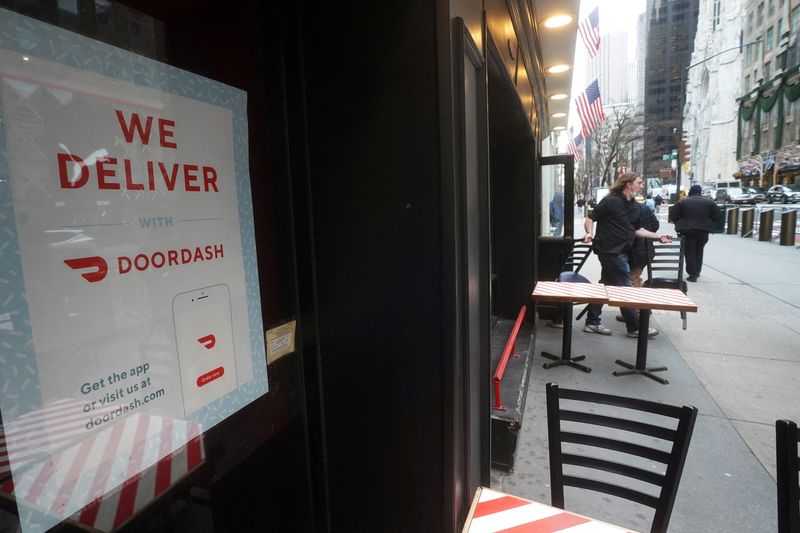
Morgan Stanley highlighted strong demand across rideshare, food delivery and grocery/retail delivery, with DoorDash and Uber growing online grocery/retail GOV roughly 32% and 40% year over year versus Instacart’s 13%. The firm kept overweight ratings on DoorDash and Uber, maintained Instacart at equal-weight, and raised Snap’s price target 8% to $7 after a Q1 EBITDA beat, though it cut revenue estimates on weaker North America users and removed a Perplexity partnership assumption.
The important takeaway is not that delivery and mobility are still growing; it’s that the economics of the category are quietly shifting toward the scaled platforms with subscription density and better merchant tooling. If subscribers spend roughly 3x more than non-subscribers, then the real moat is not gross bookings alone but retention-adjusted frequency and lower CAC payback, which should widen EBITDA margins before revenue growth visibly decelerates. That tends to favor DASH and UBER over CART over the next 12-24 months because they have more optionality to monetize the same user base through membership, ads, and adjacent commerce.
The second-order competitive effect is that online grocery/retail is becoming a share-grab market where growth rate matters more than absolute size. CART’s larger base is still an asset, but the faster-growing challengers can force merchant incentives and delivery economics to compress, especially if GenAI onboarding reduces the friction for long-tail merchants to multi-home across platforms. The hidden beneficiary here may be the merchant software and last-mile ecosystem, while the hidden loser is any standalone delivery network that depends on a single-category mix or on taking take-rate without a membership flywheel.
AMZN is the real strategic risk, but not because it needs to win share immediately; it only needs to tighten the consumer expectation around speed and bundling. If Amazon Now scales, the pressure will be on take rates and delivery density, which could cap multiples for the entire group even if gross bookings remain healthy. For SNAP, the raised target looks more like an EBITDA quality adjustment than a true growth re-rating; the user trend remains the weak link, so any multiple expansion likely requires stabilization in North America engagement rather than just cost discipline.
The contrarian view is that the market may be overrewarding near-term margin leverage in DASH/UBER while underpricing how much of the growth is being pulled forward by promotions and subscription subsidies. If membership economics are truly improving, that should show up in sustained lower churn over several quarters, not one good print. Until then, the right framing is quality-of-growth over headline growth, with the clearest asymmetry still in UBER because it has the broadest profit pool and the least dependence on a single vertical.
AI-powered research, real-time alerts, and portfolio analytics for institutional investors.
Request DemoOverall Sentiment
mildly positive
Sentiment Score
0.35
Ticker Sentiment
