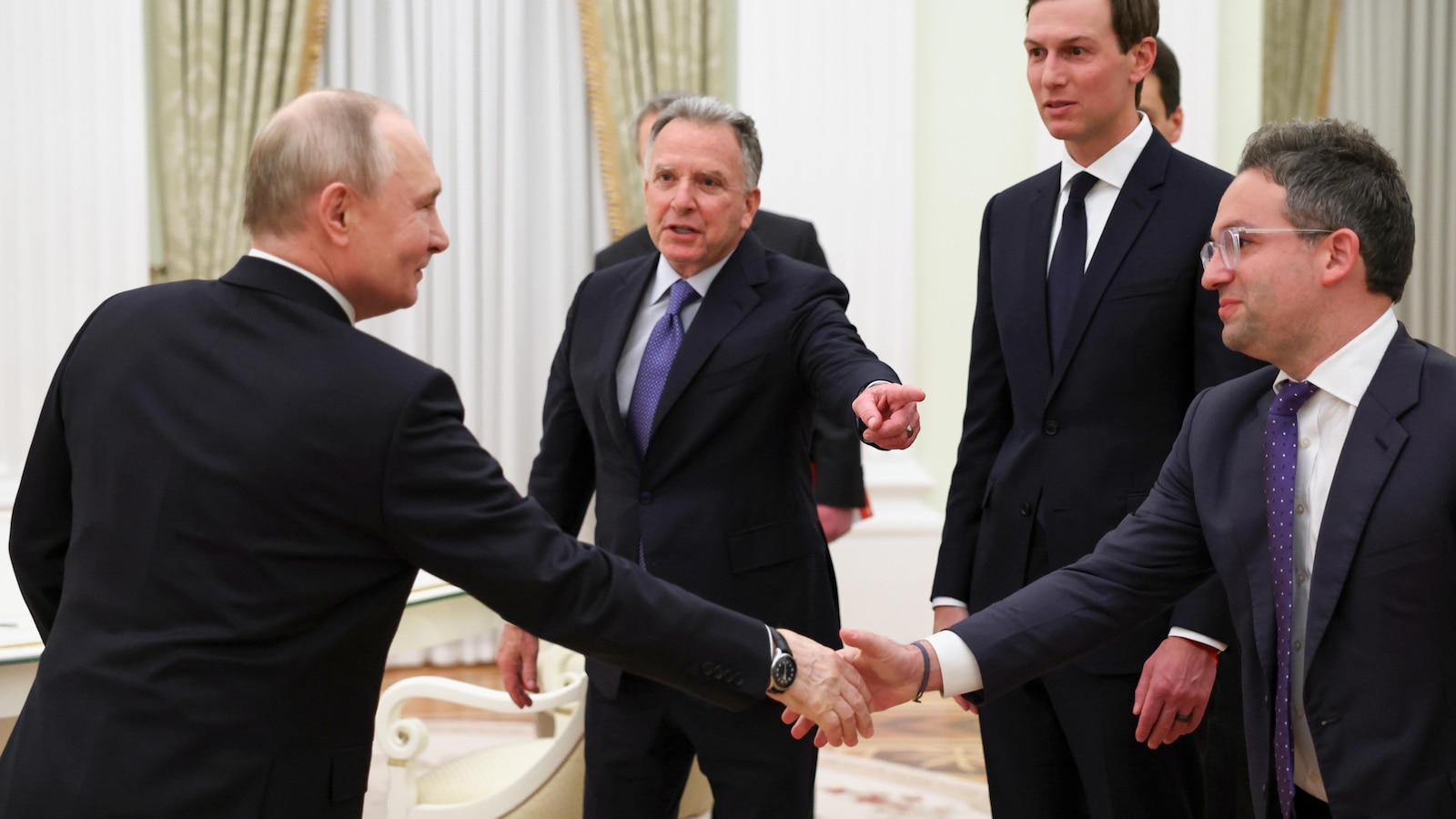
Russian President Vladimir Putin held nearly four-hour overnight talks with U.S. envoys including Steve Witkoff and Jared Kushner, with the Kremlin stressing that any long-term Ukraine settlement requires resolving territorial issues tied to Russia’s annexations. Trilateral security and economic talks involving Russian, Ukrainian and U.S. officials are slated in Abu Dhabi, with Russia confirming a delegation led by military intelligence chief Adm. Igor Kostyukov and Putin offering a proposed $1 billion contribution from frozen U.S. assets to a U.S.-backed “Board of Peace.” The meeting comes amid strained Ukrainian appeals for greater Western support — Kyiv faces financing and manpower shortfalls (officially cited troop desertions ~200,000 and widespread draft-dodging) — and ongoing sanctions/energy tensions (including reports of a Russian “shadow fleet” evading sanctions), leaving regional stability and energy/sanctions policy as key market risk drivers.
Market structure: Immediate winners are defense primes (LMT, RTX, GD) and energy volatility trades; losers are Ukraine sovereign credit, select European banks with Russia exposure, and cyclical travel names if talks fail. Pricing power for defense contractors strengthens on a multi-year European procurement cycle (potential 5–10% annual budget uplifts) while oil price sensitivity to headlines means +/-8–12% moves are credible in 1–2 months. Cross-asset: a failed or stalled diplomacy shock would push core yields down (flight-to-safety), USD and gold up, and widen IG/EM spreads by 50–150bp depending on escalation.
Risk assessment: Tail scenarios include a rapid breakdown producing a summer offensive (20% probability over 3–6 months) that spikes Brent/WTI +$10 and causes a 6–10% equity drawdown; conversely a partial land-for-peace deal (10–15% probability) could compress defense multiples by 10–20% and drop oil 8–12% within 30–60 days. Hidden dependencies: use of frozen Russian assets as precedent raises sovereign seizure risk and could materially reprice EM sovereign CDS and FX over 6–24 months. Catalysts to watch (timing): Abu Dhabi trilateral talks (days), EU defense funding decisions (weeks–months), U.S. domestic politics around funding (90 days).
Trade implications: Tactical: buy defense exposure as a baseline hedge vs geopolitical risk and size oil volatility positions around the Abu Dhabi meeting. Use relative-value: long front-line defense names vs short cyclical airlines to capture reallocation of discretionary budgets (6–18 months). Options: favor short-dated strangles on WTI/USO ahead of meetings and protective GLD/tail hedges sized 1–3% for equity downside scenarios.
Contrarian angles: Consensus underestimates the probability of a drawn-out frozen conflict that structurally raises European defense procurement and defense contractor cashflows over 2–4 years; markets may be underpricing that TWAP of demand, making multi-year defense longs asymmetric. Reaction to any near-term “progress” headline is likely overdone (oil drop and defense multiple compression) and offers an opportunistic re-entry; unintended consequence of weaponizing frozen assets is higher legal/political risk to cross-border holdings—favor liquid, investable names with minimal direct Russia exposure.
AI-powered research, real-time alerts, and portfolio analytics for institutional investors.
Request DemoOverall Sentiment
mildly negative
Sentiment Score
-0.25
