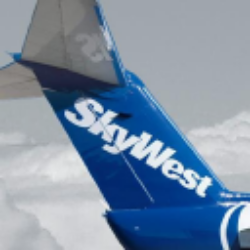
SkyWest is highlighted as a Buy, with 15% revenue growth, 33% charter/prorate revenue growth, and net income rising to $428.3M alongside robust free cash flow. The article emphasizes long-term contract visibility, disciplined capex, and decade-low leverage, suggesting fundamentals are outpacing a flat share price. The setup points to sustained shareholder returns and positive operational momentum.
SKYW’s setup is less about a single earnings beat and more about a multi-quarter compounding story: utilization discipline plus contractual visibility should keep cash conversion high even if revenue growth normalizes. The market is still valuing the stock like a cyclical regional carrier, but the balance sheet improvement changes the downside math — lower leverage means less equity dilution risk and more flexibility to keep retiring debt or funding fleet efficiency without stretching the P&L.
The second-order winner is likely not just SKYW but the capacity-constrained network carriers that rely on regional lift. As SkyWest tightens execution and preserves capex discipline, it becomes a more durable partner to majors that need reliable feed without committing to heavier balance-sheet risk. That can modestly pressure weaker regional operators that compete on pricing rather than reliability, especially if contract renewals increasingly favor operators with stronger economics and less maintenance/fleet disruption risk.
The key risk is not near-term demand collapse; it is normalization of the charter/prorate mix and any step-down in contract renewals over the next 6-18 months. If growth slows while the market simultaneously re-rates the stock higher, the trade could become crowded and vulnerable to multiple compression on any guidance nuance. In other words, the biggest threat is a perception gap closing before the fundamental story actually breaks.
Consensus appears to be underestimating how much free cash flow optionality a decade-low leverage profile creates in a capex-heavy business. That optionality matters because it gives management room to absorb operational noise, capture opportunistic fleet investments, and potentially accelerate capital returns without needing heroic revenue assumptions. The move looks underdone if the company sustains even mid-teens earnings power for another few quarters; it looks overdone only if investors extrapolate current growth into a full-cycle rerating.
AI-powered research, real-time alerts, and portfolio analytics for institutional investors.
Overall Sentiment
strongly positive
Sentiment Score
0.72
Ticker Sentiment
