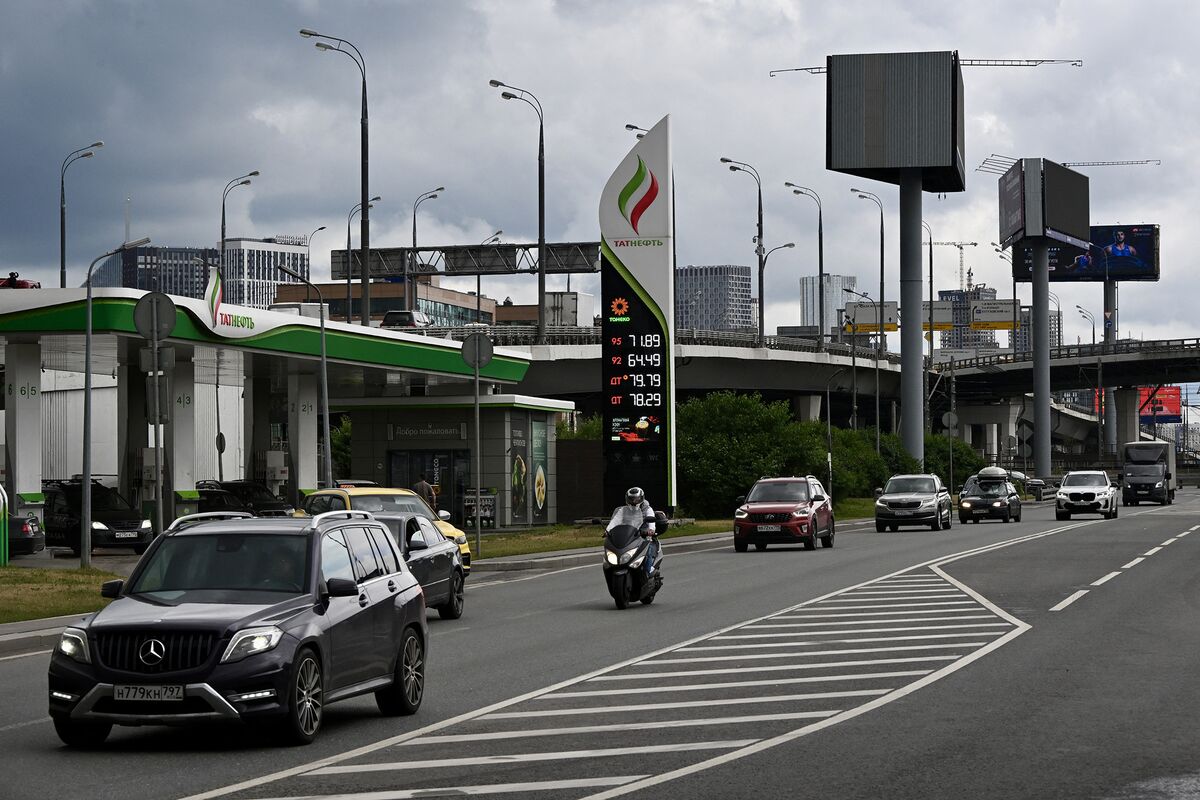
Russian average retail gasoline prices rose 1% week over week to 69.11 rubles per liter in June 9-15, the biggest weekly increase since early January. The jump comes as Ukrainian strikes on refineries have disrupted supply and some stations have limited sales during the summer travel season. The story points to higher energy costs and renewed geopolitical supply risk for Russia's fuel market.
This is less a simple consumer-price story than a distribution and logistics stress test for the Russian domestic economy. When retail fuel tightens in peak travel season, the spillover is immediate: trucking, agriculture, and regional commerce face margin compression first, then either pass-through or volume destruction. The sharper second-order effect is political, not financial — localized shortages tend to force rationing behavior that can persist even after physical supply normalizes because stations and distributors rebuild precautionary inventories.
The key market read-through is that the shock is asymmetric: upstream producers with export optionality are relatively insulated, while domestic refiners, transport operators, and state-linked retailers absorb the squeeze. If refinery outages persist for several weeks, expect a lagged inflation impulse that is bigger than the headline implies because fuel is a multiplier input into food and freight. That creates a policy trap for authorities: export restrictions or price controls can stabilize retail optics in the near term but usually worsen refinery economics and delay maintenance, increasing outage probability over the next 1-3 months.
The contrarian angle is that the immediate price spike may be underestimating the probability of a broader energy-system response. In a stressed refining system, the first real signal of escalation is not the pump price itself but tighter diesel availability, which would ripple into logistics and heavy industry faster than gasoline. Conversely, if attack intensity drops or repairs outpace damage, the market could reverse quickly because Russia still has tools to reroute product domestically and suppress retail prices administratively; the critical window is the next 2-6 weeks, not quarters.
AI-powered research, real-time alerts, and portfolio analytics for institutional investors.
Request DemoOverall Sentiment
moderately negative
Sentiment Score
-0.45
