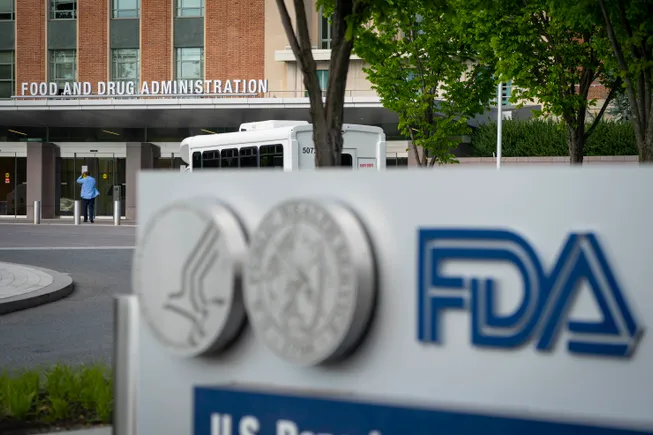
Replimune said the FDA is aligned on a path forward for RP1 and plans to file another marketing application in the coming days, with the agency viewing the case as urgent and prioritizing review. The update follows two prior FDA rejections for the melanoma therapy, but the latest signal sharply improved investor sentiment, sending Replimune shares up nearly 80% intraday. Biohaven and UniQure also rose on hopes of a more favorable FDA stance toward biotech applications.
This looks less like a single-drug readout and more like a referendum on FDA process risk. The immediate beneficiary is REPL, but the more important implication is that the agency may be back to tolerating smaller, mechanistically plausible datasets when the commercial need is obvious and the label can be tightly constrained. That shifts the probability distribution for late-stage biotech: names with hard-to-argue biology and a clean safety profile are now more likely to be judged on regulatory narrative than pure statistical elegance.
The second-order winner is any company with an active FDA filing over the next 1-2 quarters where prior feedback was ambiguous rather than negative. QURE and BHVN should trade with a lower regulatory discount if investors infer a friendlier internal hierarchy at the agency, while early-stage oncology/platform names may benefit from a reopening of capital markets even without direct read-through. Conversely, companies with binary filings that depend on expansive label claims will remain vulnerable because a more lenient FDA on one case does not eliminate ad hoc scrutiny on broader commercial claims.
The move in REPL can easily overshoot the fundamental probability of approval. A large gap-up on headline alignment often implies the market is pricing a near-clean approval path, but the real monetization risk is still launch execution: payer pushback, limited physician uptake in a crowded post-IO PD-1 space, and partner dependency on BMY for commercial traction. If the filing is accepted on an expedited clock, the stock likely trades on incremental milestones over the next 4-8 weeks; if the agency inserts new objections, the relief rally unwinds quickly.
Consensus is probably underestimating how much of this is about regime change in the FDA rather than about RP1 specifically. The market may be too focused on a single approval outcome and not enough on the broader implication that perceived regulatory volatility can move valuations for months, not days. That argues for positioning in a basket of names with asymmetric upside from restored FDA predictability, while fading the purest one-day reflexivity in REPL after the initial squeeze.
AI-powered research, real-time alerts, and portfolio analytics for institutional investors.
Request DemoOverall Sentiment
moderately positive
Sentiment Score
0.55
Ticker Sentiment
