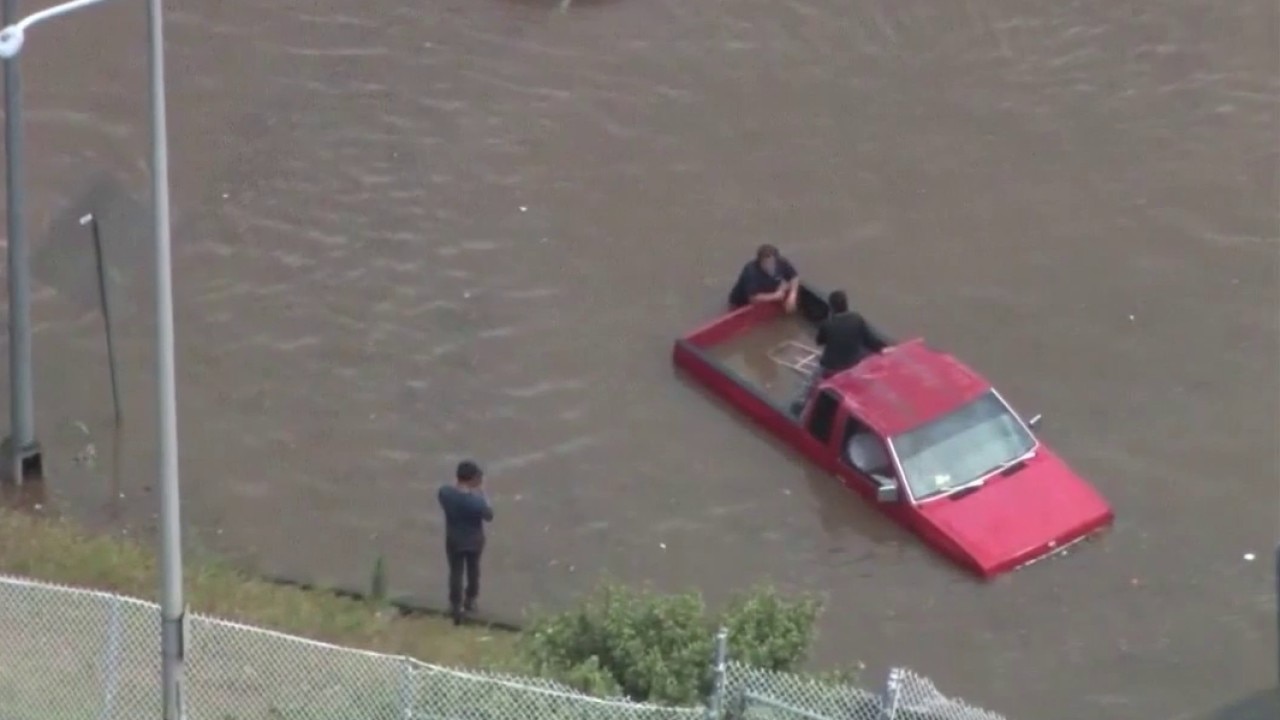
Waymo temporarily suspended its Atlanta autonomous ride-hailing service after an unoccupied driverless vehicle became stranded in standing water during a sudden downpour. The vehicle has been recovered, but the company has not provided a firm restart date and said it will resume only when conditions are safe. The incident highlights weather-related operational risk for autonomous vehicles, though the immediate market impact is likely limited.
This is not a revenue problem; it is a credibility problem. For autonomous ride-hailing, a single highly visible failure in adverse weather can shift buyer behavior faster than any number of successful miles, because enterprise and municipal regulators anchor on worst-case edge conditions, not average performance. The immediate economic impact is small, but the second-order effect is larger: every pause reinforces the market’s assumption that AV utilization will be structurally discounted in cities with flash-flood risk, which matters for route density, rider retention, and the unit economics of dispatch.
The near-term winner is the human-driven ride-hailing ecosystem. When AV service is unavailable in a metro during peak weather disruption, incremental demand likely migrates to incumbent platforms with better supply elasticity, especially if they can surge aggressively and absorb bad-weather trips. That is a subtle but important competitive advantage: in bad weather, the operator with the most robust driver network captures the highest-value rides, while the AV operator absorbs the reputational hit without the same revenue upside.
The larger question is whether this becomes a regulation and procurement issue rather than a fleet issue. If cities, insurers, or commercial partners infer that geofenced AVs still lack reliable hydroplaning/standing-water discrimination, deployment timelines may slip by quarters in weather-prone markets, not because the core autonomy stack is broken, but because underwriting and permit processes reprice tail risk. Conversely, if Waymo can show a rapid software remediation and publish weather-specific safety metrics, the event may be remembered as a contained operational hiccup rather than a structural setback.
Consensus may be overreacting to the headline and underweighting the asymmetry: for a capital-intensive AV program, the downside is mostly narrative and regulatory friction, while the upside from a clean fix is preserved. The tradeable angle is less about Waymo directly and more about relative exposure to urban mobility demand in adverse conditions, with weather-sensitive cities as the battleground. The key catalyst is not the incident itself, but the speed and transparency of the post-incident engineering response over the next 2-6 weeks.
AI-powered research, real-time alerts, and portfolio analytics for institutional investors.
Request DemoOverall Sentiment
mildly negative
Sentiment Score
-0.28
