
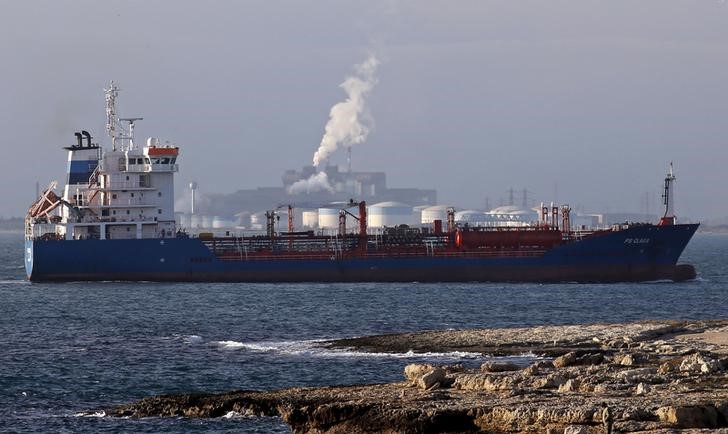
The Trump administration issued a new 30-day sanctions waiver through May 16, allowing purchases of Russian oil and petroleum products already at sea, while explicitly excluding Iran, Cuba, and North Korea. The move is intended to ease energy prices amid ongoing Middle East disruptions and the partial reopening of the Strait of Hormuz, but it underscores elevated geopolitical risk and support for crude market volatility. The policy reversal is likely to influence global energy markets broadly and may pressure Western sanctions efforts against Russia.
The immediate market read is that policy, not physical supply, is doing the heavy lifting: this is a liquidity event for crude pricing, but not a clean normalization. The beneficiaries are downstream refiners, airlines, chemicals, and any large fuel consumer with near-term hedge exposure; the losers are high-beta energy equities that had been trading as a direct proxy for geopolitical scarcity. For CVX specifically, the move trims the tailwind from elevated crude while preserving much of the integrated-asset protection, so the stock’s asymmetry is now more about dividend resilience than upside from spot price spikes.
The second-order effect is that sanction leakage becomes a recurring tool, which compresses the risk premium embedded in the front end of the curve. That tends to flatten backwardation and soften nearby crack/flat price dislocations, hurting producers with short-duration cash flow and benefiting firms that buy physical barrels or have refining capacity to arbitrage cheaper input costs. If shipping lanes remain open for even a few weeks, the market may reprice from “war premium” to “policy ceiling,” which is usually a faster and larger multiple driver than the underlying Brent move.
The real risk is reversal: any renewed escalation in Hormuz, a failed ceasefire, or a political backlash that restores sanctions enforcement could re-inflate the geopolitical bid in days, not months. But the more interesting medium-term setup is that the administration has effectively signaled willingness to use sanctions flexibility as an anti-inflation valve, which caps upside in energy prices unless physical outages worsen materially. That makes energy longs less attractive on spot alone and more dependent on company-specific execution, buybacks, and balance-sheet quality.
Consensus is likely overestimating how durable the relief is for consumers and underestimating how quickly the market will fade the move if barrels keep flowing. The contrarian view is that this is not a bearish energy signal so much as a volatility regime shift: crude may stay rangebound, but options implied vol and calendar spreads should remain rich as traders hedge policy whiplash. In that setup, selling directional energy beta and owning volatility/relative value looks better than chasing outright longs.
AI-powered research, real-time alerts, and portfolio analytics for institutional investors.
Request TrialOverall Sentiment
mildly negative
Sentiment Score
-0.15
Ticker Sentiment
