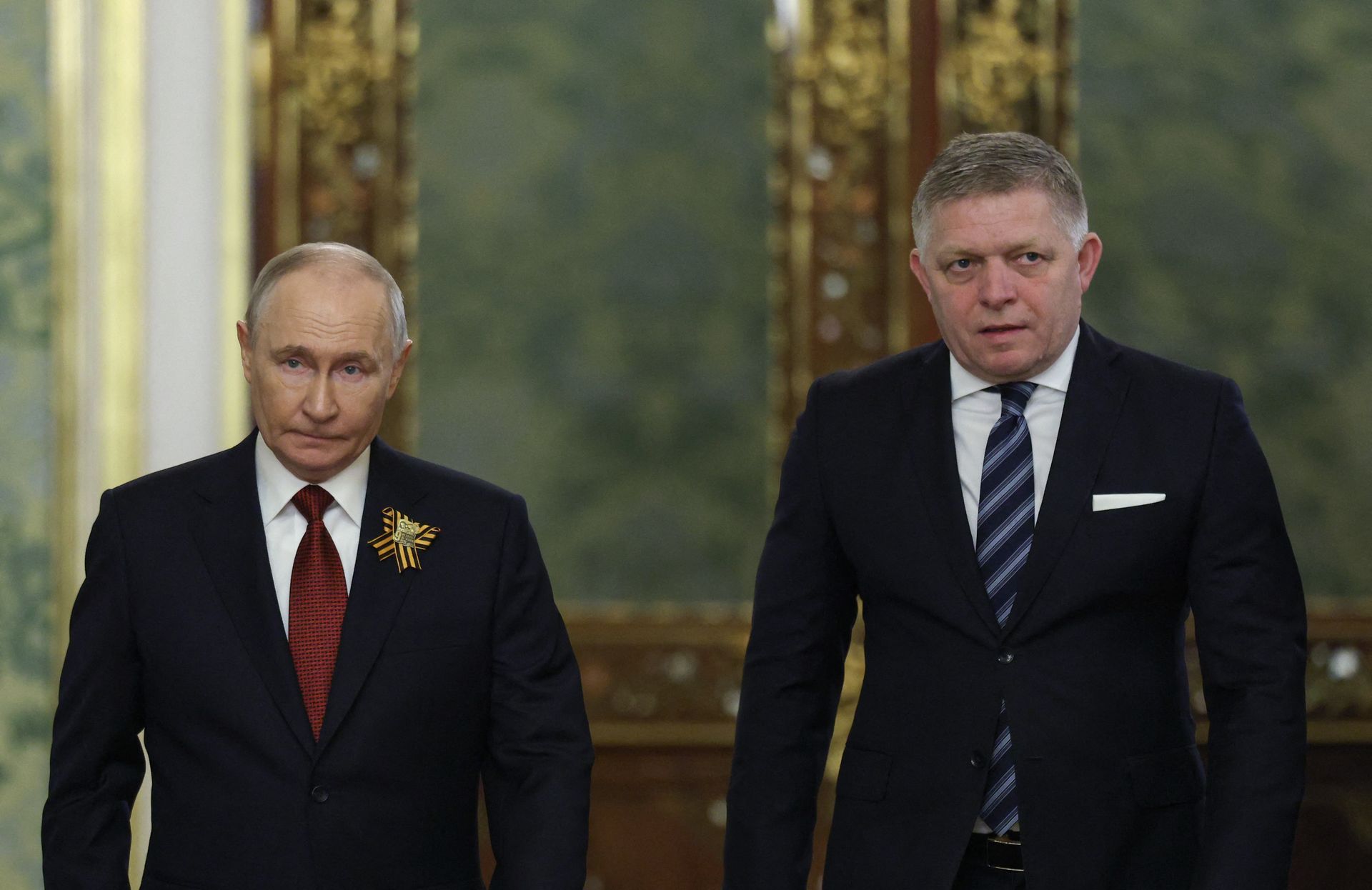
Slovak Prime Minister Robert Fico said Ukrainian President Volodymyr Zelensky should call Vladimir Putin directly if he wants face-to-face talks, underscoring the limited progress in diplomacy around the Russia-Ukraine war. Fico also backed extending the U.S.-backed three-day ceasefire, which has already been violated by renewed Russian attacks on Ukraine. The remarks highlight persistent geopolitical risk, though the immediate market impact is likely limited.
The market read is less about peace progress and more about the odds of policy drift: Fico is signaling that some EU actors are willing to normalize direct engagement with Moscow even while the battlefield remains active. That matters because it reduces the probability of a unified European escalation package, especially on sanctions enforcement, air defense replenishment, and reconstruction funding discipline, which are the real incremental support vectors for Ukrainian risk assets.
The second-order effect is on time horizon, not headline alpha. A call for dialogue can shave some tail risk premia in the near term, but unless it translates into a durable ceasefire architecture, it does not change the supply constraints facing defense contractors or the financing gap for Ukrainian infrastructure rebuild. In practice, the article is mildly bearish for fast-trading “ceasefire beta” and mildly bullish for European defense names on any dip, because markets will continue pricing a longer conflict duration even if political rhetoric softens.
The contrarian point is that this may be more useful to Kyiv than to Moscow: any visible pressure on Putin to engage directly raises the cost of rejecting negotiations while preserving maximalist military aims. That dynamic can actually harden western support if Russia keeps violating pauses, creating a recurring pattern where diplomatic optics improve but operational risk does not. Over the next 1-3 months, the key catalyst is whether ceasefire breaches persist; if they do, the market should fade headlines that imply de-escalation and instead buy the assets tied to sustained rearmament and reconstruction spend.
AI-powered research, real-time alerts, and portfolio analytics for institutional investors.
Overall Sentiment
mildly negative
Sentiment Score
-0.15
Ticker Sentiment
