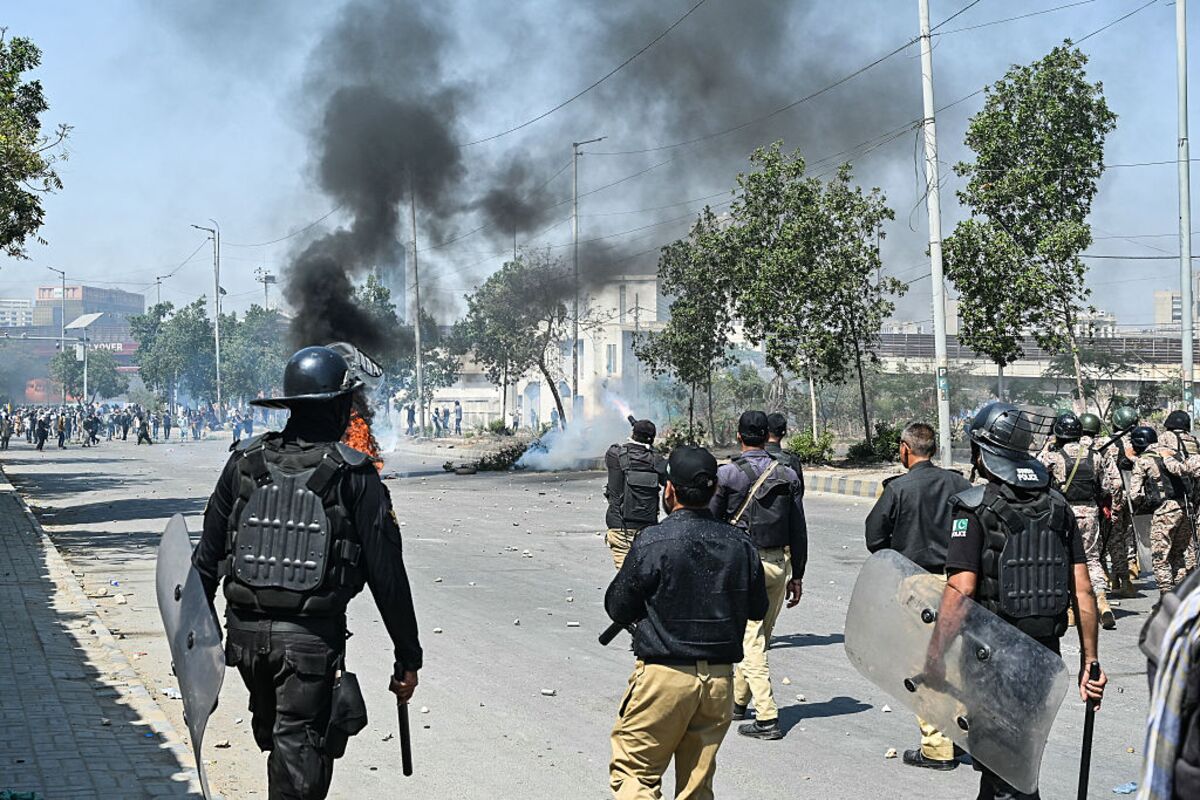
The US State Department will phase down its Consulate General in Peshawar, Pakistan, citing security concerns for diplomatic personnel. The move underscores elevated geopolitical and operational risk in the region, but it is a localized diplomatic action with limited direct market impact. No financial metrics or broader policy changes were announced.
This is less a direct market event than a signal that the security premium on Pakistan-linked assets is widening. When a major diplomatic footprint starts shrinking, it usually precedes a tighter operating environment for foreign NGOs, contractors, logistics providers, and frontier-market capital allocators, with the first-order damage showing up in risk premiums before any macro data changes. The most exposed beneficiaries are not local competitors but firms with lower Pakistan beta: regional service providers, airlift/security vendors operating out of the Gulf, and multinationals that can re-route regional oversight to Dubai or Abu Dhabi with minimal disruption.
The second-order risk is that this reinforces a self-reinforcing capital flight loop: higher perceived security risk raises insurance, staffing, and transport costs, which reduces investment appetite, which then weakens the local currency and fiscal position. That matters most over the next 3-12 months for sovereign/quasi-sovereign credit, domestic banks with corporate lending exposure, and infrastructure names dependent on foreign funding or donor-backed projects. The move also marginally improves the competitive position of neighboring hubs that can absorb administrative functions, especially the UAE, which tends to benefit whenever frontier markets become harder to operate in.
Consensus will likely treat this as a contained consular adjustment, but the market underestimates how quickly such actions can change behavior among contractors and diplomats who rely on layered risk models. The contrarian view is that the headline may be overread if it is driven by resource optimization rather than a fresh threat escalation; if security incidents do not follow, the risk premium could fade within weeks. The key catalyst to watch is whether other foreign missions or development agencies mirror the move, which would convert an isolated precaution into a broader withdrawal narrative.
AI-powered research, real-time alerts, and portfolio analytics for institutional investors.
Request DemoOverall Sentiment
mildly negative
Sentiment Score
-0.20
