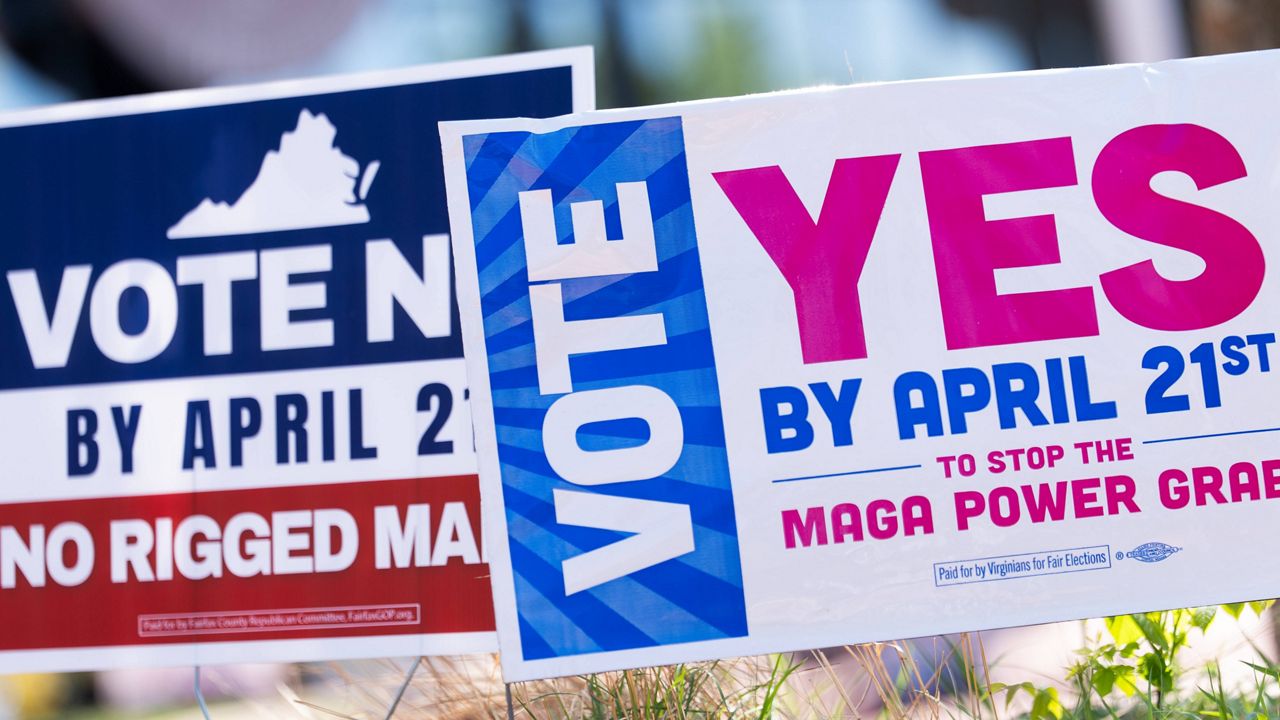
The U.S. Supreme Court rejected Virginia's bid to restore a congressional map that could have given Democrats a chance to gain four House seats, leaving the state's 2026 elections under the current 2021 districts. The decision preserves the status quo after Virginia's special-election-backed redistricting amendment was struck down by the state Supreme Court, amid a broader partisan redistricting battle across multiple states. The ruling is politically significant but has limited direct market impact.
The immediate market read is not about a single district map; it is about the probability that Washington remains structurally gridlocked after the next House cycle. If redistricting battles keep net seats close to even, the base case shifts toward a lower-conviction Congress, which tends to compress the pricing of any policy-dependent catalyst: tax changes, healthcare reform, telecom spectrum, crypto legislation, and parts of industrial subsidy execution. That matters because the market has been implicitly assigning too much odds-weight to a clean legislative sweep in either direction; this ruling keeps the median outcome messy.
Second-order, the bigger trade is not “Democrats vs Republicans” but “status quo vs volatility.” A razor-thin House increases the value of Senate bottlenecks and raises the chance of continuing resolutions, stopgaps, and last-minute omnibus deals. That is modestly supportive for large-cap defensives and firms with less direct Washington exposure, while it is a headwind for small-cap domestically oriented cyclicals that need policy visibility and lower risk premia to re-rate. It also means more headline-driven factor rotations around court rulings, election administration, and district litigation, which should benefit volatility strategies more than outright directional equity bets.
The contrarian point: consensus may be overestimating the practical seat impact of court decisions and underestimating voter fatigue with overt partisan map-drawing. Litigation can delay implementation and preserve uncertainty, but it does not guarantee the electoral conversion rates politicians assume, especially in mid-decade maps where incumbent entrenchment often offsets theoretical gains. If the next few rulings continue to produce procedural delays rather than durable map changes, the market may be overpricing a sustained red-wave or blue-wave legislative scenario that never fully materializes.
Near term, the key catalyst window is the next 1-3 months as states race primary deadlines and further court orders either lock in or invalidate maps. Any reversal would likely require a new state-level procedural victory rather than a federal reset, so the base case is continued churn rather than resolution. That argues for positioning around volatility and policy uncertainty, not a strong directional bet on party control.
AI-powered research, real-time alerts, and portfolio analytics for institutional investors.
Request DemoOverall Sentiment
neutral
Sentiment Score
-0.05
