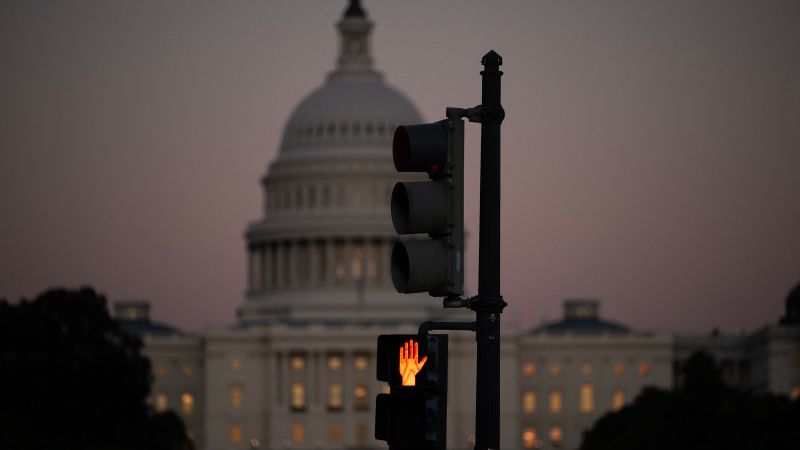
The US government shutdown is poised to become the longest in history, creating significant political and economic uncertainty as critical safety net programs, such as food stamps, face funding shortfalls, prompting partial, court-ordered relief. The impasse is marked by President Trump's threat to eliminate the Senate filibuster to pass funding and a lack of direct negotiations, with Democrats holding out for concessions on Affordable Care Act subsidies. While both parties are under increasing pressure to resolve the situation, particularly after upcoming elections, the administration's firm stance suggests continued political gridlock and potential for prolonged disruption.
The U.S. government shutdown is on the verge of becoming the longest in history, generating a strongly negative sentiment and high market impact. Critical safety net programs, including food stamps, face severe funding shortfalls, with federal judges mandating only partial, short-term relief for November benefits. This directly impacts tens of millions of Americans, raising concerns about consumer confidence and broader economic stability.
Political gridlock persists, exacerbated by President Trump's threat to eliminate the Senate filibuster for funding, a move swiftly rejected by top GOP leaders. Negotiations are stalled as the White House insists Democrats concede before any meetings, while Democrats demand direct commitments from Trump, particularly on extending Affordable Care Act (ACA) subsidies. This lack of direct engagement and entrenched positions prolongs the uncertainty.
Despite increasing public and political pressure on both parties, a resolution remains elusive, with the shutdown potentially extending past November 21. While some GOP leaders anticipate Democrats may yield post-November 4 elections, possibly for ACA subsidy extensions, Democrats maintain an unwillingness to back down without substantial concessions. This suggests a continued pessimistic outlook and potential for further economic disruption.
AI-powered research, real-time alerts, and portfolio analytics for institutional investors.
Overall Sentiment
strongly negative
Sentiment Score
-0.75
