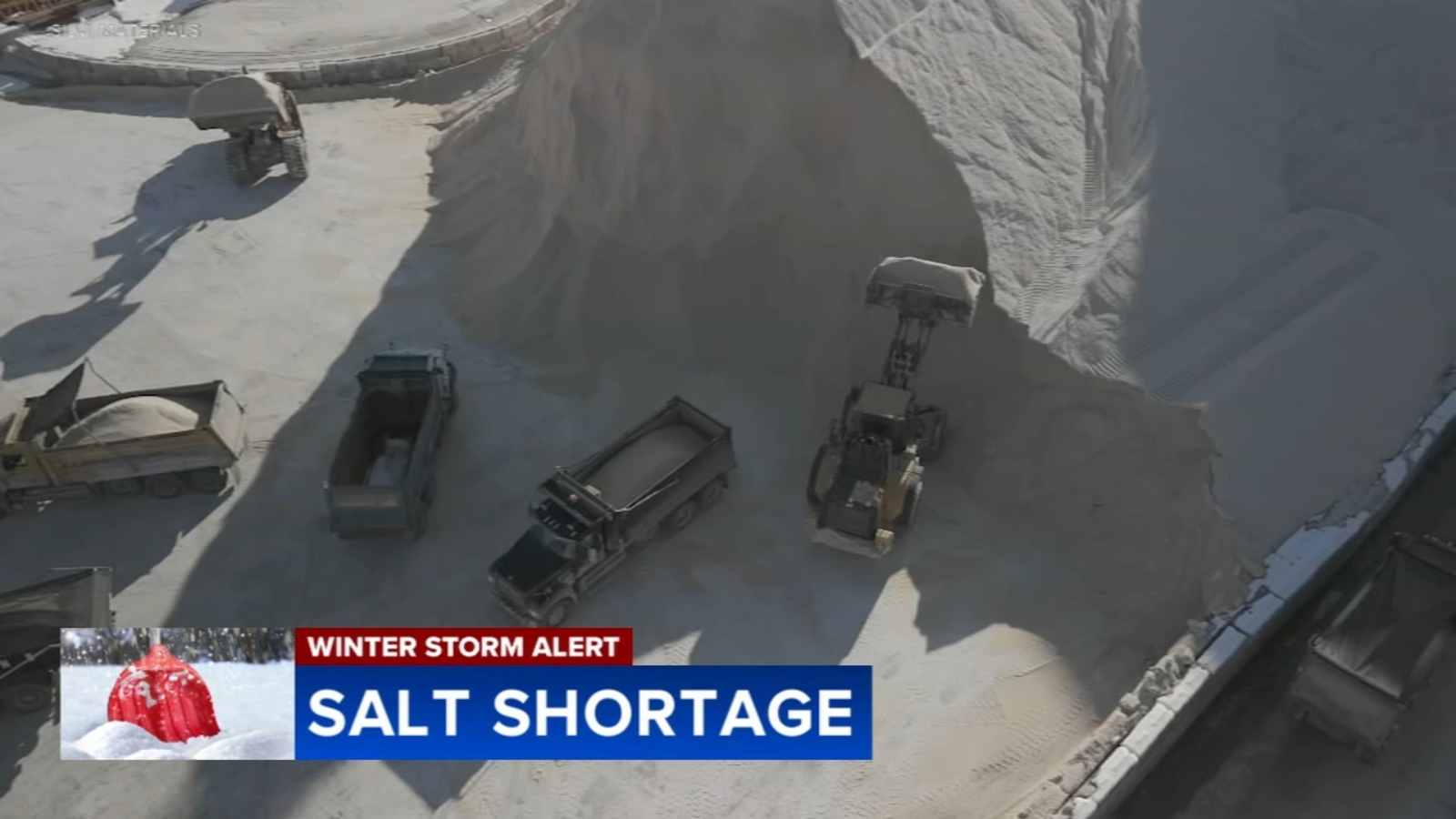
Regional salt supplies are strained ahead of an expected winter storm, with Silvi Materials in Bristol Township reporting long truck lines as commercial buyers and contractors rush to secure dwindling inventory depleted by heavy December use. The distributor increased stockpiles and imported additional shipments, prioritized public-sector deliveries and turned away retail pickups, while contractors warn they may resort to alternatives (sand/cinders) if supplies do not normalize—signaling localized supply-chain stress and potential price/operational pressure for service providers in the near term.
Market structure: Immediate winners are integrated salt producers with export/logistics reach (e.g., Compass Minerals, CMP) and short-haul trucking firms capturing spot premium; losers are small private contractors and municipal budgets that lack purchasing scale. December draws indicate inventory tightness regionally (spot shortages vs contracted supply), creating temporary pricing power—expect local spot spreads to contract prices to widen by low double-digits (10–30%) in the next 2–4 weeks. Cross-asset: limited macro effect, but expect elevated IV for CMP and select trucking names (JBHT/KNX) and modest pressure on municipal winter maintenance budgets (upward pressure on near-term muni yields if states reallocate funds).
Risk assessment: Tail risks include port/berth congestion, a shipping strike, or mine/terminal operational outage that could extend shortages >8 weeks and spike prices >30%; regulatory tail risk (EPA/state limits on road-salt discharge or bans on coal-ash alternatives) could structurally change demand over quarters. Time horizons: days — tactical spikes around storms; weeks to 3 months — inventory replenishment via imports; quarters+ — seasonality and regulatory changes. Hidden dependencies: import volume sensitivity to USD FX, vessel schedules, and municipal procurement cycles; catalysts are storm forecasts, weekly port manifests, and state procurement releases.
Trade implications: Tactical longs in CMP and short-duration freight exposure are preferred pre-storm; due to likely volatile but transient moves favor 1–3 month options or tight call spreads over outright long-duration delta. Avoid large-duration buys until 4–8 weeks after visible inventory replenishment; consider pair trades that capture relative winners (materials producers) vs losers (local contractors/small-cap service names).
Contrarian angles: Market consensus treats this as a short-lived logistics hiccup — historical parallels (regional salt squeezes) resolved in 4–8 weeks once imports arrive, so upside may be capped. Conversely, if regulators ban coal-ash cinders or cold snaps persist, the shortage could extend and create multi-quarter margin tailwinds for producers. Watch for overbought price action in CMP: if it rallies >25% pre-inventory confirmation, consider de-risking positions.
AI-powered research, real-time alerts, and portfolio analytics for institutional investors.
Request DemoOverall Sentiment
moderately negative
Sentiment Score
-0.40
