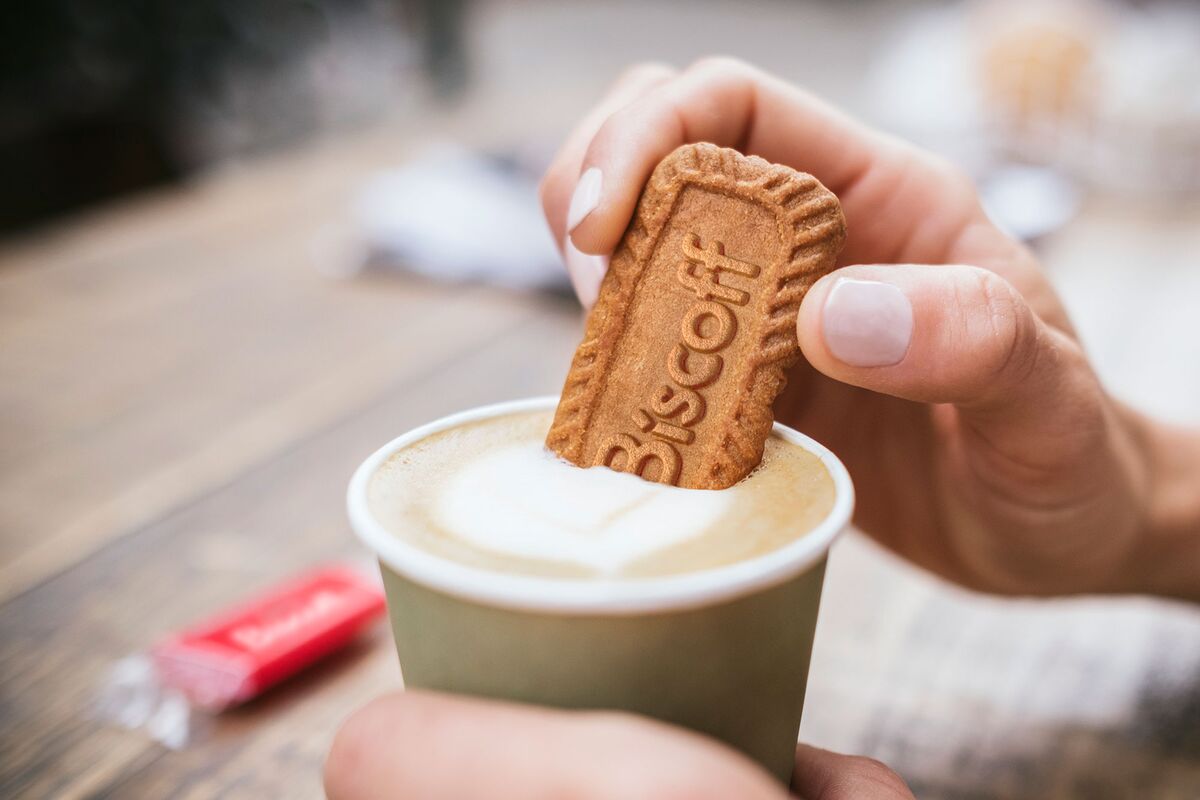
The article highlights Biscoff’s strength as consumers keep finding more ways to eat it (dunking, spreading, and even brand-new uses like “Japanese cheesecake”). It frames the trend as turning the cinnamon-spiced, caramelized cookie into a “money-making machine,” but provides no specific earnings, pricing, or market-share figures.
This is less a “cookie trend” story than a proof point that branded indulgence can still compound in a weak category if it owns a ritual, not just a SKU. The economic value sits in use-case expansion—coffee, desserts, spreads, foodservice—which typically carries better margin and more repeat frequency than a single packaged-snack aisle slot. That favors owners with brand heat and distribution leverage, while commodity biscuit makers and private label are left competing on price and shelf space.
The second-order read-through is to premium snack portfolios, not the whole center-store. Names with strong premium add-ons and cross-occasion exposure can protect pricing even if broader snack volumes stay soft, but legacy cookie businesses with slower innovation will likely see share leakage at the margin. For U.S. public comps, the nearest lens is Mondelez’s cookie/biscuit franchise and, more broadly, any packaged-food name that depends on pantry replenishment rather than impulse or coffee-occasion consumption.
The main risk is that investors extrapolate a niche brand flywheel into a structural category re-rating. If growth is driven by a few geographies, a few channels, or temporary social-media-driven trial, the multiple can compress quickly once novelty fades. Watch for input-cost pressure, retailer pushback on premium pricing, or any sign that distribution gains are being bought with trade spend rather than earned with velocity.
Contrarian view: the market may be underestimating how much “health-conscious” behavior coexists with small-format indulgence, so this could still have runway over 6-18 months. But near term, there is not enough here to justify paying up for the whole packaged-snack complex unless the company proves durable gross-margin expansion alongside volume growth.
AI-powered research, real-time alerts, and portfolio analytics for institutional investors.
Request DemoOverall Sentiment
mildly positive
Sentiment Score
0.15
