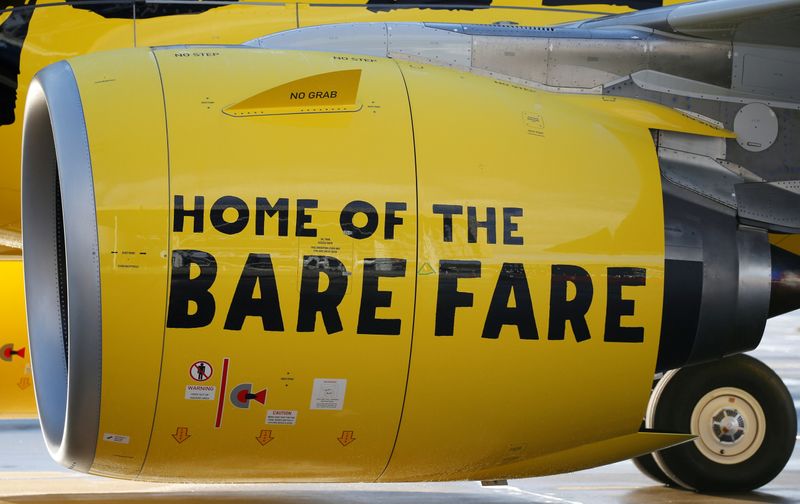
U.S. budget airlines are seeking $2.5 billion in government assistance to offset higher jet fuel costs, assuming prices average above $4 a gallon for the rest of the year. The request underscores pressure on low-margin carriers like Frontier, Avelo, and Spirit as the Iran-related oil shock lifts fuel expenses. Talks on the aid package are expected to continue, and the news could support the sector if assistance is approved, but it highlights material liquidity stress in the near term.
The key implication is not just liquidity support for one carrier, but a policy backstop that can slow the normal reset in ultra-low-cost airline capacity. If warrants are attached, the government is effectively monetizing the rescue optionality, which softens immediate dilution optics but does not fix structurally weak unit economics when fuel remains elevated. That means the sector may avoid a near-term disorderly failure, yet still face months of margin compression, capacity discipline, and repeated equity overhang.
The second-order winner is likely not the distressed carriers themselves, but the survivors with stronger balance sheets and less exposure to subscale routes. Any federal lifeline reduces the probability of abrupt fare spikes from capacity exits, which caps pricing power for competitors, but also prevents the most negative tail scenario for the industry. The bigger market signal is that policymakers appear willing to intervene around a geopolitical fuel shock, which raises the odds of repeated ad hoc support if oil stays above the implied threshold.
For ULCC specifically, the risk/reward is asymmetric to the downside because the market is now pricing a combination of fuel stress and dilution risk, while the upside requires both fuel relief and a favorable rescue package. The near-term catalyst window is days to weeks, but the earnings guide-in effect can last several quarters if hedges are thin and the fuel assumption remains wrong. Contrarian takeaway: this may be less about bankruptcy avoidance than about time-buying; equity holders may be rescued from zero, but not from chronic value leakage.
AI-powered research, real-time alerts, and portfolio analytics for institutional investors.
Overall Sentiment
moderately negative
Sentiment Score
-0.45
Ticker Sentiment
