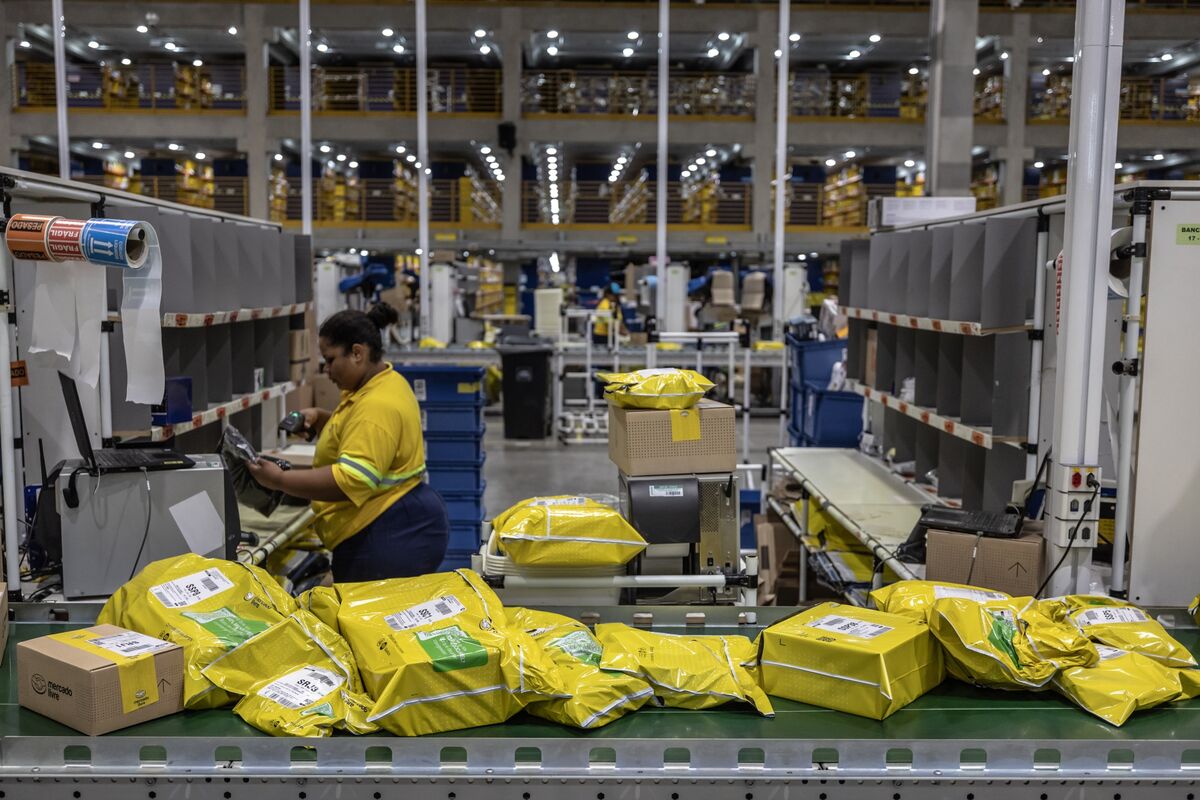
MercadoLibre, long the dominant e-commerce player in Latin America, is facing intensified competition in Brazil this holiday season from global entrants Amazon and Shein, putting pressure on its market share and customer retention. The encroachment by well-capitalized rivals raises downside risks for revenue growth and margins through higher promotional and customer-acquisition spending, making market-share trends and margin guidance key monitoring points for investors in the company and the region's e-commerce sector.
Market structure: Deep-pocketed global entrants (AMZN, vertically integrated fast-fashion players) will pressure MELI’s pricing power and buyer economics, likely producing a 300–500 bps incremental market-share shift in urban coastal Brazil within 12 months and compressing MELI’s consolidated EBITDA margin by ~200–400 bps if promotions persist. Sellers with low unit economics (pure-play fast-fashion importers) win share in apparel categories; incumbents with integrated payments/logistics (MELI) retain advantage in cross-sell and long-tail marketplace revenue. Expect temporary GMV reallocation rather than full structural displacement in tier-2/3 cities where logistics density favors MELI.
Risk assessment: Tail scenarios include a prolonged price war that forces MELI to burn cash (free cash flow negative for two consecutive quarters), a regulatory backlash favoring local suppliers, or a >10–20% BRL depreciation that magnifies FX-translated revenue swings. Near-term (days–weeks) risk centers on holiday CAC spikes; short-term (1–3 months) on Black Friday/Gift-season metrics; long-term (12–36 months) on permanent share loss and fintech monetization erosion. Hidden dependency: MercadoPago and logistics leverage can mask retail weakness until payments take-rate or active-buyer retention falls.
Trade implications: Tactical short using options is preferred to outright short equity given event risk — buy 3-month put spreads (buy 15% OTM, sell 30% OTM) sizing 2–3% notional; pair trade idea: long AMZN (2%) vs short MELI (2%) to play scale/advertising advantage, rebalance after Q4 results. Rotate 3–5% from LATAM consumer discretionary into global cloud/consumer staples (AMZN/AWS, PG) to lower cyclicality. Time entries into hedges 2–6 weeks before Q4 guidance; trim or convert to long-dated puts if metrics improve.
Contrarian angle: Consensus underestimates MELI’s fintech and logistics moat — if active-buyer growth stays >+8% YoY and take-rate stabilizes, a >20% pullback would be a buying opportunity for a 12–36 month hold. Historical parallels (Amazon vs regional incumbents) show entrants take multiple years to erode deeply integrated marketplaces; entrants’ unit-economics weakness may produce a mean-reversion in MELI margins once promotional intensity normalizes. Watch for entrant overextension (promotional burn) which could trigger an asymmetric recovery in MELI shares.
AI-powered research, real-time alerts, and portfolio analytics for institutional investors.
Request DemoOverall Sentiment
mildly negative
Sentiment Score
-0.25
Ticker Sentiment
