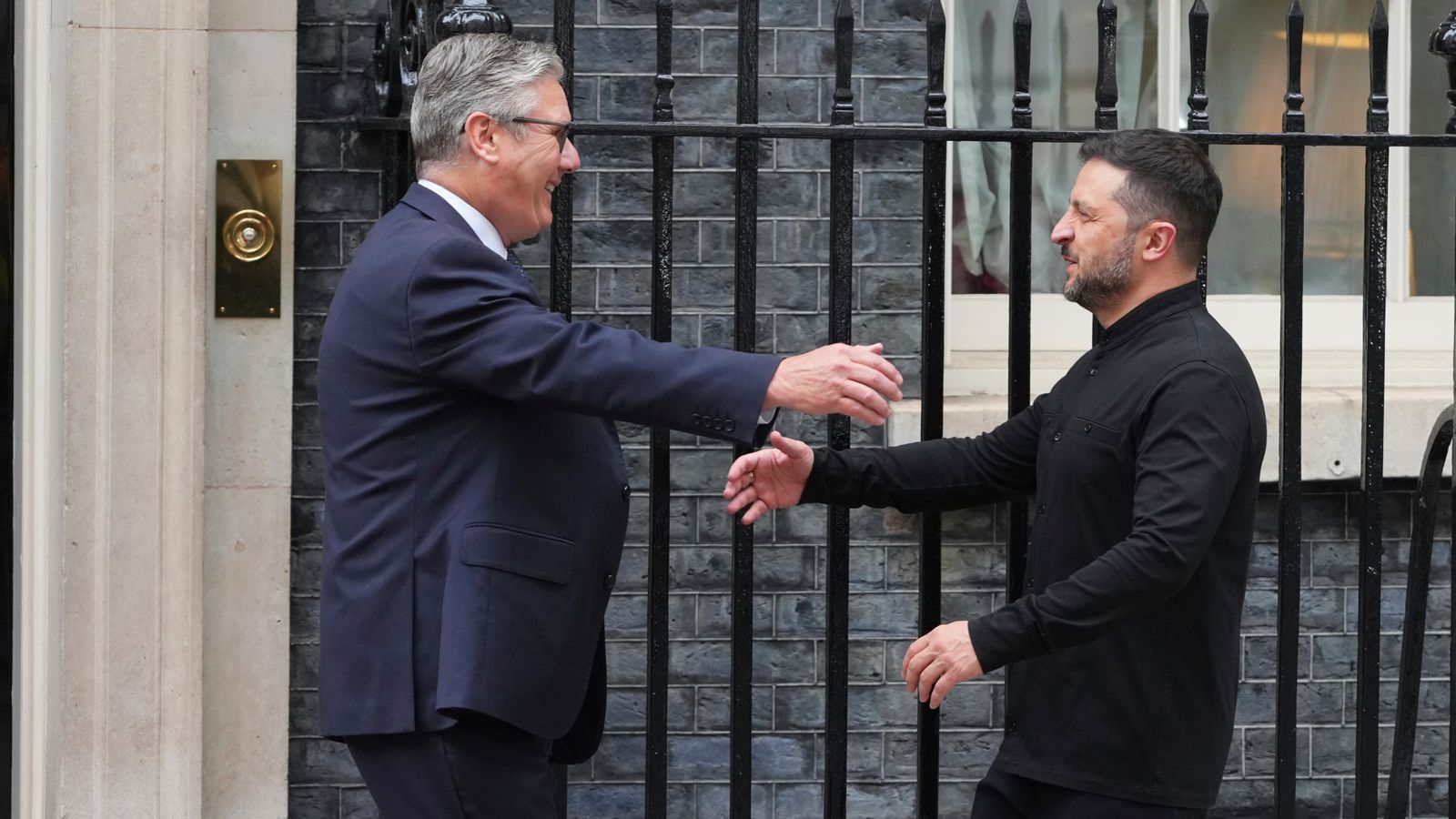
Ukrainian President Volodymyr Zelenskyy is at the White House for crucial peace talks with Donald Trump, joined by a significant delegation of European leaders including UK PM Sir Keir Starmer, French President Emmanuel Macron, and German Chancellor Friedrich Merz, alongside NATO and EU officials. The meeting reportedly centers on Trump urging Zelenskyy to accept a peace deal involving the ceding of eastern Ukrainian territories, a condition previously put forth by Russia and rejected by Ukraine. European leaders are attending to support Zelenskyy and ensure his central role in any future negotiations, highlighting a coordinated Western diplomatic effort at a critical juncture for the conflict's resolution and regional stability.
High-stakes diplomatic negotiations are underway in Washington, centered on a US-led proposal for ending the war in Ukraine. The core of the proposed deal involves Ukraine ceding the strategic eastern regions of Donetsk and Luhansk to Russia in exchange for a cessation of hostilities and the return of other occupied territories. This presents a significant geopolitical inflection point, underscored by a high market impact score of 0.8 and a moderately negative sentiment reading of -0.4, reflecting profound uncertainty. The presence of a large, coordinated delegation of European leaders—including the heads of the UK, France, Germany, and Italy, alongside NATO and EU chiefs—is critical. Their stated intent is to support Ukrainian President Zelenskyy and ensure he is central to any agreement, signaling potential friction with the US approach and a concerted effort to prevent a peace settlement that compromises Ukraine's long-term security. Ukraine has previously rejected ceding territory, viewing it as a strategic vulnerability that could enable future Russian offensives, making the outcome of these talks highly unpredictable and pivotal for European stability and defense posture.
AI-powered research, real-time alerts, and portfolio analytics for institutional investors.
Overall Sentiment
moderately negative
Sentiment Score
-0.40
