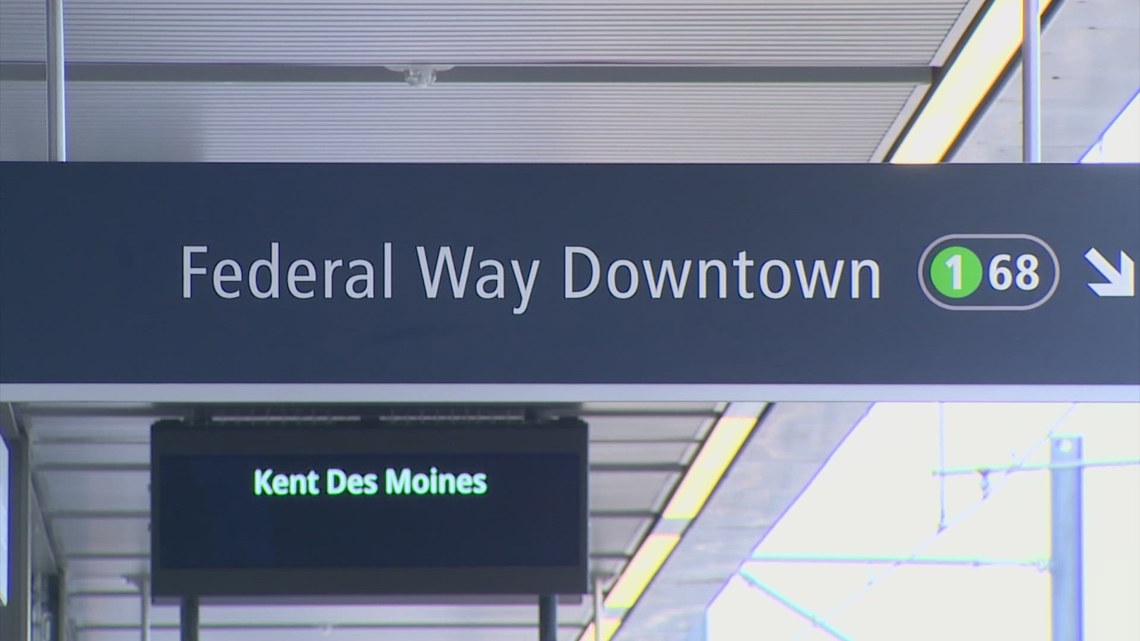
Sound Transit opens the Federal Way extension of the 1 Line on Dec. 6 at 11 a.m., extending the line eight miles south with three new stations (Federal Way Downtown, Star Lake, Kent Des Moines) and adding 3,200 parking spaces. Officials estimate 19,000–24,000 daily riders and publish key trip times (e.g., Federal Way Downtown to Sea‑Tac in 16 minutes, to Downtown Seattle in 50 minutes), making the 1 Line the second‑longest U.S. light rail route and materially improving regional connectivity—an event likely to influence local commuting patterns and transit‑oriented development but with limited broader market impact.
Market structure: The 8-mile 1 Line extension is a demand shock that reallocates ~19k–24k daily commuters from cars/buses to rail over time, favoring urban residential and retail real estate within 0.5–1 mile of Federal Way/Star Lake/Kent Des Moines stations and operators of last-mile logistics. Pricing power shifts modestly toward downtown Seattle locations (commute times cut 30–50%), while suburban auto-dependent services (short-haul ride-hailing, parking-dependent strip retail) face incremental headwinds; incremental parking supply (+3,200 spaces) mutes some pure transit-only upside. On cross-assets, expect modest tightening of regional muni spreads (Sound Transit credit) and small positive re-rating for urban-focused REITs; FX/commodities negligible.
Risk assessment: Tail risks include ridership failing to meet projections (e.g., <12k/day average -> budget shortfalls), major operational incident, or adverse zoning outcomes that delay TOD development; either could impair farebox and taxable uplift. Time horizons: immediate (0–3 months) is operational ramp and PR; short (3–12 months) is ridership trends and retail leasing; long (1–5 years) is property value appreciation and development. Hidden dependencies: bus-rail integration, ORCA adoption rates, and parking utilization drive realized benefits; federal/local funding decisions and bond covenants are catalysts.
Trade implications: Direct plays—long urban REIT exposure (Prologis PLD for last-mile logistics; Equity Residential EQR or VNQ for urban rental capture) and select engineering/maintenance contractors (Jacobs J) for multi-year service contracts; buy municipals (MUB) for regional muni tightening. Pair trades—long PLD or EQR vs short LYFT (LYFT) or UBER (UBER) to express modal-share shift; options—buy 9–12 month call spreads on PLD (e.g., 1x 12%/20% strikes) and J (reduce capital outlay) to leverage maintenance wins. Rotate 3–6% away from auto retail/dealers into urban REITs and muni exposure.
Contrarian angles: Consensus assumes immediate property-price lifts; historical parallels (other US rail openings) show rents/values typically lag 12–36 months and are capped by zoning—don’t pay for instant 10% uplifts. The new 3,200 parking spots could slow residential mode shift, creating overstated demand forecasts; if 6-month ridership <20k, expect downward re-pricing of local retail/REIT expectations. Watch for unintended congestion and security costs at transfer hubs that raise operating expenses and compress margins for expected TOD profits.
AI-powered research, real-time alerts, and portfolio analytics for institutional investors.
Request DemoOverall Sentiment
mildly positive
Sentiment Score
0.25
