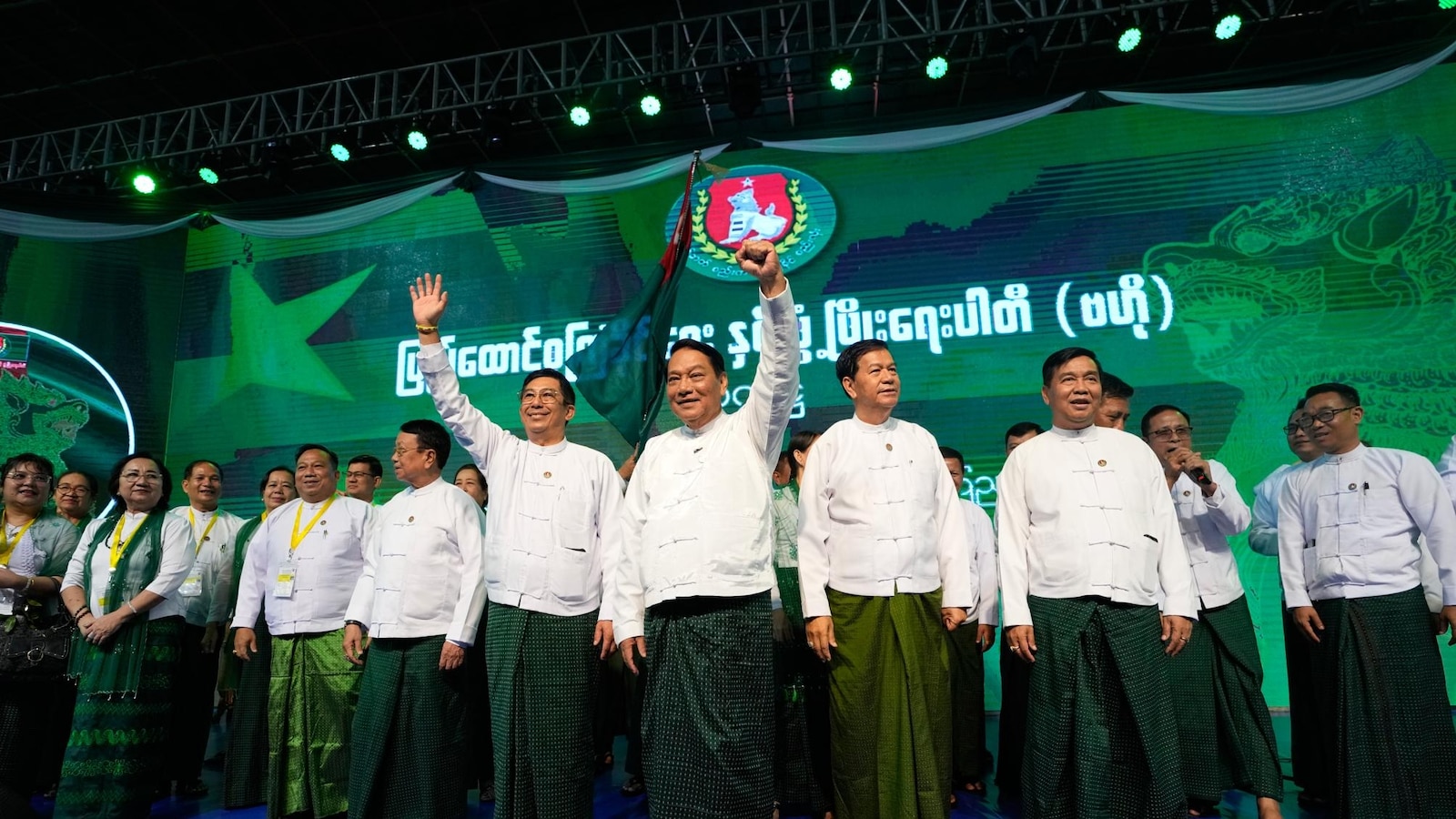
Myanmar’s military-appointed Union Election Commission reported partial first-phase results from the Dec. 28 vote, with the military-backed Union Solidarity and Development Party (USDP) claiming a dominant outcome: the UEC named USDP winners for 38 of 330 lower-house seats in the announced batch while a USDP official asserted the party won 88 of 102 contested seats and ran unopposed in 29 constituencies. The UEC said turnout in the first phase exceeded 6 million voters (about 52% of ~11 million eligible in those townships); USDP leader Khin Yi was declared winner in Naypyitaw with 49,006 of 68,681 votes. Voting proceeds in two more phases (Jan. 11 and Jan. 25) but 65 townships are excluded because of fighting; the military retains 25% of parliamentary seats by constitution and the main opposition, the NLD, was dissolved in 2023 — all factors indicating a consolidation of military political control and elevated political risk for investors in Myanmar and the region.
Market structure: A military-backed USDP victory crystallizes a higher political-risk premium for Myanmar exposure—direct winners are domestic military-controlled SOEs and contractors; direct losers are foreign investors, tourism, telecoms and frontier-focused funds. Expect sovereign and corporate credit spreads to widen (EMB-type spreads +100–300bp potential) and local-currency weakness versus USD (depreciation >10% plausible over 3–12 months absent stabilizing flows).
Risk assessment: Tail risks include escalation to nationwide civil war, broad Western sanctions, or interruption of gas/commodity exports; each could cause >30% drawdowns in frontier allocations and >200bp widening in regional bond spreads. Immediate (days) risks: volatility spikes around Jan 11/25 election phases; short-term (weeks–months): sanction moves or supply-chain shocks; long-term (quarters–years): permanent FDI withdrawal, capital controls, or re-orientation toward Chinese/Russian backers.
Trade implications: Favor defensive liquidity and convexity: overweight USD (UUP) and gold (GLD) and underweight EM equities (EEM/VWO) and sovereign debt (EMB). Use options to express convexity—buy 3–6 month put spreads on EEM and 3-month GLD calls; reduce direct frontier (FRN) exposure by 50% if EMB widens +150bp from current levels.
Contrarian angles: Consensus assumes prolonged instability; if the military consolidates control quickly and international response is muted, short-term risk premia may compress 20–40% within 3–6 months—creating entry points for selective long positions in ASEAN exporters and commodity producers. Monitor Chinese state engagement and any sanctions thresholds: these are the binary triggers that will validate either the risk-off or mean-reversion scenario.
AI-powered research, real-time alerts, and portfolio analytics for institutional investors.
Request DemoOverall Sentiment
moderately negative
Sentiment Score
-0.60
