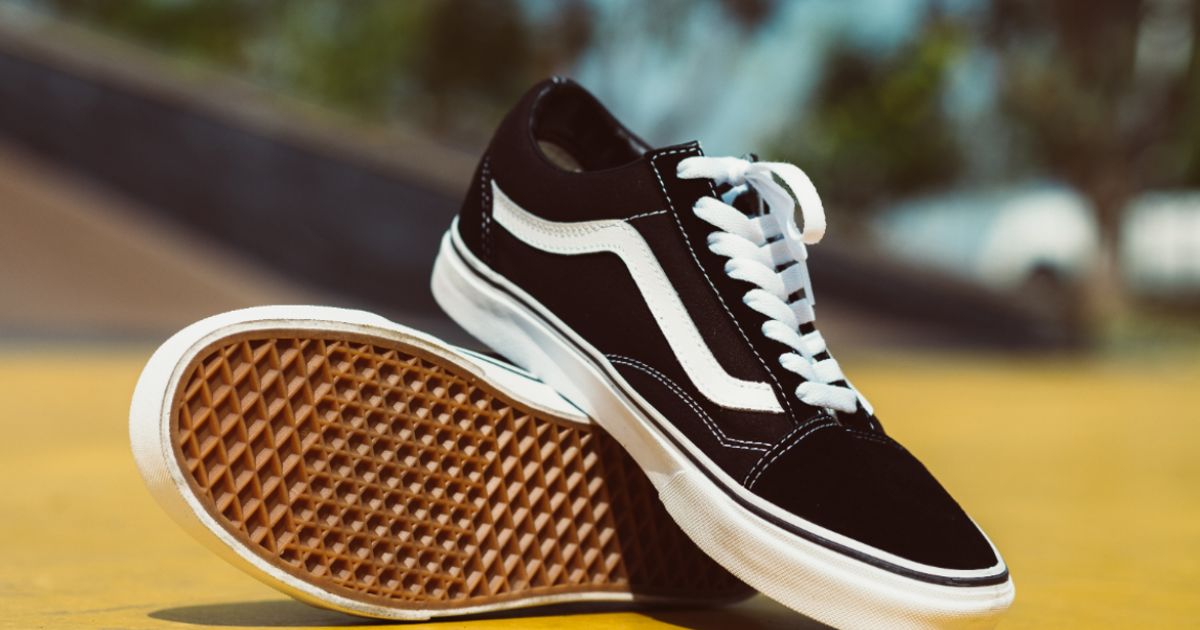
VF Corp reported Q3 adjusted EPS of $0.58 versus the FactSet consensus of $0.45 and revenue of $2.88 billion (est. $2.75 billion), driven by stronger holiday demand at The North Face and Timberland, margin expansion (+30 bps to 56.6%) and sourcing savings that offset tariff impacts. Operating income rose to $289 million from $226 million a year earlier; VF expects Q4 revenue flat to +2% and adjusted operating income of $10 million–$30 million, and reiterated fiscal 2026 targets for higher free cash flow, operating income and operating cash flow with year-end leverage at or below 3.5x. Despite the beat, stock reaction was negative (down ~8.5%) as investors focused on cautious Q4 guidance and continued weakness at Vans, making the release company‑specific but market-relevant for retail and consumer discretionary players.
Market structure: VF’s quarter signals a bifurcation across its portfolio — durable pricing and margin power in outerwear (The North Face, Timberland) versus cyclical, youth-driven vulnerability at Vans (cc sales down ~10%). Product mix + sourcing savings lifted gross margin 30 bps to 56.6%, implying VF can withstand modest cost shocks (tariffs) but relies on direct-to-consumer and North America to sustain volume. Competitors exposed to premium footwear (DECK, NKE) face similar cyclical risk, while utility/outerwear peers (COLM) may capture share.
Risk assessment: Near-term downside is driven by a prolonged Vans demand hit and wholesale inventory markdowns (tail risk: 15%+ rev hit and 200–300 bps margin erosion), with recession scenarios amplifying weakness across discretionary. Time horizons: immediate (days) — price volatility and sentiment-driven gap down; short-term (weeks/months) — Q4 guidance & holiday comps; long-term (quarters) — FCF/leverage target (<=3.5x) suggests management will prioritize cash over aggressive growth. Hidden dependency: sourcing savings are finite; restoration of tariffs or freight spikes would quickly reverse margin gains.
Trade implications: Tactical long bias to VFC but size-constrained and hedged — margin resilience and FCF guidance support a 6–12 month recovery if Vans stabilizes. Pair trades: long VFC / short DECK to capture relative resilience in outerwear vs premium footwear cyclicality over 3–9 months. Options: favor 3–6 month protective puts or collars around new long entries to cap downside while financing premium sales.
Contrarian angles: The 8–9% selloff likely overreacts to cautious Q4 guide; North Face/Timberland momentum points to durable cash generation, not a structural decline. Conversely, Vans weakness could be structural if youth tastes shift — monitor wholesale inventory ratios and Vans comp trajectory over next 60 days as the decisive signal. Historical parallel: episodic brand cyclicality (footwear fads) often mean-reverts within 2–4 quarters if inventory is controlled; sudden management capital allocation shifts would be the real negative surprise.
AI-powered research, real-time alerts, and portfolio analytics for institutional investors.
Request DemoOverall Sentiment
mixed
Sentiment Score
0.00
