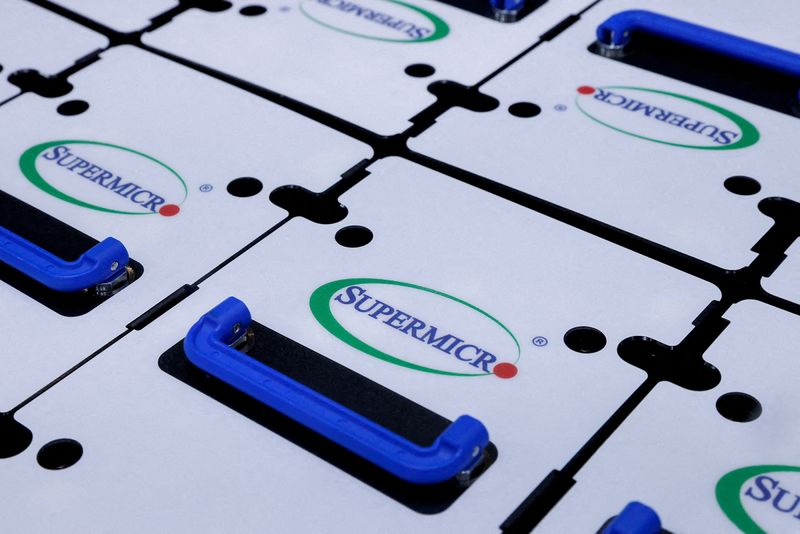
Super Micro Computer reportedly lost a $1.1 billion to $1.4 billion Oracle rack contract, with Bluefin saying Oracle canceled 300-400 Nvidia GB300 NVL72 racks valued at about $3.5 million each. The firm also flagged slowing xAI demand after Colossus 2 shipments, a delayed Rubin rollout, and considerable excess B200 GPU inventory. Shares fell 10% on the report, and the cancellation was linked by industry sources to the co-founder indictment over alleged GPU smuggling into China.
This is less about one lost order and more about a potential reset in how hyperscalers source AI infrastructure. Once a supplier is viewed as having governance or compliance overhangs, procurement teams tend to diversify even if the near-term product is competitive; that can create a multi-quarter share loss that outlasts the headline cancellation. The second-order implication is that rack-level winners may matter more than GPU-level winners here, because the systems integrator that can absorb the program operationally gains negotiating leverage over future platform refreshes.
For SMCI, the immediate risk is not just revenue, but working-capital and mix damage. Large stranded B200 inventory can force either price concessions or slower inventory turns, which compresses gross margin before the market fully sees the top-line shortfall; that usually shows up over 1-2 quarters, not in the same day move. If the company is forced to reprice older inventory to clear balance sheet, the reported earnings downside could exceed the lost Oracle contract value because it hits both revenue recognition timing and margin structure.
The relative winners are the incumbents already embedded in alternative supply chains, especially those with stronger enterprise procurement relationships and less reputational friction. Even if the rack business migrates to another vendor, the broader AI server pool still needs diversified assembly and logistics capacity, which should help the names with better balance-sheet flexibility and less customer concentration. The market may be underestimating how much this helps the next-best suppliers in future bid rounds, because once a design is dual-sourced, the displaced vendor rarely regains full share quickly.
The contrarian view is that the selloff in SMCI may still be incomplete if the legal issue expands into customer qualification or export-control scrutiny. However, if the stock is already pricing in a 1-2 quarter hole, a stabilization trade is possible only after management proves inventory digestion and confirms replacement demand. The key catalyst window is the next earnings call and any disclosed backlog bridge; absent that, this remains a structurally negative story with limited visibility for a durable rebound.
AI-powered research, real-time alerts, and portfolio analytics for institutional investors.
Request TrialOverall Sentiment
strongly negative
Sentiment Score
-0.72
Ticker Sentiment
