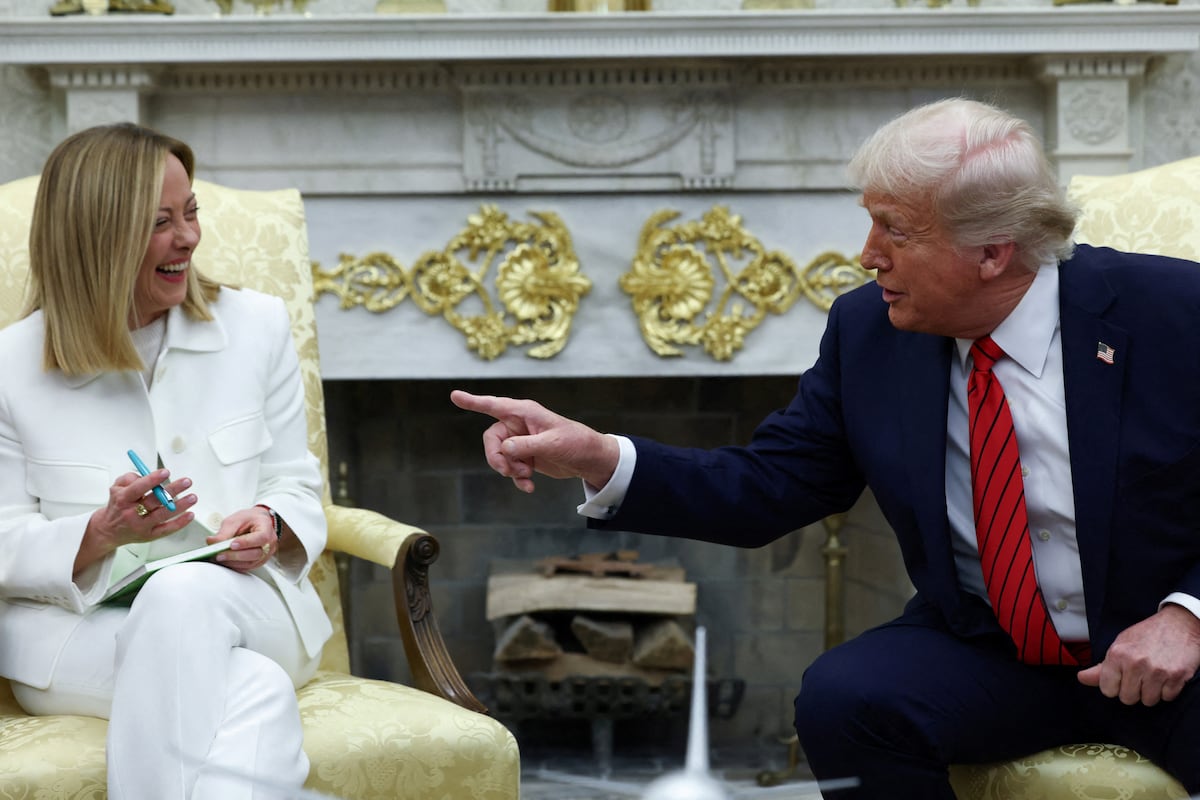
Italy said it will suspend the automatic renewal of its defense agreement with Israel, a memorandum first approved in 2006 covering military equipment exchange and technology research. The move reflects rising domestic opposition to Israel’s actions in Gaza and Lebanon, and comes amid added strain in Italy-U.S. ties after Donald Trump criticized Giorgia Meloni for not supporting the U.S. campaign against Iran. The development is geopolitically meaningful but is unlikely to have a direct near-term market impact.
The market read-through is less about the bilateral defense memo itself and more about the signaling collapse in Italy’s role as a reliable bridge between Washington and Europe. That raises the probability of a wider European procurement tilt toward intra-EU supply chains, which is marginally negative for U.S. prime contractors with exposure to pooled R&D and NATO-adjacent cooperation, while improving the relative position of continental suppliers with sovereign production capacity and less political friction.
The second-order risk is not immediate revenue loss, but program slippage: once a government frames defense cooperation as politically conditional, procurement cycles tend to elongate, amendments get scrutinized, and follow-on maintenance or technology-sharing contracts become harder to renew. Over 6-18 months, that can shave high-margin services and sustainment income more than headline equipment sales, which is where investors often underappreciate the hit.
The Trump fallout matters because it weakens Meloni’s ability to act as a moderating channel inside the EU. If Rome is forced to hedge between domestic voters and Washington, expect more frequent refusals on U.S. operational requests, a higher probability of fragmented European responses to Middle East escalation, and a modest tailwind for European defense autonomy narratives. That is constructive for names tied to local industrial policy and less exposed to transatlantic politics, while it creates a small but real overhang for contractors that rely on foreign military sales goodwill.
Contrarian view: the move may be bigger rhetorically than economically. If the Israeli ministry is right that the agreement is largely symbolic, the direct cash-flow impact is likely negligible, and the more tradeable effect is sentiment around alliance stability rather than actual defense spending. The better setup is to fade any knee-jerk selloff in diversified defense primes and instead express the view through relative-value positions on Europe-versus-U.S. procurement optionality.
AI-powered research, real-time alerts, and portfolio analytics for institutional investors.
Request TrialOverall Sentiment
mildly negative
Sentiment Score
-0.25
