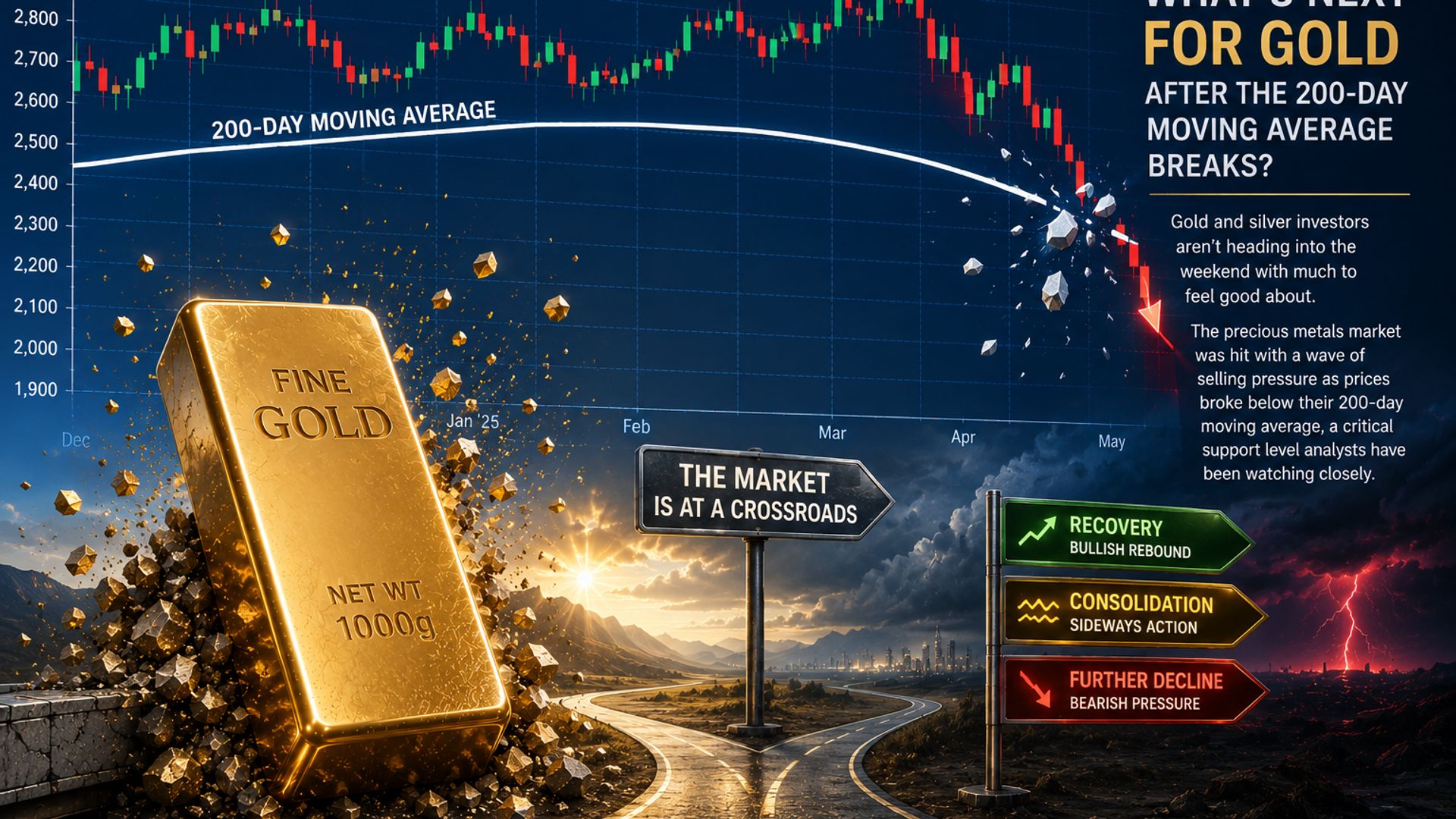
Gold and silver sold off sharply after breaking below the 200-day moving average, with higher bond yields and a stronger U.S. dollar pressuring precious metals. The article says the near-term outlook is weak and that it is too early to buy the dip, though analysts still view the move as a temporary correction and see gold back above $5,000 within a year. Longer term, the case remains supported by inflation, fractured global supply chains, and structurally higher fiscal spending.
The immediate market damage is less about gold’s fundamentals than about positioning getting forced out by rates and FX. Once a 200-day breaks, systematic trend followers and CTA sleeves typically add incremental selling over the next 1-3 weeks, which can extend downside well beyond what macro fundamentals alone would justify. That means the next leg is more likely driven by flows than conviction, and the fastest beneficiaries are real yields, the dollar, and miners’ short-interest dynamics rather than bullion itself.
The second-order loser set is broader than precious metals. If higher-for-longer policy reprices credibly, the carry regime strengthens for USD-funded assets and punishes commodities that do not generate yield; that can bleed into industrial metals and EM FX via tighter global financial conditions. Conversely, the main medium-term winner is not just gold as an inflation hedge, but sovereign balance-sheet hedges against fractured supply chains: if fiscal dominance and defense/resilience spending keep rising, the asset with no default risk and no liability is still the cleanest portfolio insurance.
The contrarian read is that this drawdown may be creating a better entry in gold miners than in bullion itself. Miners are usually the higher-beta expression of the move, but if gold stabilizes above the next support zone, equities can re-rate faster because margins expand mechanically from prior cost discipline; a 5%-10% metal rebound can translate into a materially larger earnings inflection. The key risk is that this is not a one-week shakeout but a months-long real-rate regime shift: if nominal yields keep grinding up while the dollar remains bid, gold could underperform even without a full risk-off event.
For the next quarter, the most important catalyst is whether inflation prints force the market to push terminal-rate expectations higher again; that would keep pressure on bullion until positioning fully clears. If instead the data cools and yields roll over, the move can reverse sharply because the market is already leaning bearish. In that case, the upside can be fast and nonlinear as short gold and miner hedges are covered into a dovish repricing.
AI-powered research, real-time alerts, and portfolio analytics for institutional investors.
Request DemoOverall Sentiment
mildly negative
Sentiment Score
-0.35
