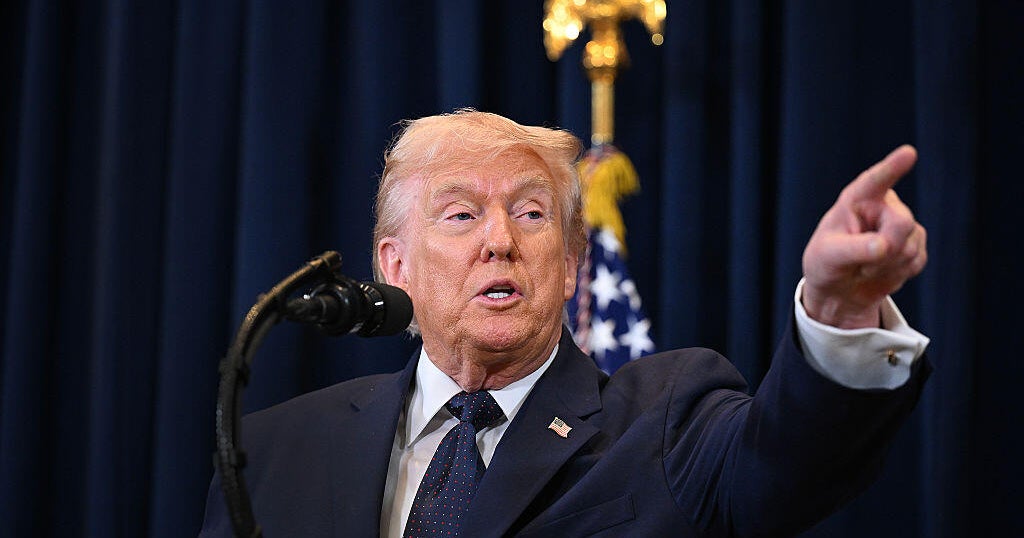
President Trump is expected to issue an executive order this week to remove Anthropic's AI (Claude) from federal agencies after a Feb. 27 directive; the Pentagon has ordered a six-month phaseout and the Defense Secretary labeled Anthropic a supply-chain risk. Multiple agencies including Treasury are discontinuing use, and Anthropic filed suit seeking to block the supply-chain designation and the presidential directive. The company says federal contract cancellations and private contract uncertainty jeopardize “hundreds of millions of dollars” near-term and pose reputational and First Amendment harms.
The immediate political escalation functions as a force-multiplier for consolidation in the AI stack: federal demand will be redirected toward incumbent hyperscalers and entrenched defense contractors, accelerating share-of-wallet shifts that normally take quarters into a matter of weeks. That reallocation is likely to be concentrated on providers offering verifiable on‑prem or 'air‑gapped' deployment options and vendors that can absorb rigorous supply‑chain audits, raising the effective barrier to entry for pure‑cloud, API‑first startups.
A supply‑chain risk designation creates a durable compliance premium — expect higher contract friction, insurance and KYC/contractor diligence costs that compress early‑stage margins and extend sales cycles by 30–90 days. Litigation and administrative appeals make the path forward binary in the short run: judicial relief or regulatory entrenchment; either outcome creates a multi‑month window of elevated idiosyncratic volatility for affected suppliers and a multi‑year regime of preferred vendor lists for the DoD and other agencies.
Tail risks skew to fragmentation: if other agencies or allied governments adopt similar carve‑outs, we move toward a bifurcated market for models (trusted/uncaged) with 15–30% higher per‑unit compute and integration costs for the ‘trusted’ branch. Conversely, an injunction or a negotiated compromise within 1–6 months would rapidly restore demand to the private incumbents, producing a sharp re‑rating—so price action should be treated as an event‑driven opportunity rather than a structural death knell for private AI vendors.
Portfolio implication: favor large, diversified cloud and chip incumbents with both enterprise/government relationships and on‑prem capabilities, and rotate away from small pure‑play AI vendors that lack audited deployments or defense certifications. Size positions modestly: legal/regulatory outcomes are binary and can flip sentiment quickly; use options or pair trades to express exposures while capping downside.
AI-powered research, real-time alerts, and portfolio analytics for institutional investors.
Request DemoOverall Sentiment
strongly negative
Sentiment Score
-0.60
