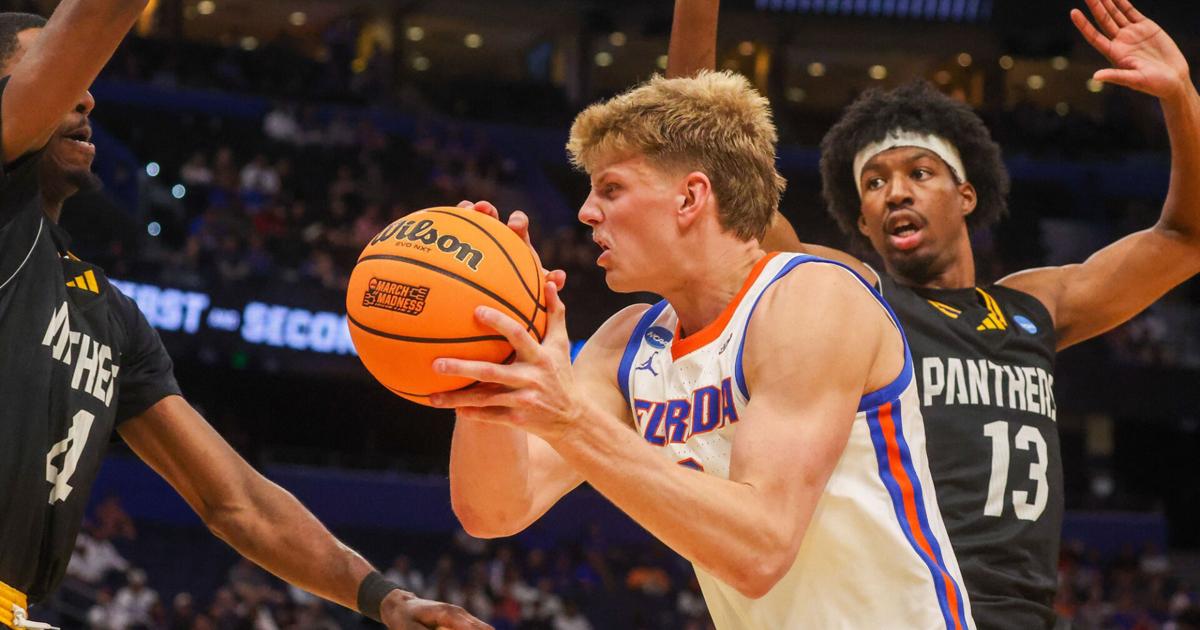
Only 71 players filed as early-entry candidates for the 2026 NBA Draft, down sharply from 106 in 2025 and 353 in 2021, highlighting how NIL is keeping more top college players in school. The article cites Thomas Haugh, Braylon Mullins, and Patrick Ngongba II as examples of first-round-caliber players choosing to return, strengthening Florida, UConn, and Duke. The broader impact is a thinner draft pool and a stronger, older college game, but the piece is largely structural and not directly market-moving.
The key second-order effect is that NIL is effectively turning college basketball into a retention market for the marginal NBA prospect. That should improve on-court product quality at the high-major level because the players most likely to return are exactly the ones who can swing March outcomes and conference title races, while the NBA loses a layer of cost-controlled upside that historically fed the bottom half of the draft. In other words, the talent isn’t disappearing; it’s being re-priced and delayed.
The competitive dynamic shifts toward programs with the strongest donor infrastructure, brand leverage, and coaching continuity. That widens the gap between a small set of bluebloods and everyone else because the schools that can create near-pro-level annual cash flow for players will be able to keep older rosters together longer. The hidden loser is the “developmental” middle class of the NBA draft ecosystem: agents, combine invitees, G League pathways, and teams that used to mine late first/early second for multi-year value now face a thinner pool and more uncertainty around who is actually available.
The reversal trigger is not sentiment around college sports; it’s NBA economics. If the draft becomes meaningfully more forgiving for the middle class—through better rookie-scale upside, expanded roster spots, or a stronger G League-to-NBA conversion rate—the incentive to return weakens over 12-24 months. The bigger risk to the current trend is also macro: if NIL money concentrates in a smaller number of programs, the average return decision stays rational, but the broader competitive balance benefit may prove overestimated.
Consensus is likely underappreciating how durable this is because it is not a one-off class effect; it is a structural bidding war between a stable college cash offer and a highly uncertain draft outcome outside the top tier. The market may be overfocusing on the headline reduction in early entrants and underweighting the longer-run implication: more experienced college rosters should boost TV quality and March relevance, but at the cost of further flattening the NBA pipeline’s middle rounds.
AI-powered research, real-time alerts, and portfolio analytics for institutional investors.
Request DemoOverall Sentiment
neutral
Sentiment Score
0.05
