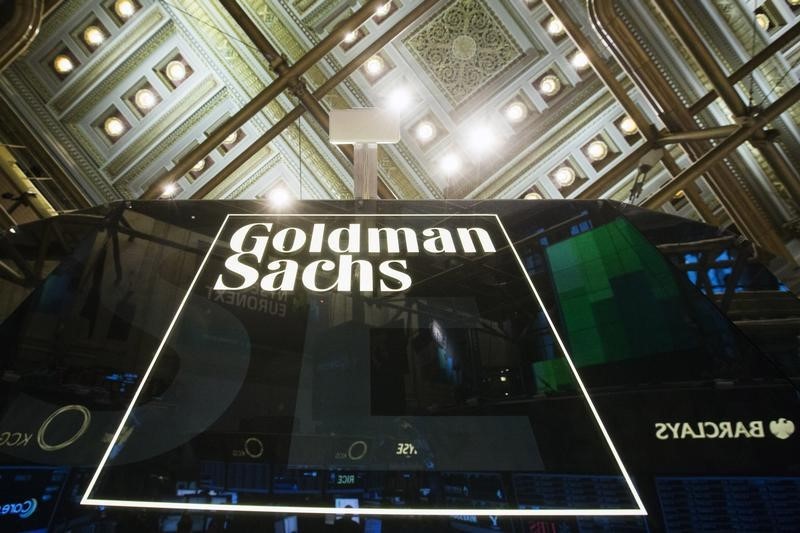
Goldman Sachs upgraded Orsted to Buy from Neutral and raised its price target to DKK185 from DKK150, citing improving policy support for electrification and renewables, a softer U.S. offshore wind stance, and stronger long-term growth prospects. The bank expects 2033 EBITDA of about DKK51 billion, roughly 40% above 2028, and now models 1.5 GW of annual offshore wind awards/additions plus 300 MW of onshore wind per year. Shares are already up 36% over the past six months and 34% year to date, suggesting the upgrade reinforces an existing positive trend rather than triggering a major new catalyst.
The market is starting to price a policy regime shift, not just a company-specific rerating. If Europe continues moving toward electrification, the real winners are the grid-equipment, interconnect, and power-price hedges that sit upstream of offshore wind; the loser is any merchant generator with limited inflation pass-through and no balance-sheet flexibility. That makes this more interesting as a relative-value signal inside European power than as a standalone long on the sponsor.
The second-order effect is financing cost compression. If the equity market believes large-scale projects can clear the permitting and balance-sheet hurdles, developers with late-cycle growth optionality should see lower implied cost of capital and better refinancing terms over the next 6-18 months. That benefits the few players with credible execution pipelines, while smaller developers without contracted cash flow may get crowded out as lenders favor scale and sponsor support.
The key risk is that the move is ahead of the tape relative to policy durability. Offshore wind remains highly sensitive to permitting, supply-chain bottlenecks, and subsidy design; a single project delay can push back the de-leveraging story by years, not quarters. The more aggressive valuation case assumes smooth execution through 2028, so any adverse headlines on turbine availability, cable shortages, or political rollback could compress multiples quickly.
Consensus may be underestimating the duration of the capex cycle rather than the terminal EBITDA. If awards accelerate, the near-term earnings uplift for equipment and services is likely modest, but the multi-year order book visibility can rerate the entire industrial value chain before project cash flows fully appear. That argues for trading the supply chain and grid buildout rather than chasing the developer alone at higher levels.
AI-powered research, real-time alerts, and portfolio analytics for institutional investors.
Request DemoOverall Sentiment
moderately positive
Sentiment Score
0.45
Ticker Sentiment
