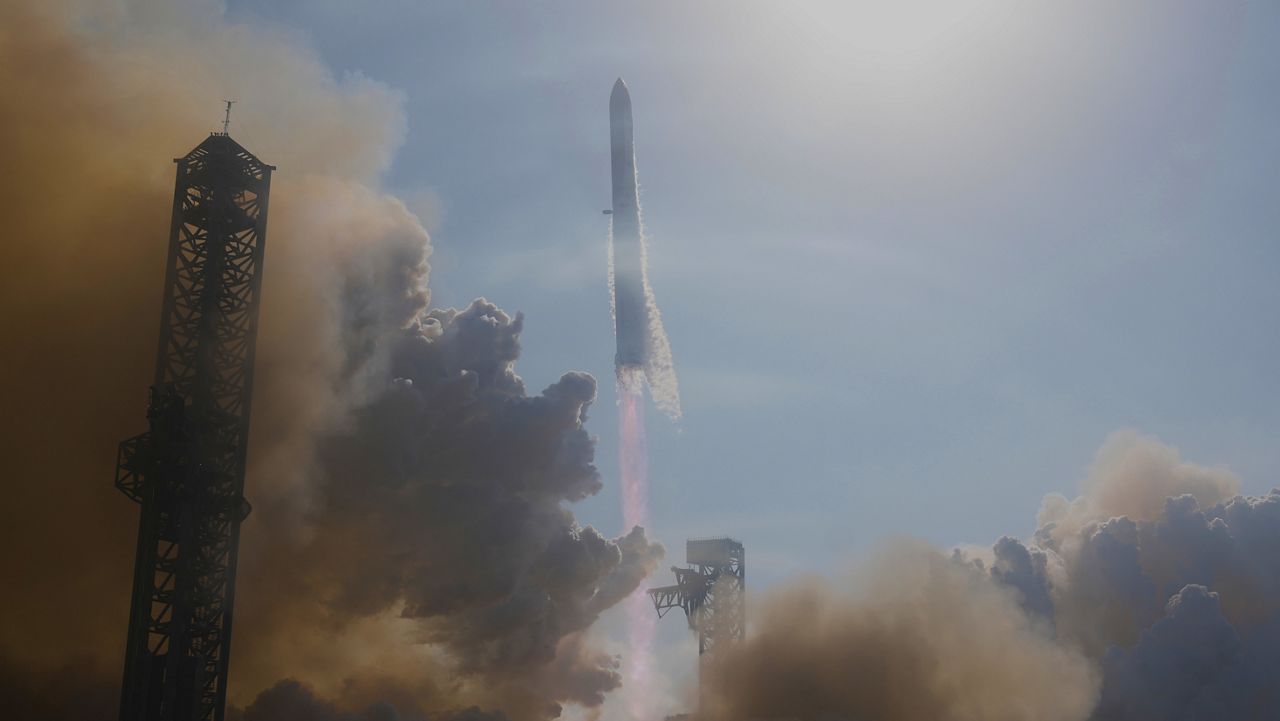
The FAA grounded SpaceX’s Starship after its 12th test launch failed when the Super Heavy booster could not relight all planned engines and ended in a hard splashdown in the Gulf. The agency is requiring a SpaceX-led mishap investigation and will review corrective actions before allowing another launch. No injuries or public property damage were reported, limiting broader market impact.
This is less a one-off launch failure than a reminder that reusability is still the gating item for Starship’s commercial schedule. The most immediate economic effect is not on launch cadence alone, but on customer confidence: every FAA review resets the clock on constellation deployment assumptions, and that matters most for time-sensitive contracts where launch slots are priced against a narrow window. The market is likely underestimating the second-order impact on SpaceX’s premium pricing power if reliability milestones slip versus internal targets. The bigger competitive implication is that slower Starship maturation indirectly supports incumbents with proven launch systems and capacity discipline. Any customer that was waiting for Starship-cost economics to compress later-stage deployment costs will be pushed back toward nearer-term alternatives, which improves utilization and pricing for established launch providers and launch-adjacent suppliers. It also raises the probability that satellite operators hedge by diversifying manifest exposure, which can benefit multi-launch procurement platforms and lesser-known manufacturers with non-Starship-compatible architectures. The regulatory overhang is likely to persist in cycles: days for the headline, months for the corrective-action process, and years for the broader certification narrative. A key contrarian point is that repeated groundings can be bullish for the ecosystem around SpaceX’s constraints, because constrained Starship availability keeps launch economics from collapsing too quickly and preserves demand for legacy services. The downside case is if the mishap points to a deeper booster-stage reliability issue; that would extend the review and push meaningful commercialization another 1-2 launch cycles, not just a single test delay.
AI-powered research, real-time alerts, and portfolio analytics for institutional investors.
Request DemoOverall Sentiment
mildly negative
Sentiment Score
-0.25
