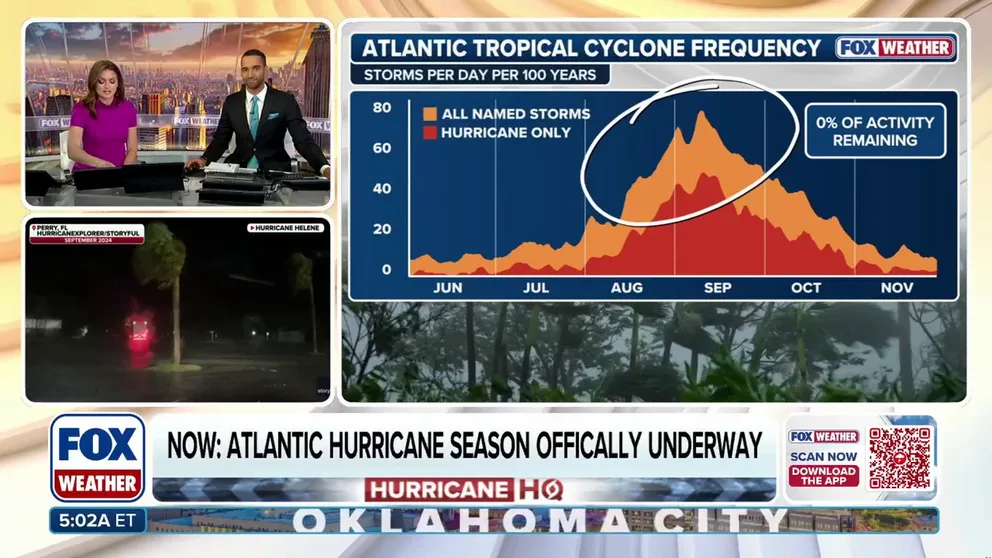
Atlantic hurricane season is forecast to be below normal, with NOAA and Colorado State citing Saharan dust, cooler MDR sea-surface temperatures, and an expected El Niño-driven increase in Atlantic wind shear. In the East Pacific, two systems are being monitored, including one with an 80% chance of development, while Typhoon Jangmi is tracking toward Japan and could bring hurricane-force winds and heavy rain. The article is largely seasonal outlook and monitoring commentary, with limited immediate market impact beyond weather-sensitive sectors.
The first-order read is “quiet Atlantic, active Pacific,” but the tradable second-order effect is dispersion across transport, insurance, and commodity-input chains rather than a broad macro shock. A suppressed early Atlantic season reduces near-term headline risk, yet that can be misleading for positioning because the market tends to underprice late-season regime shifts when the steering pattern changes and dust/shear effects fade. For now, the cleaner expression is that assets exposed to Gulf/Caribbean disruption risk should cheapen relative to Pacific-linked beneficiaries such as West Coast logistics, Japan-sensitive shipping, and select ags/industrial names with lower hurricane beta.
The more actionable risk is inventory and routing optionality: even without a major landfall, storms in the East Pacific can shift shipping schedules, elevate fuel surcharges, and tighten vessel/air cargo availability on the Mexico–US and Asia–Japan corridors. That tends to be a margin-negative setup for carriers with weak pricing power and a margin-positive setup for firms with contractual pass-through. In commodities, warmer Pacific waters plus active cyclones can create short-lived volatility in refined products and softs, but the bigger edge is in volatility harvesting rather than outright direction because the fundamental damage footprint remains uncertain until track confidence improves.
Contrarianly, the market may be overemphasizing the “below-normal Atlantic” label and underpricing the persistence of storm tail risk into late summer. A single midseason shift in steering currents can flip the expected value quickly, and the biggest losers are usually the names that sold vol or relaxed disaster preparedness too early. If El Niño strengthens as projected, that is also a latent beneficiary for firms with less hurricane exposure but higher Pacific weather sensitivity; the trade is not simply risk-off, it is rotation within weather-exposed equities and commodities.
AI-powered research, real-time alerts, and portfolio analytics for institutional investors.
Request DemoOverall Sentiment
neutral
Sentiment Score
-0.05
