

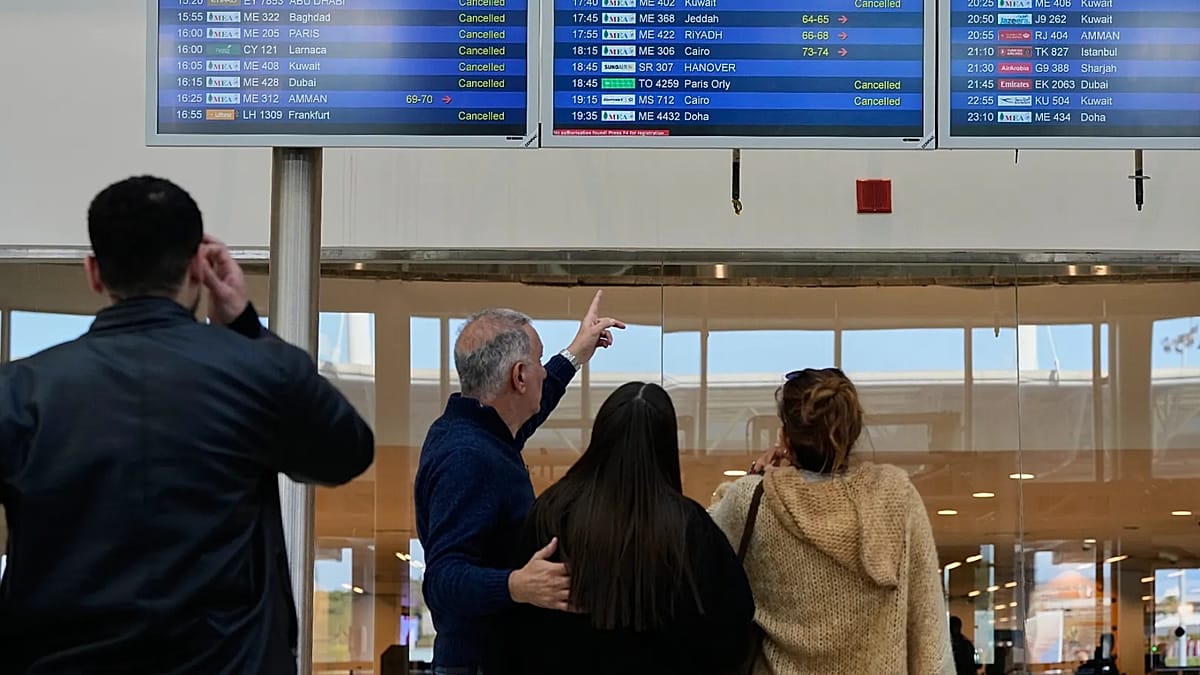
Major Gulf aviation hubs (Dubai, Abu Dhabi, Doha) and at least eight countries closed or partially closed airspace after strikes involving the US, Israel and Iran, forcing mass cancellations and diversions that left tens of thousands of passengers stranded. Cirium and flight trackers report heavy disruption: more than 1,800 flights cancelled by major Middle Eastern carriers, 966 of ~4,218 scheduled Saturday flights cancelled (22.9%), 716 of 4,329 on Sunday, FlightAware noting >19,000 global delays and Flightradar24 >3,400 cancellations across seven regional airports; Gulf carriers saw cancellation rates of ~38% (Emirates), 30% (Etihad) and 41% (Qatar). The shutdown and rerouting of east‑west corridors will raise flight times, fuel burn and operational costs, risk revenue hits for airlines and hub-related service providers, and may put upward pressure on ticket prices and regional risk premia until airspace is safely reopened.
Market Structure: Immediate winners are energy producers, defense contractors, and re/insurance (short-term premium repricing); losers are network and international airlines tied to Gulf hubs (Dubai/Doha/Abu Dhabi) with a near-term capacity shock: ~20–40% flight cancellations on key East-West corridors. Pricing power shifts to carriers with deep domestic feed (US majors) and freight operators able to reroute; Gulf carriers lose hub premium while fuel/overflight/insurance costs rise ~3–8% versus baseline in the next 7–30 days.
Risk Assessment: Tail risks include escalation into wider Gulf conflict causing a 10–20% Brent spike and multi-week airspace closures (low probability, high impact). Immediate window (0–7 days): operational cancellations and liquidity pressure on smaller carriers; short-term (1–3 months): margin compression from fuel and rerouting; long-term (3–18 months): potential permanent route realignments and higher insurance/sovereign risk premia. Hidden dependencies: airline fuel-hedge positions, reinsurance contract timing, and bilateral traffic rights that could delay recovery.
Trade Implications: Direct plays — short airlines with highest Middle East exposure (AC.TO, AAL) and hedge with long energy/defense (XOM/CVX, NOC/ITA). Use options to express asymmetric views: buy 1–3 month puts on AC.TO/AAL and 3–6 month call spreads on XOM if Brent >$85. Rotate away from travel/leisure (airlines, airport operators) into energy, freight/logistics, and select defense stocks; increase cash/short-duration Treasuries as a flight-to-quality for 2–8 weeks.
Contrarian Angles: Consensus underestimates that US/European network carriers (e.g., DAL) may capture share from Gulf hubs once airspace reopens, producing a rapid rebound; initial sell-offs could be overdone by 10–20% for well-hedged, domestically-focused airlines. Historical parallels (temporary 2019–2020 airspace shocks) show 4–8 week operational dislocations but limited long-term traffic loss; risk is that prolonged closure (>4 weeks) would make the sell-off justified and force deeper portfolio adjustments.
AI-powered research, real-time alerts, and portfolio analytics for institutional investors.
Request TrialOverall Sentiment
moderately negative
Sentiment Score
-0.60
Ticker Sentiment
