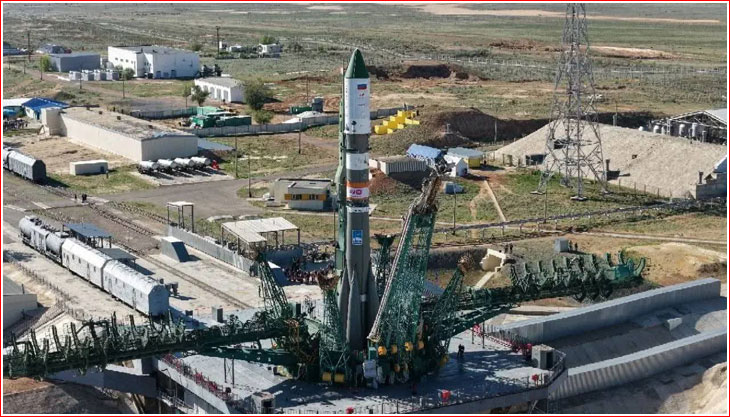
Progress MS-34 launched successfully on April 26, 2026 at 01:21:47 Moscow Time from Baikonur on a Soyuz-2-1a rocket, carrying more than 2.5 tons of supplies to the ISS. The cargo includes 1,348 kg of dry goods, 700 kg of propellant, 420 kg of water, and 50 kg of oxygen, with docking planned for April 28, 2026 at 03:01:16 Moscow Time. The mission helps restore the ISS resupply cadence after the November 2025 launch pad accident at Site 31 disrupted previous schedules.
The near-term signal is not the cargo itself but the restoration of cadence. In launch services, reliability after a pad incident matters more than one mission: once the schedule normalizes, the market typically reprices the risk premium attached to the launch site, supplier chain, and mission planning process. The key second-order effect is that a compressed manifest tends to pull forward working capital demand and reduce schedule slack, which raises the operational value of every additional clean launch and increases the penalty of any further anomaly.
For the broader space-industrial complex, this is mildly bullish for suppliers with exposure to ground handling, propulsion, avionics, and inspection/testing equipment, because accelerated turnarounds tend to lift utilization before they lift headline revenue. The more interesting dynamic is on the defense side: a functioning cargo cadence reduces pressure on alternative logistics paths and preserves political confidence in legacy launch infrastructure, which can delay budget shifts toward redundant or commercialized replacement capacity.
The contrarian read is that this is more a normalization event than a growth inflection. Once the backlog from the earlier interruption is cleared, the incremental benefit fades quickly; the true catalyst would be evidence that launch frequency remains elevated for several quarters without another pad-related interruption. The tail risk is obvious: any fresh launch-site issue would reintroduce schedule slippage, which is far more damaging to sentiment than the mission’s modest direct economic value suggests.
AI-powered research, real-time alerts, and portfolio analytics for institutional investors.
Request DemoOverall Sentiment
neutral
Sentiment Score
0.12
