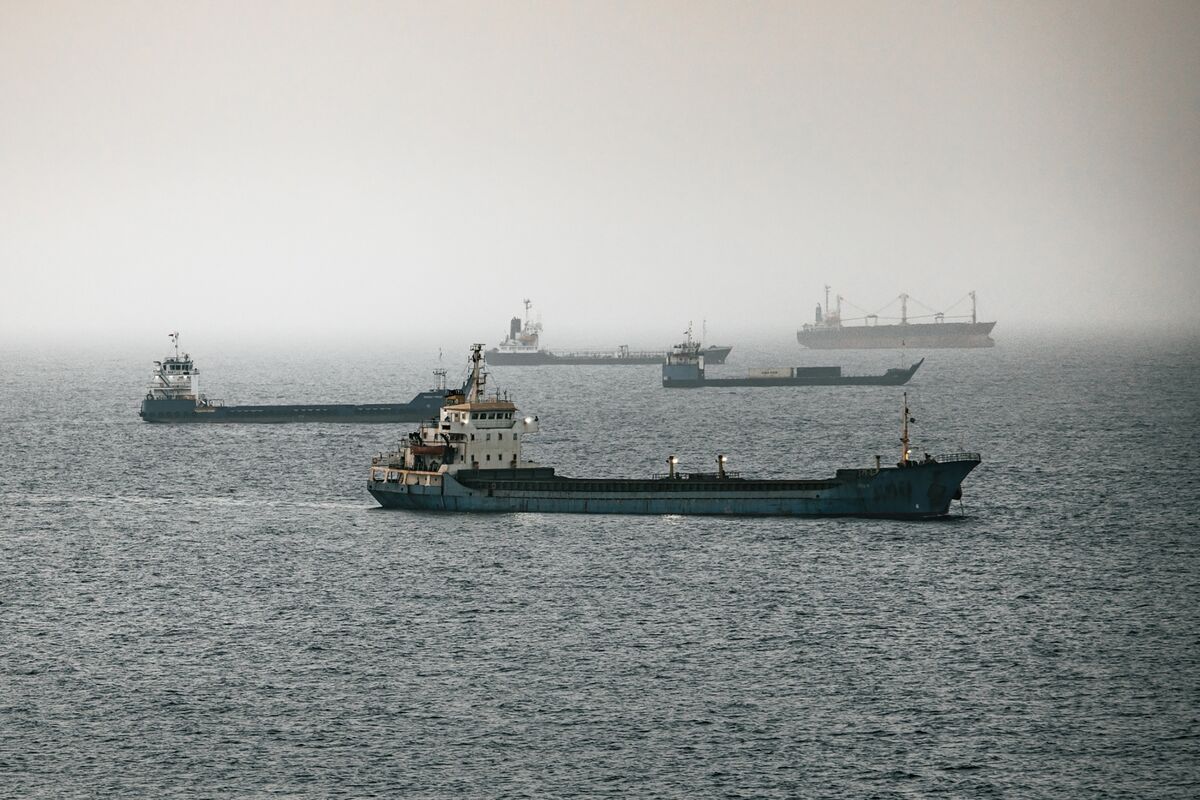
Two convoys of commercial vessels (including six freighters entering and four departing) crossed the Strait of Hormuz in close formation on a US-policed route near Oman, carrying oil, gas, fuel and containers. The formation tactic suggests heightened security risk in the corridor, even as Gulf oil flows appear uninterrupted. While no new price or production figures were cited, the report implies ongoing risk premiums for Gulf shipping.
The key market signal is not a supply shock but a rising friction cost on a route that still functions. That tends to cap the immediate upside in crude because barrels are moving, while quietly improving the economics for owners of flexible tonnage and, more importantly, for the insurance/reinsurance complex that prices war-risk by the week rather than by the headline. The first-order losers are schedule-sensitive carriers and downstream users that depend on just-in-time delivery; the second-order loser is any importer with thin inventory buffers, because convoying adds latency even when it avoids outright disruption.
For equities, the cleaner expression is not a broad energy long but a relative-value trade in shipping and transport. Spot-exposed crude and product tanker names can see dayrate support if Gulf security risk stays elevated, while container and LNG operators with fixed commitments absorb the extra cost without the same pricing power. Over 1-3 months, the market will key off whether convoying becomes normalized; if it does, the geopolitical premium fades, but the embedded logistics tax on trade may persist for quarters.
The contrarian view is that the market may be too focused on a binary "Hormuz closed/open" outcome and underpricing the more durable effect: higher operating cost per barrel moved, not fewer barrels moved. That is mildly bullish for energy infrastructure and marine security services, but not necessarily for crude itself. The thesis is falsified if war-risk insurance rates and tanker spot rates fail to widen over the next 2-4 weeks, or if diplomatic de-escalation reduces convoy frequency and premiums quickly collapse.
AI-powered research, real-time alerts, and portfolio analytics for institutional investors.
Request DemoOverall Sentiment
mildly negative
Sentiment Score
-0.08
