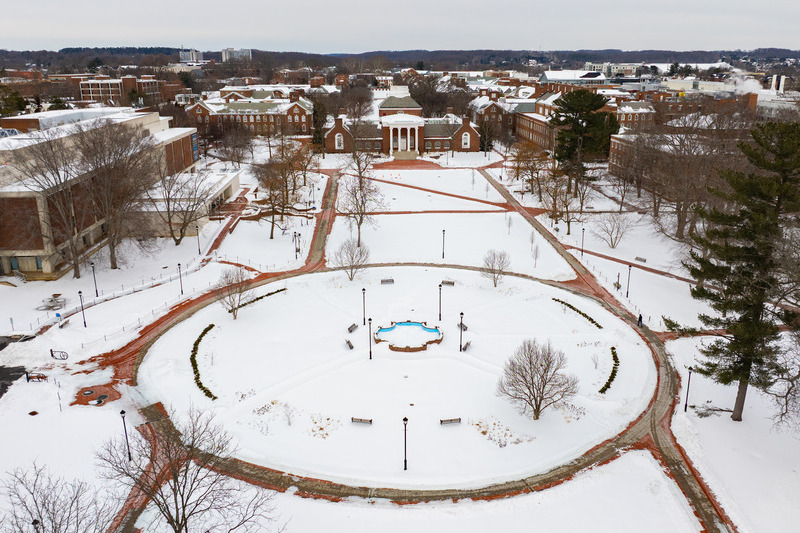
A National Weather Service winter storm warning (including a Delaware blizzard warning) and a state of emergency declared by Delaware’s governor have prompted the University of Delaware to suspend transportation services, close multiple campus facilities, and halt in-person instruction for its Newark campus beginning 12:01 a.m. Monday; non‑essential staff are released and essential personnel only should report. Key operational impacts include suspended parking enforcement, garage roof closures, dining-hall schedule changes, and campus-level shutdowns at several satellite campuses, with university leadership monitoring conditions for potential Tuesday disruptions.
Market structure: A localized blizzard that shuts a university and regional services creates short, concentrated winners (road‑salt producers like CMP, home‑improvement retailers HD/LOW, generator maker GNRC, heating fuels/NG) and losers (campus retail operators such as BNED, regional airlines, local foodservice and event operators). Expect a 5–15% transient uplift in spot heating‑fuel and natural‑gas prices and a 10–30% draw on regional salt inventories over 7–21 days if snowfall exceeds ~6 inches, while foot‑traffic sensitive names see same‑day revenue declines of 10–40%.
Risk assessment: Tail risks include multi‑day power outages or major transport infrastructure failures that could produce outsized insurance claims and local economic damage; a >24‑hour outage affecting 50k+ customers would likely push regional power volatility +30–100% and generate loss events for P&C insurers. Time horizons separate: immediate (0–7 days) for logistics and retail shocks, short (2–8 weeks) for inventory replenishment and options decay, long (3–12 months) for earnings revisions or persistent demand shifts if severe winter recurs.
Trade implications: Tactical, short‑dated plays dominate—use options to capture 1–3 week demand spikes (NG/heating oil calls, HD/LOW call spreads) and equity exposures in salt producers (CMP) for 1–3 month horizon. Shorting campus‑centric retail (BNED) or buying puts on regional carriers (AAL/ALK) captures downside from cancellations; prefer pair trades (long CMP, short BNED) to isolate weather vs. secular trends. Execute within 24–72 hours as implied vols will reprice quickly; size trades small (0.5–2% notional) to limit mean‑reversion risk.
Contrarian angles: The market often underestimates road‑salt and generator demand because attention focuses on airlines; salt producers can outperform for 4–12 weeks while restocking occurs. Conversely, airline knee‑jerks are often overdone—if cancellations are localized expect mean reversion in 2–3 weeks, creating a short‑term put‑sell or buy‑the‑rebound opportunity. Watch NOAA 7‑day HDD divergence >15% vs forecast as an actionable signal that commodity/retailer moves should accelerate.
AI-powered research, real-time alerts, and portfolio analytics for institutional investors.
Request DemoOverall Sentiment
neutral
Sentiment Score
0.00
