
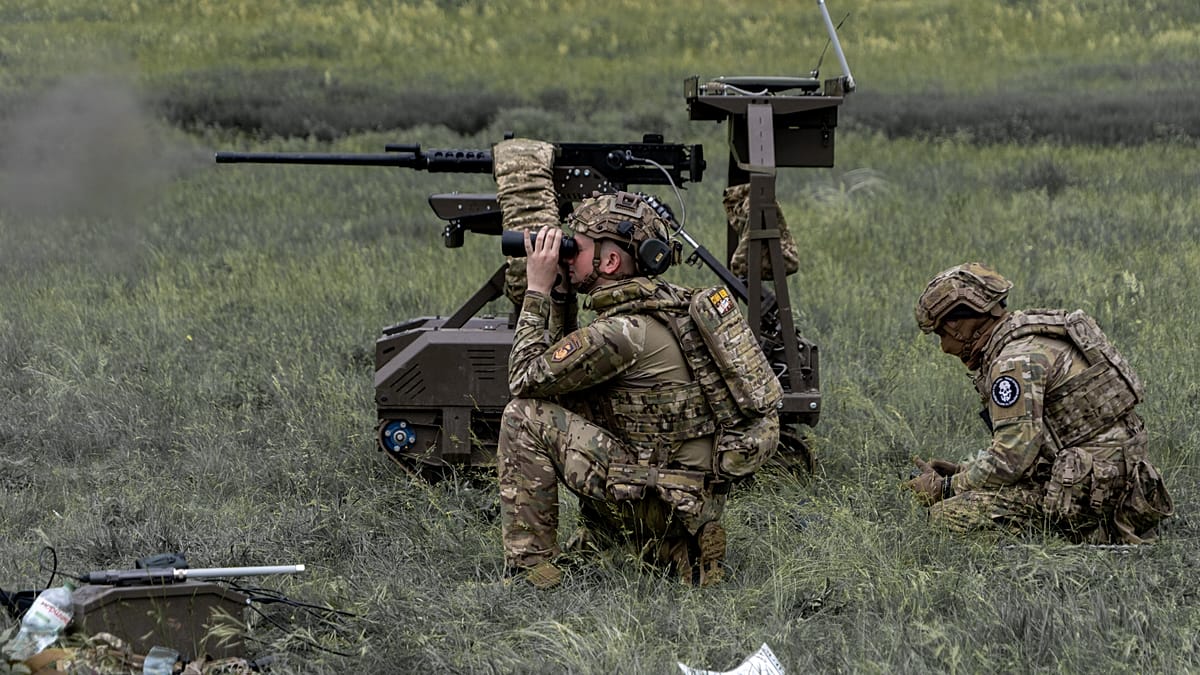
Ukraine’s military says it has already identified 500 potential targets in Belarus and warned Minsk against deeper involvement in Russia’s war, underscoring elevated escalation risk on Ukraine’s northern border. President Zelenskyy also signaled Kyiv may take preventive measures against the Belarusian leadership amid Russia-Belarus military activity and reported Belarusian road and artillery buildup near Ukraine. The rhetoric points to a worsening security backdrop with potential regional defense and energy-supply implications.
The market implication is not the headline geopolitical rhetoric itself, but the widening probability distribution around northern logistics and energy transit. Belarus is a low-cost staging area with asymmetric leverage: even limited escalation would force Ukraine to spend scarce air-defense and drone capacity on a larger target set, raising the operating cost of the war without requiring a full conventional incursion. That matters most for any assets with exposure to regional rail, road, and power continuity, because the first-order damage would likely show up in freight disruption, diesel availability, and border-risk premia before it appears in GDP prints.
The second-order effect is on Russia’s war economy and domestic fuel balance. Continued degradation of refining capacity increases the chance of temporary export restrictions, internal fuel rationing, and higher logistics costs for Russian heavy industry, which would ripple into steel, fertilizer, and agricultural shipping chains. In parallel, Belarusian infrastructure near the border becomes a more credible target set, meaning insurers and counterparties will start pricing a higher probability of disruption even if strikes remain selective; that tends to hit EM risk sentiment in a broader radius than the battlefield map suggests.
For Ukraine-related assets, this is a tactical positive for defense beneficiaries but a negative for near-term stabilization narratives. The key catalyst window is days to weeks: any visible Belarusian mobilization, air-defense redeployment, or joint exercise can trigger a step-up in strikes, while diplomatic signaling from Minsk would reduce tail risk quickly. The contrarian view is that the market may be overpricing an actual Belarusian entry into the war; Lukashenka’s rational strategy is likely brinkmanship without commitment, which keeps the risk premium elevated but may not justify a full-duration escalation trade.
AI-powered research, real-time alerts, and portfolio analytics for institutional investors.
Request TrialOverall Sentiment
strongly negative
Sentiment Score
-0.55
Ticker Sentiment
