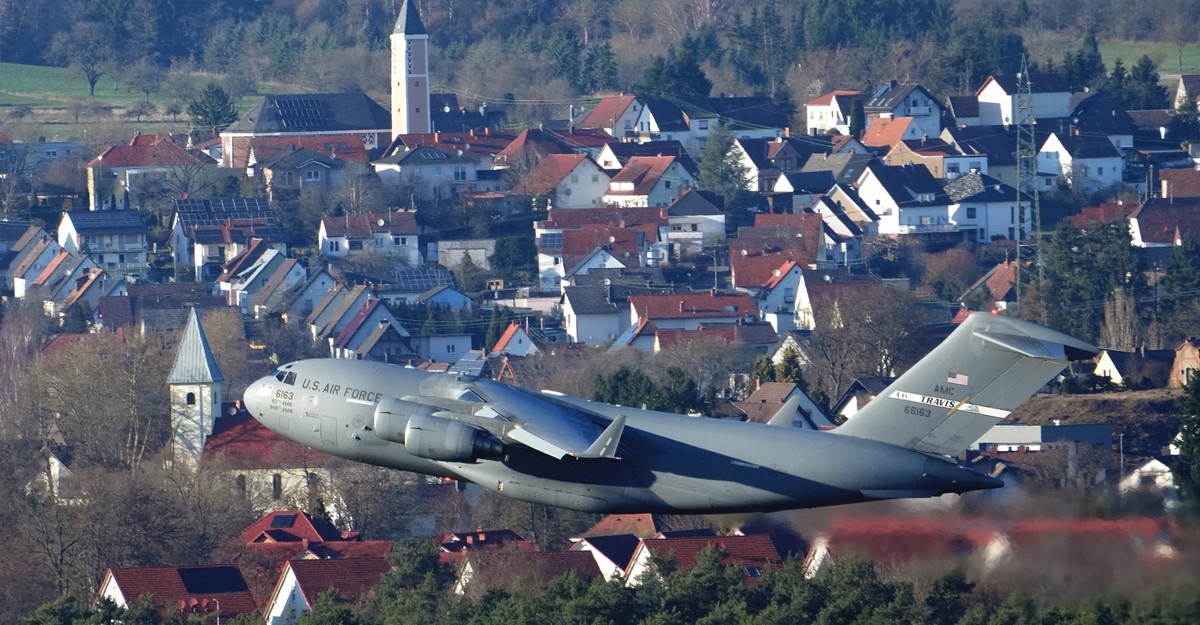
The article says the U.S. will remove 5,000 troops from Germany, with a phased reduction over the next 12 months that could significantly shrink the American presence there. It argues the move would hit base-area economies around Ramstein, Wiesbaden, Vilseck, and Grafenwoehr, threatening local jobs and long-standing U.S.-Germany ties. The broader market impact is limited, but the policy shift is negative for defense positioning and transatlantic security sentiment.
The market is likely underpricing the second-order damage to the U.S. defense ecosystem: this is not a one-for-one troop count issue, it is a utilization shock to an embedded logistics and family-support network that has been optimized for permanence. The immediate economic hit is localized, but the investable signal is broader: Europe-facing basing is a high-multiplier demand anchor for airlift, maintenance, depot work, housing, and contracted services, so the real earnings risk shows up first in mid-tier defense suppliers and military real-estate exposure rather than primes with diversified backlogs.
The bigger strategic consequence is alliance credibility decay. Rotational presence is cheaper on paper, but it weakens forward-deployed deterrence quality and increases the probability of more expensive follow-on spending on prepositioning, missile defense, and rapid reinforcement in Poland and the Baltics. That is a classic budget-smearing trade: near-term OPEX down, medium-term CAPEX up. If the drawdown persists beyond the next 2–3 quarters, expect European governments to accelerate indigenous procurement and stockpiling, which is net-positive for select EU defense names but not for U.S. contractors reliant on stable U.S.-led theater architecture.
The contrarian read is that the headline move may be more symbolic than structural at first. A phased reduction creates room for reversal after diplomatic bargaining, and Washington may later reclassify some units as rotational rather than permanently removed, blunting the actual reduction in industrial demand. That said, the reputational damage is harder to unwind than the troop count, and the longer the gap in daily civilian interaction, the more durable the political drift in Germany becomes. In other words, the tradeable risk is not just a temporary base contraction; it is the compounding loss of U.S. influence, which eventually forces costlier re-entry if strategic priorities shift back to Europe.
AI-powered research, real-time alerts, and portfolio analytics for institutional investors.
Request DemoOverall Sentiment
moderately negative
Sentiment Score
-0.45
