
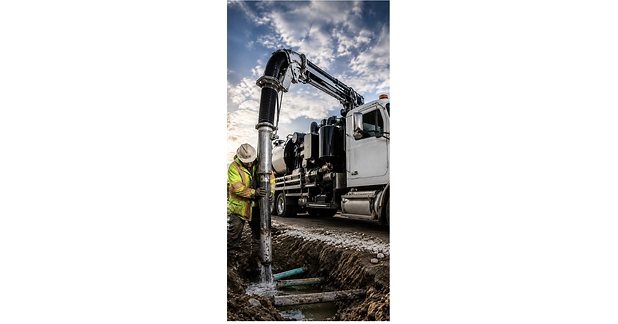
The article explains directional drilling as a trenchless method for installing underground utilities in Albany, NY, enabling work beneath streets and waterways with less surface disruption. It highlights planning/pilot-hole precision, reduced restoration costs (repaving/landscaping) and potentially shorter timelines, plus lower environmental disturbance in sensitive areas. Overall, it’s informational content with no direct financial figures or company performance impact.
This is an execution-method story, not a demand story, so the market impact is mostly zero unless it shows up in contractor backlog or municipal capex timing. The real economic benefit of trenchless work is faster turnover and fewer restoration costs, which should accrue to owners and specialty contractors with strong planning/mapping capabilities; that is a productivity gain, not a new revenue pool.
The second-order losers are the businesses that monetize open-cut disruption: paving/restoration subs, landscaping recovery, and some materials demand tied to surface repair. Over 6-18 months, wider trenchless adoption is mildly margin-accretive for fiber, water, and gas network buildouts because it reduces permitting friction and post-work restoration, but it does not change the underlying replacement cycle. For NGS, there is no direct estimate revision here; the ticker linkage is too weak to support a trade.
Contrarian view: the market often overstates the investability of "modern infrastructure" narratives when the driver is just a construction technique already embedded in procurement. The actionable signal would be a step-up in HDD rig utilization, backlog, or guidance from specialty contractors—not a generic explainer. Falsifiers are simple: if municipal/utility capex and award volumes do not improve, this remains noise rather than a tradable catalyst.
AI-powered research, real-time alerts, and portfolio analytics for institutional investors.
Overall Sentiment
neutral
Sentiment Score
0.05
Ticker Sentiment
