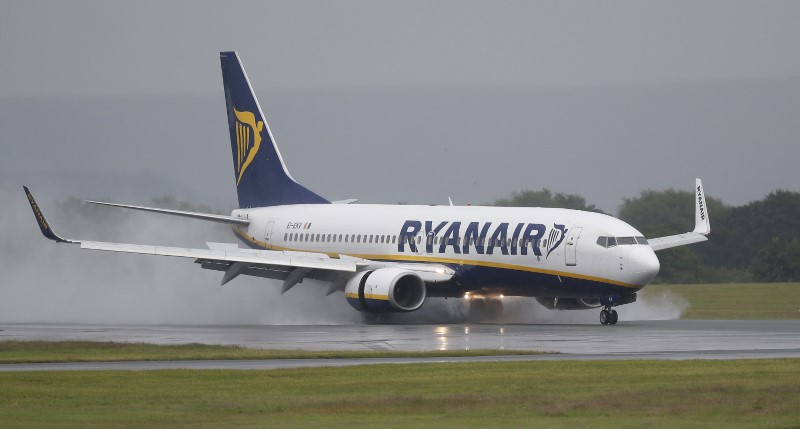
Bernstein says European jet fuel has jumped to $1,500-$2,000 per ton, more than double pre-attack levels, pushing airlines toward operating losses unless fares rise or hedges offset the move. Ryanair and Lufthansa are relatively protected with 2026 hedge ratios of about 80% and 77%, while IAG and Air France-KLM are more exposed near 62%; higher leverage also leaves Air France-KLM and Wizz Air under greater pressure. The report expects carriers to respond mainly through capacity cuts, with United trimming growth by 5%, Delta by 3.5%, and Lufthansa by 1%.
The market is likely underestimating how quickly higher jet fuel compresses equity value, because the real transmission is not a simple margin hit but a capacity reset that advantages the strongest balance sheets. The carriers with the cleanest hedges and net cash can keep flying profitably while weaker operators are forced to prune marginal routes, which paradoxically supports pricing for the survivors. That creates a medium-term winner-take-more dynamic: the strongest network airlines gain share without needing aggressive fare discipline, while structurally levered names become forced sellers of growth.
The second-order effect is that fuel inflation is less about absolute ticket pricing power and more about schedule optionality. Airlines with weaker liquidity lose the ability to “buy” market share through unprofitable capacity, so their load factors may look fine for a quarter or two before unit revenue degrades as route rationalization accelerates. This is where the risk is asymmetric: the P&L pain lands immediately, but the competitive damage compounds over several quarters as fleet deployment, labor planning, and aircraft utilization become harder to optimize.
The contrarian read is that the move may be over-pricing the near-term earnings hit for the best-positioned carriers while under-pricing the survival risk for the weaker ones. If fuel stays elevated into the next booking season, leverage and hedge gaps matter more than headline demand, and the market should start discounting dilution, aircraft sale-leasebacks, or equity raises for the most exposed airlines. A reversal requires either a fast de-escalation in the geopolitical premium or a broader demand shock that forces global capacity destruction before the weaker balance sheets crack.
On Berkshire, the cash build is not a sign of idle capital so much as a growing option on volatility: the larger the dislocation in cyclicals and transport, the more valuable its balance sheet becomes as a buyer of distressed assets or structured financing. That makes the current setup more bullish for future capital deployment than for immediate return of capital, which can keep the stock supported even if operating earnings are noisy.
AI-powered research, real-time alerts, and portfolio analytics for institutional investors.
Request DemoOverall Sentiment
mildly negative
Sentiment Score
-0.35
Ticker Sentiment
