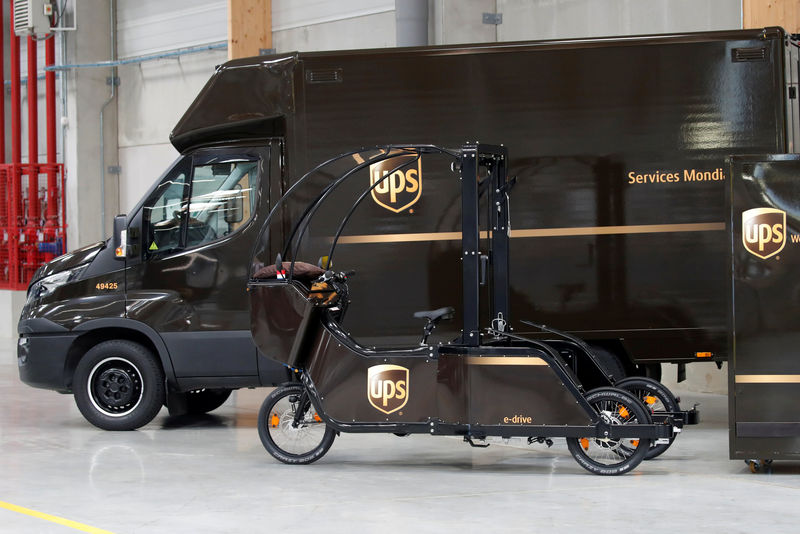
UPS declared a quarterly dividend of $1.64 per share, payable June 4, 2026 to holders of record on May 18, extending a 28-year streak of dividend payments and 16 straight years of dividend increases. The article also notes UPS’s 2025 revenue of $88.7 billion and recent mixed analyst moves, with BofA raising its price target to $108 and Evercore ISI lowering its target to $111. Overall the news is supportive for shareholder returns but likely modest in direct market impact.
The immediate winner is not UPS so much as the entire logistics stack that can piggyback on a premium-capital-return balance sheet while the industry is repricing toward lower growth and higher self-help. A maintained dividend in this tape is a signal that management is defending the equity with cash flow discipline, which tends to compress downside volatility even when volume trends are soft; that matters because yield support can keep the stock from de-rating as aggressively as the market expects. The bigger second-order effect is that Amazon’s logistics push keeps increasing the probability of structural margin pressure across parcel and freight, but it also raises the bar for service quality and network density, which favors the best-capitalized operators and niche networks over undifferentiated incumbents.
FDX is the cleaner relative loser because it sits in the most exposed position: more cyclical, less dividend-supported, and more sensitive to any incremental share shift in U.S. domestic parcel. The market may still be underestimating how quickly customers re-bid logistics spend when a platform player offers bundled transport, warehousing, and last-mile capabilities; even a low-single-digit share loss can have an outsized impact on operating leverage in a fixed-cost network. That said, the pain is not linear—if the macro environment improves or shipping volumes normalize, the bear case can unwind quickly because logistics equities tend to re-rate on margin inflection rather than top-line growth.
The contrarian setup is that Amazon’s move may be better for pricing discipline than headline share capture in the near term. Third-party shippers adopting Amazon’s network could validate the infrastructure as a utility layer, but that does not automatically translate into profitable market share gains; it may simply force UPS and FDX to defend service on price while preserving their most profitable lanes. Over 6-12 months, the key variable is whether volume concentration and density gains offset the margin drag from competitive pricing—if not, the “winner” trade becomes a relative long in asset-light or niche logistics exposures rather than a blanket short on the sector.
AI-powered research, real-time alerts, and portfolio analytics for institutional investors.
Request DemoOverall Sentiment
mildly positive
Sentiment Score
0.25
Ticker Sentiment
