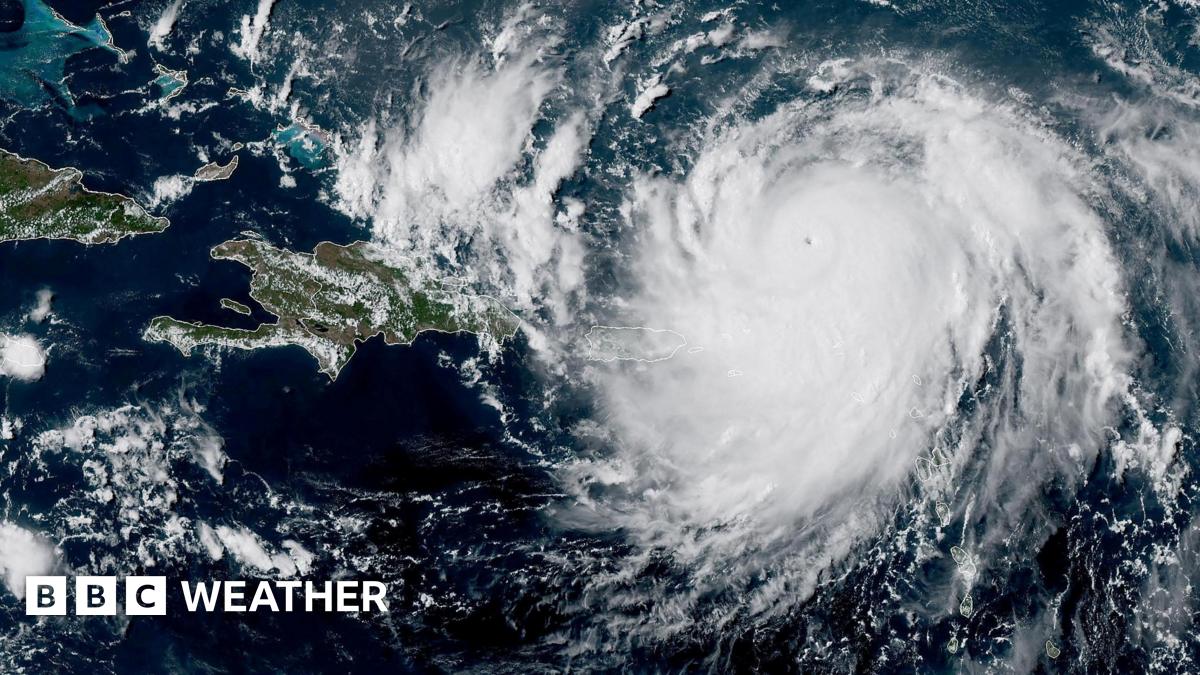
NOAA expects the 2026 Atlantic hurricane season to be below average, with an 55% chance of a quieter season, 8-14 named storms, 3-6 hurricanes, and 1-3 major hurricanes. A developing El Niño is expected to suppress storm activity despite unusually warm Atlantic sea surface temperatures, though forecasters stress that even one major storm can cause severe damage. The article is primarily a weather outlook update rather than a market-moving event.
The market is likely overindexing on seasonal storm counts and underpricing dispersion inside the “below-average” umbrella. For portfolios, the bigger issue is not the probability-weighted number of storms but the convexity of the loss distribution: one high-intensity landfall can dominate annual insured loss ratios, reinsurance recoveries, and municipal repair spending. That means equity exposure is less about directionally shorting weather risk and more about identifying who owns the embedded gamma: insurers with thin catastrophe buffers, reinsurers with treaty concentration, and utilities with hardening capex backlogs.
A developing El Niño is a medium-term suppressant, but it is not an all-clear signal for risk assets tied to the Gulf and Caribbean. The second-order effect is a shift from frequency risk to severity risk: fewer events can lead to weaker premium growth assumptions, yet the warm-water backdrop preserves tail exposure to rapid intensification, which is what breaks pricing models and creates gap risk in catastrophe reinsurance and coastal infrastructure names. That favors long volatility structures over simple outright shorts because the base rate may improve while tail severity remains intact.
The contrarian angle is that a “quiet” season can be worse for complacent balance sheets than a noisy one if it encourages under-reserving, looser policy terms, and delayed mitigation spending. If forecasters are right, the near-term catalyst is not a broad hurricane trade but a window for insurers to reset rates without obvious headline losses; if they are wrong, the reversal is abrupt and concentrated into September-October. The tradeable edge is to own assets with explicit benefit from a stronger underwriting cycle while buying cheap downside on exposed coastal credits and reinsurance proxies.
AI-powered research, real-time alerts, and portfolio analytics for institutional investors.
Request DemoOverall Sentiment
neutral
Sentiment Score
-0.05
