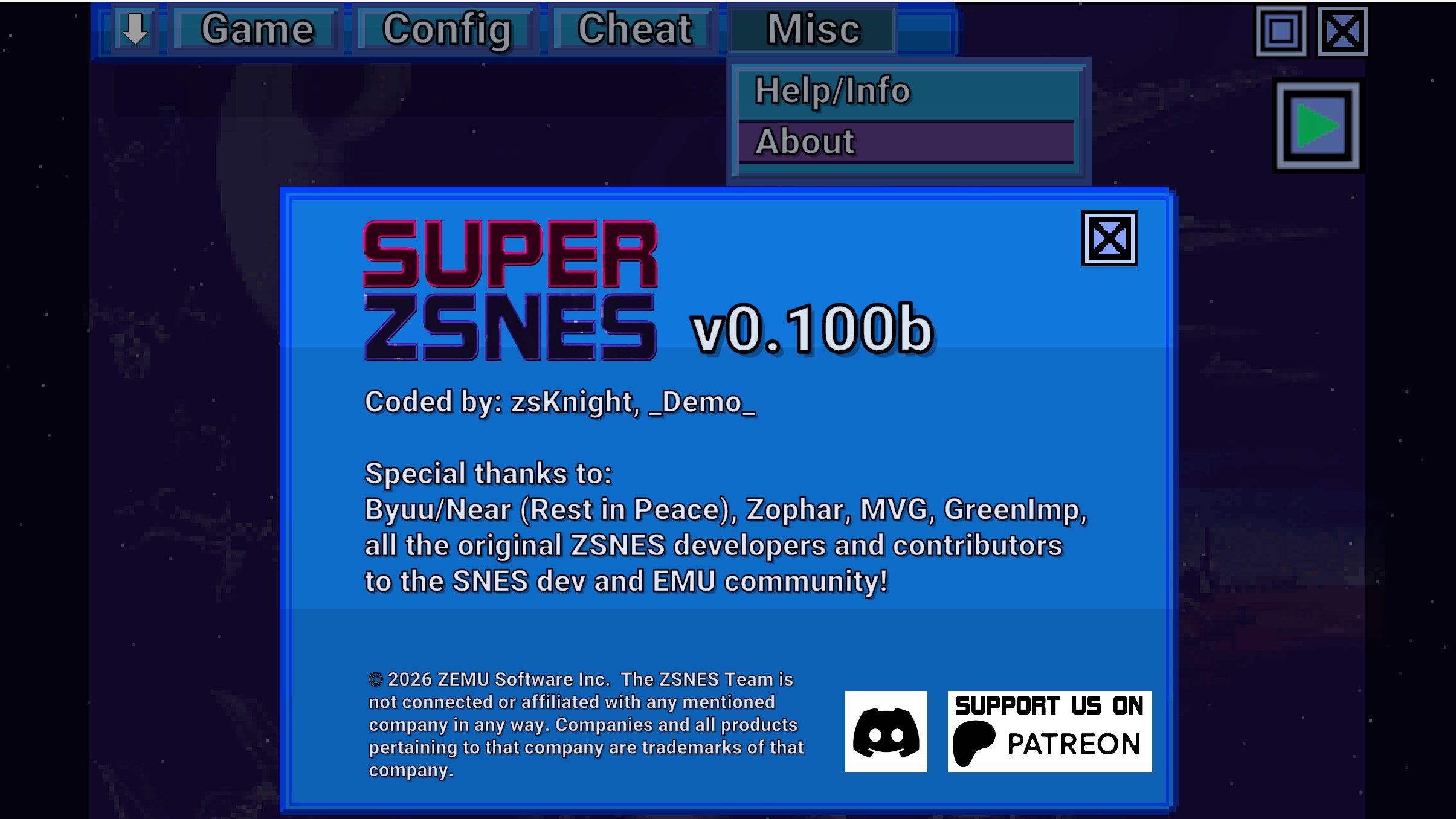
Super ZSNES has been rewritten from scratch and now features GPU-accelerated rendering, with the developers claiming far more accurate CPU and audio cores than the original ZSNES. The first release also adds optional enhancements such as higher-resolution rendering, texture/normal mapping, widescreen support, and uncompressed audio replacement, though the build is still early and lacks some special-chip support. Impact is likely limited to the retro gaming/emulation niche rather than broader markets.
This is less a “retro gaming” story than a microcosm of a broader consumer-software trend: GPU-native reconstruction of legacy workloads. The second-order winner is not the emulator itself but the tooling stack around it—engine middleware, shader tooling, distribution platforms, and hardware vendors that benefit when older, CPU-bound workloads get re-expressed as parallelizable graphics tasks. If this approach proves robust, it creates a template for other emulation, upscaling, and preservation projects to move from hobbyist niches into a small but real category of GPU-accelerated software.
The near-term upside is engagement, not monetization. An early build with missing special-chip support means the product is still in the “demo velocity” phase, where adoption can spike on novelty but retention depends on stability and compatibility. The biggest risk is that performance/accuracy tradeoffs become visible once users hit edge cases, which would cap the conversion from nostalgia buzz into durable paid support; that pushes the real catalyst horizon out to months, not days.
Contrarian view: the market may be overestimating how transferable this architecture is. SNES-era rendering quirks are a very specific problem set, and GPU acceleration does not automatically generalize to other emulation targets with heavier timing dependence or more complex custom chips. The more interesting signal is that a pair of veteran developers can still ship differentiated consumer software without AI-assisted “vibe” tooling, suggesting human-led craftsmanship remains monetizable in high-identity niches. If the project builds a modest recurring revenue stream, the lesson for software investors is that authenticity plus performance can outrun scale in enthusiast markets.
AI-powered research, real-time alerts, and portfolio analytics for institutional investors.
Request DemoOverall Sentiment
mildly positive
Sentiment Score
0.35
