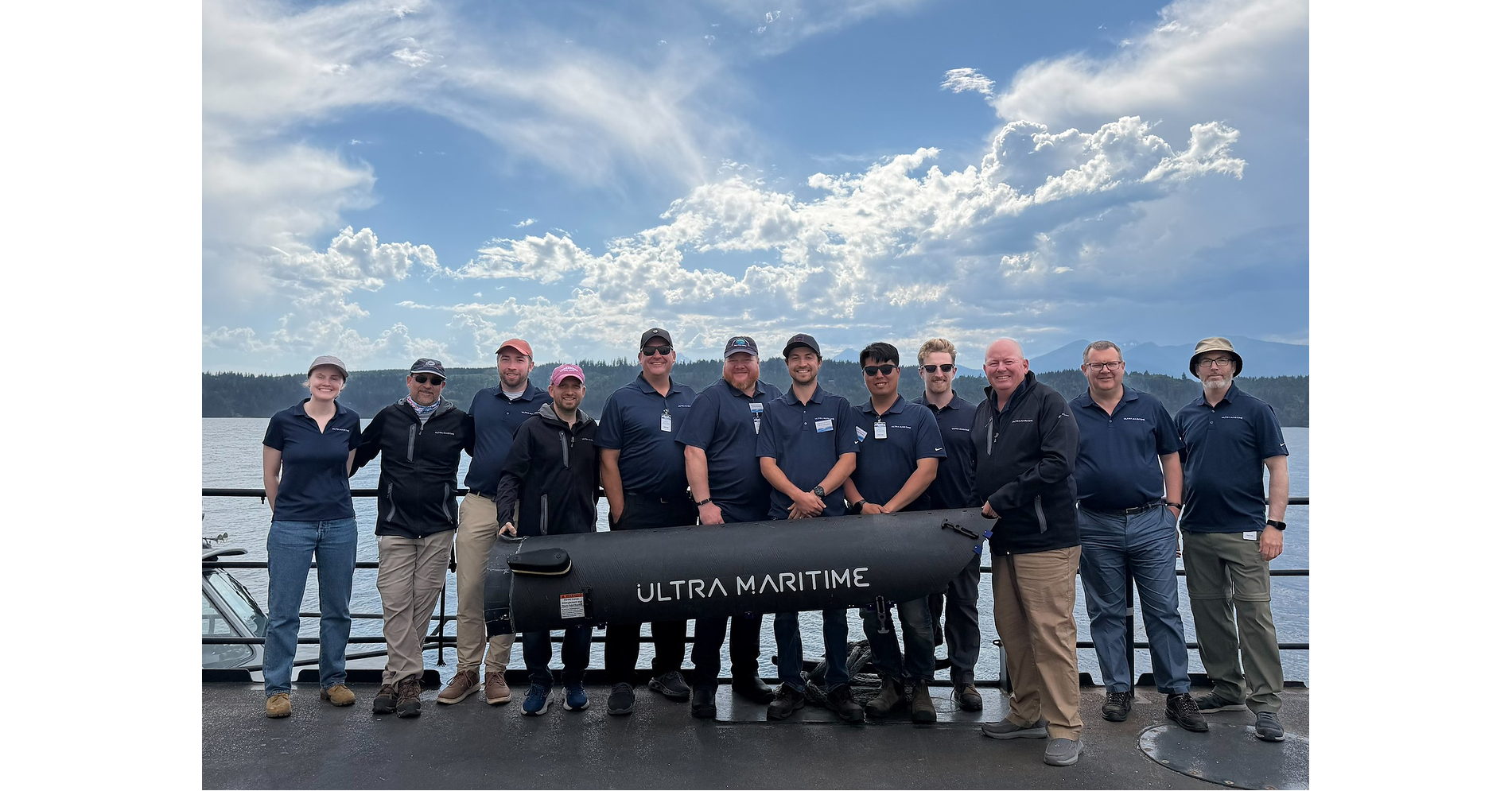
Ultra Maritime demonstrated its Sea Spear deployable sonar during the U.S. Navy’s Lanternfish 2026 exercise, where it consistently detected, tracked, and classified medium- and large-diameter UUVs in a realistic port-protection scenario. The system provided persistent acoustic sensing and transmitted track data to undersea command centers, with Sea Spear integrated with Anduril’s Seabed Sentry to form a distributed autonomous undersea network. The milestone supports accelerated deployment for covert ASW and broader maritime defense missions via scalable, rapid deployments from manned and unmanned platforms.
This is more valuable as a program-validation signal than as a revenue event. The near-term market reaction should be limited unless the demo converts into funded procurement, because defense budgets monetize repeatability, not capability theater. In the 1-3 month window, the key catalyst is whether this architecture shows up in a named program element, contract vehicle, or budget line item; without that, the equity impact remains mostly option value.
The competitive shift is toward distributed undersea networks, which increases the value of systems integrators, command-and-control software, and deployable sensor networks while pressuring legacy, hull-centric ASW spend over time. That favors prime contractors and platform owners with Navy relationships and procurement pathways (HII, NOC, LHX, ITA) more than standalone tech vendors that can demonstrate but not scale. Second-order beneficiaries are suppliers of acoustic components, edge compute, underwater comms, and power systems; the likely loser is any legacy platform whose moat depends on scarce crewed assets and proprietary single-point sensors.
Contrarian risk: this can remain a press-release-perpetual-pilot. Underwater clutter, false positives, maintenance burden, and adversary countermeasures are exactly the kinds of frictions that kill demos before procurement. Falsifiers are simple: no budget language, no follow-on award, or no allied adoption by the next budget cycle; confirmation would be a multi-year contract or repeated operational testing across theaters.
AI-powered research, real-time alerts, and portfolio analytics for institutional investors.
Request DemoOverall Sentiment
mildly positive
Sentiment Score
0.25
Ticker Sentiment
