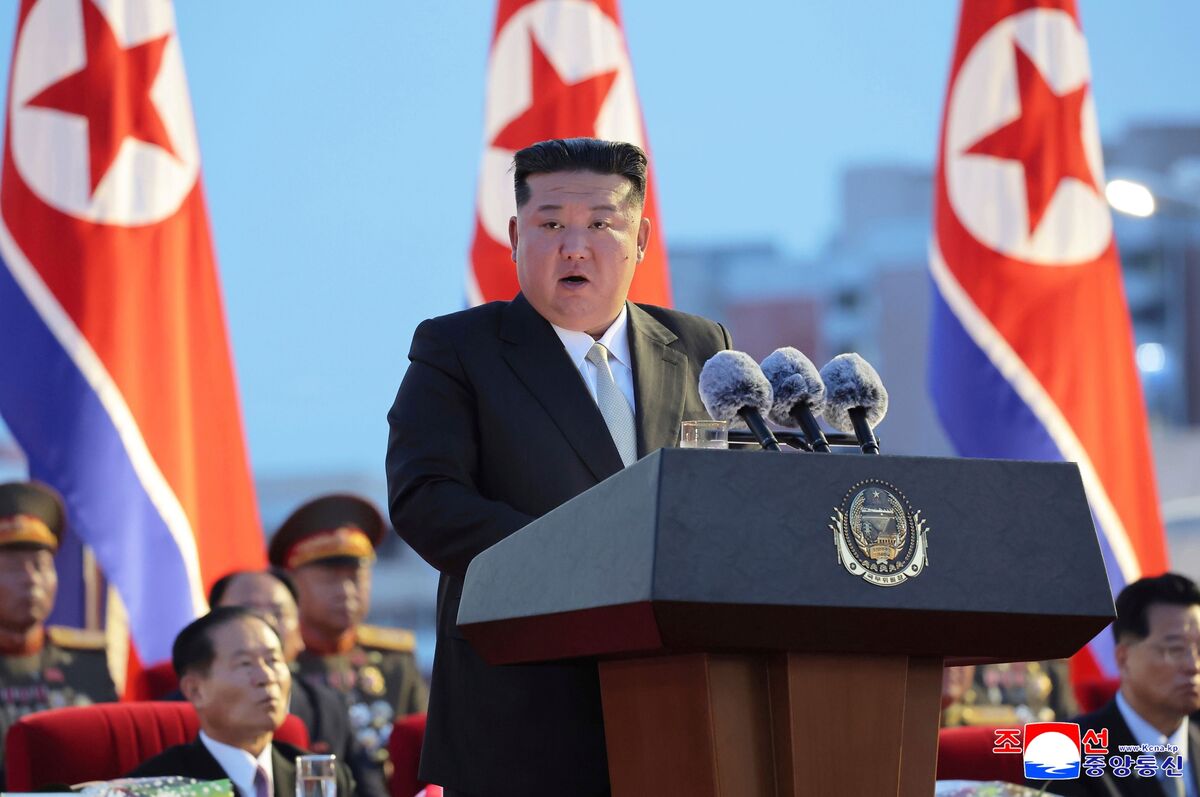
North Korean leader Kim Jong Un has called for a 'rapid expansion' of the nation's nuclear weapons program and naval forces, citing the regional security environment. This directive, issued amidst ongoing joint US-South Korea military drills that Pyongyang views as a 'prelude to war,' signals a significant escalation of tensions and a continued focus on military development in the Korean Peninsula.
North Korea has announced a significant escalation of its military posture, with leader Kim Jong Un mandating a 'rapid expansion' of the country's nuclear weapons program and naval capabilities. This directive is explicitly linked to the ongoing joint US-South Korea military drills, which Pyongyang interprets as a direct provocation and a 'prelude to war'. The development carries a strongly negative sentiment score (-0.75) and a hawkish tone, signaling a material increase in geopolitical risk in the Korean Peninsula. With a market impact score of 0.65, this event is poised to introduce considerable uncertainty and potential volatility into regional markets, directly affecting investor sentiment and the security calculus for nations in the Asia-Pacific.
AI-powered research, real-time alerts, and portfolio analytics for institutional investors.
Request DemoOverall Sentiment
strongly negative
Sentiment Score
-0.75
