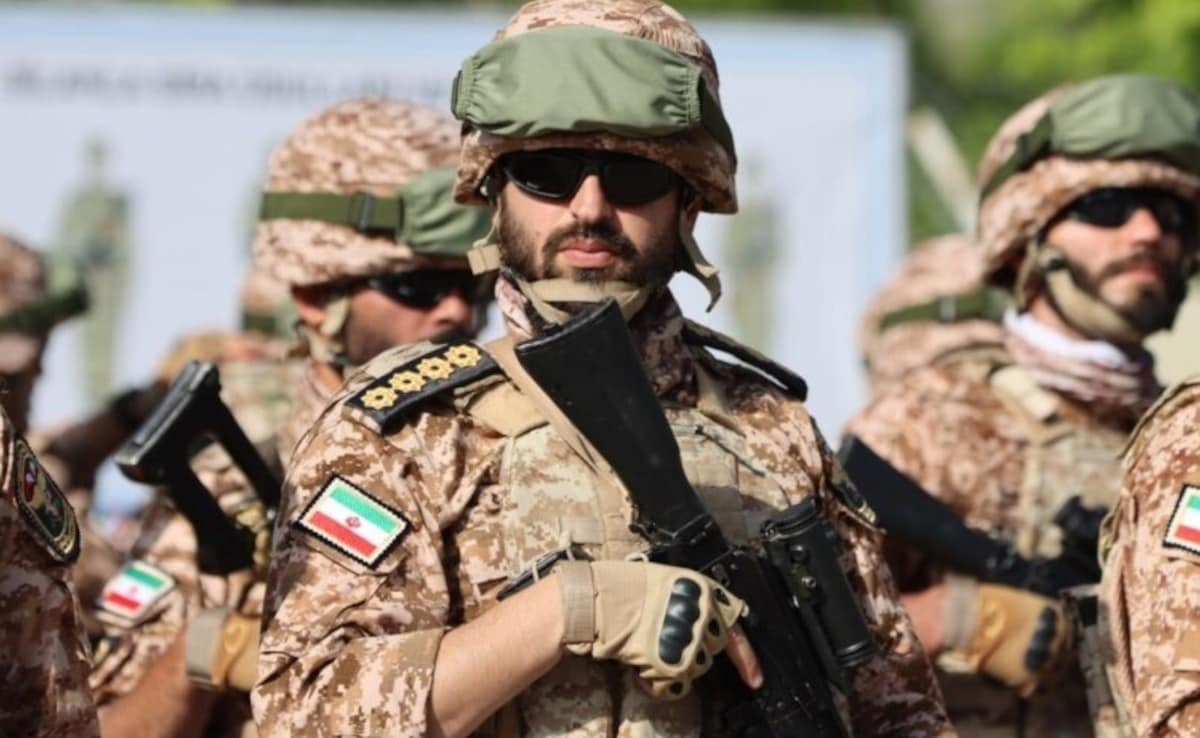
Israel's IDF told the Knesset that Iran's new leadership is far more hardline, coming from the IRGC rather than the clerical elite, one day after Trump announced a ceasefire with Iran. The article also cites ongoing U.S.-Iran high-level talks in Islamabad this Saturday on the Strait of Hormuz, the Israel-Hezbollah conflict, and Iran's uranium enrichment program. The backdrop of regime-change claims, a recent wartime leadership decapitation, and unresolved nuclear and regional-security disputes points to elevated geopolitical risk.
The market’s first-order read is “de-escalation,” but the more important shift is regime quality: an IRGC-centered leadership base implies a more centralized security state with fewer internal veto points and a higher tolerance for asymmetric retaliation. That raises the probability of calibrated disruption rather than headline-grabbing war—especially in shipping lanes, drone proxies, and cyber—because those tools deliver leverage without forcing a direct conventional response. For risk assets, that is worse than a clean ceasefire: it creates a lower-volatility, higher-tail-risk environment that can keep defense, energy logistics, and maritime insurance bids under pressure for weeks.
The second-order winners are not just defense primes; it is the entire “friction stack” around Middle East transit. Even a modest increase in perceived Hormuz risk can tighten tanker availability, widen freight rates, and lift regional insurance premia before any actual supply outage appears, which is why the trade often starts in energy transport and marine services rather than spot crude. In parallel, any renewed sanctions or export-control chatter would likely hit EM FX and frontier importers harder than developed markets, because the financing channel typically weakens before the commodity channel shows up in CPI.
The contrarian point is that the market may be overestimating the durability of the ceasefire and underestimating the leadership’s need to demonstrate control. A hardline leadership often front-loads signaling, but once credibility is established, it can become more pragmatic than rhetoric suggests; that creates a binary path where the next 2–4 weeks matter far more than the next 12 months. If talks in Islamabad produce even a narrow verification framework, the immediate “war premium” can bleed out quickly, but failure likely re-prices geopolitical risk across oil, shipping, and defense in one move rather than gradually.
AI-powered research, real-time alerts, and portfolio analytics for institutional investors.
Request DemoOverall Sentiment
strongly negative
Sentiment Score
-0.65
